




Poker Range Misread It is one of the most common and fatal analytical errors in Texas Hold'em.
Many players think they are reading the cards, but in reality they are just guessing whether their opponent has "that hand," and as a result, the entire analysis goes astray from the beginning.
The essence of range misjudgment is not that you didn't think at all, but that you mistakenly simplified what should have been an analysis of "an entire range of possibilities" into a single guess and emotional projection.
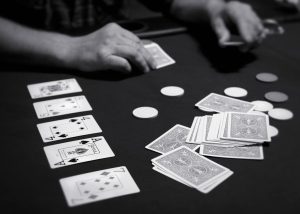
1. How do I know if my opponent happens to have this hand?
2. Why do I often feel like he's bluffing, but when I flip over the cards, they're actually real?
Key takeaway: Poker Range Misread = If you don't understand the range, all your subsequent judgments are easily based on errors.
The essence of Range misjudgment:
1. Lock your opponent into a single hand.
2. Ignoring location and route to determine how the convergence range is narrowed.
3. Replacing structural analysis with intuition
True card reading in Texas Hold'em is not about guessing a single hand, but about narrowing down a whole range of reasonable possibilities.
What is Range Misread?
Range Misread
1. This refers to a player's misinterpretation of their opponent's possible hand range when analyzing the opponent.
2. Commonly seen when only a single action is considered, without looking at the entire path, position, or betting size.
3. This will directly distort all forms of betting, including calling, folding, bluffing, and value betting.
You didn't lose because you weren't good enough at guessing; you turned what should have been a game of analyzing the "range" into a "guessing game."
What are the most common errors caused by not understanding Range?
1. Overestimating the opponent's Bluff
→ Because you only considered "he might not have a card," without actually taking into account the value combinations that naturally exist along the way.
2. Underestimating the competitor's value
→ You only see that your own hand is pretty good, but you don't realize that this line has actually already made your opponent very strong.
3. Mistaking a mediocre hand for a strong one.
→ Without considering your opponent's remaining range, medium-strength hands are easily overestimated as hands capable of handling significant pressure.
4. Mistaking polarization for random attack
→ When your opponent is betting in a highly polarized manner, you try to justify calling by saying "he might bet randomly."
If the range is misinterpreted, it's not just a problem with a subsequent decision, but the entire analytical logic will go astray.
Why do many players misjudge the Range?
→ Too eager to know quickly whether the opponent "actually has it"
→ A habit of working backward from the result, rather than using path convergence.
→ Focus only on this one shot, without considering how we got here from every street before.
→ Projecting your own emotions, hopes, or fears onto your opponent.
Many so-called "inaccurate card readings" are not actually due to poor skills, but rather because you didn't use range thinking to read the cards from the beginning.
Classic practical scenarios
1. You open on the BTN, and the BB calls.
2. Flop: K♣ 8♠ 4♦, you bet, your opponent calls.
3. Turn: 2♣, you bet again, and your opponent calls.
4. River: A♥, opponent suddenly performs a large check-Raise All-in
5. You hold K♠ Q♠
Question: Why do many players misjudge the range here and end up making the wrong Hero Call?
False thinking: He might just have seen A and wanted to put on an act.
Many players will:
→ I think River's big move might just be using the Ace to represent...
→ Because I have KQ, I don't want to believe that this place has fallen too far behind.
→ The range of the opponent's sudden polarized counterattack after the flop and turn was not fully captured.
Result: You are not analyzing reasonable bluff density, but rather using your imagined possibilities to fight against a value line that is actually already very strong.
Correct thinking: Every street is converging; River wasn't guessed from scratch.
In this context:
→ After the BB Flop and Turn continued to call, the remaining range was already biased towards Kx, two pair, sets, slow play, and some draws.
→ River A will affect some combinations, but the opponent's large check-Raise won't create a lot of bluffs out of thin air.
→ If the opponent's style is relatively stable and lacks natural bluff combinations, KQ here is often just a bluff catcher that looks decent but is actually not enough to cover the damage.
Conclusion: The real key is not how you view the River point, but whether you have brought the accumulated range changes from the previous three streets all the way to this final decision point.
Three core principles to avoid Range misjudgment
1. First look at the location, then look at the starting range.
→ The starting range differs significantly depending on the position when opening, calling, and defending.
2. We need to tone it down on every street, not just on the River.
→ Every call, raise, and check during a Flop, Turn, and River narrows down the opponent's possible hand range.
3. Don't just ask "Does he have Bluff?", ask "How much Bluff does he have?"
→ Range analysis is a matter of proportion, not a matter of single possibility.
Range misjudgment is the most common error.
→ Directly target your opponent with a hand that you fear most or most desire.
→ Only look at the last shot, ignore the entire betting path before that.
→ Mistaking "he might also" for "therefore he should pay".
→ Use results-oriented approaches to correct flawed scope analysis.
The biggest problem with Range misjudgments is not that you guess wrong once, but that you will use incorrect analysis methods and repeatedly pay the price at key points.
Advanced Strategies: Range × Line × Board × Player Type
Experts' Gathering:
→ Establish the starting range based on the flipping position and the method of entering the pool.
→ Use the actions of Flop / Turn / River to gradually converge possible combinations.
→ Incorporate card variations and opponent types into the analysis, rather than viewing them in isolation.
→ Before making a Hero Call, Bluff, or Big Value Bet, confirm whether the other party's scope truly supports this decision.
Truly advanced card reading isn't about guessing someone's mind, but about using structure to gradually eliminate unreasonable combinations until only the truly worthwhile combinations remain.
Core Decision Conclusions
Texas Hold'em is not about guessing whether your opponent "just happens to have" it or not, but about whether you can narrow down the reasonable range more and more accurately with limited information.
When you truly understand the problem of range misjudgment, you will no longer treat every hand as a guessing game, but will begin to think in a more mature way: After your opponent comes from this position, with this size, and along this route, what cards are truly reasonable left? Once you start using range analysis instead of single-point guessing, your decision-making quality will truly stabilize.
Common Mistakes Review: Why Do You Keep Losing? The Problem Lies Here
Most players lose money not because of luck, but because they repeat the same mistakes.
These debriefings will help you identify the most common mistakes and understand how to correct them:
Why does constantly calling cause you to lose money?
[Bluff Imbalance] What are the costs of excessive bluffing?
Why do you always lose on the last street? [Never fold]
[Slow Play Error] Why do I lose big pots when I play slowly?
What's the problem with betting too small?
Why do people lose money when they bet too much?
[Emotional Issues] How do emotions affect your decision-making?
[Range Misjudgment] Analysis of Errors Caused by a Lack of Understanding of Range
[Location Ignore] What are the consequences of ignoring location?
[Misinterpreting People] The Impact of Misinterpreting an Opponent's Behavior
Avoiding mistakes is more important than learning new skills. By reviewing these common mistakes, you can quickly identify your weaknesses, correct your decision-making habits, and reduce unnecessary losses.