





The Texas Hold'em starting hands chart is the most important basic tool in Texas Hold'em. This article provides a complete starting hands chart and positional strategy to help beginners quickly determine which hands to play, improving decision-making and win rate.

How to Play Poker: 10-Minute Beginner's Guide (Rules & Gameplay)
How to play Texas Hold'em? This article fully introduces the rules of Texas Holdem, the hand flow (Preflop / Flop / Turn / River), the betting action (Check / Bet / Call / Raise / Fold) and the card size, to help novices quickly understand the gameplay of Texas Holdem in 10 minutes.
Why is position important in Texas Hold'em? This article analyzes the differences between early, middle, and late positions and the advantages of the BTN (Block Tone), explaining why late position has an informational advantage, enabling more effective pot control and improved decision-making and win rate.
Learning the betting action of Texas Holdem is the first step in understanding the strategy of the hand. This article fully introduces the common Check, Bet, Call, Raise, and Fold actions of Texas Hold'em, and explains the betting process, Bet Size, and C-Bet continuous betting strategies to help novices quickly understand the betting logic of Texas Hold'em.

In Texas Hold'em, range is the core of all decision-making. This article will guide you through the key thinking of poker range strategy, teaching you how to deduce your opponents' holding range from their actions, and how to use range vs. range to make more accurate betting, pot control, and attacking decisions, comprehensively improving your long-term profitability.

In Texas Hold'em, check-raise is a high-pressure, high-reward offensive defensive technique. This article will guide you through the core logic of the check-raise strategy, analyzing when to induce your opponent to bet and then raise, and how to combine value and semi-bluff to create pressure, helping you effectively control the pace of the game and improve profitability post-flop.

In Texas Hold'em, delayed c-betting is an underrated but highly profitable technique. This article will guide you through the core logic of the delayed c-bet strategy, analyzing when to check on the flop and then attack on the turn, helping you apply pressure at the right time, increase your success rate, and optimize your overall decision-making.
In Texas Hold'em, the key to consistently high profitability over the long term lies not just in mastering skills, but in developing your own strategy system. This article delves into the core concepts of the Texas Hold'em strategy system, guiding you from imitating standard play to understanding, systematizing, and ultimately forming your own personal style. When your decisions are consistent and replicable, you will no longer rely on intuition but will consistently profit with a stable playing style—a crucial step for advanced players towards the professional level.
In Texas Hold'em, even with the right decisions, short-term wins and losses can fluctuate. This article delves into the core concepts of Texas Hold'em mental game and poker variance, helping you understand why even the right play can result in losses, and how to maintain decision-making quality through a stable mindset and emotional control (tilt). When you can accept volatility, focus on long-term EV, and avoid emotional decision-making, you will progress from "being a good player" to "being consistently profitable," which is a key ability to become a long-term winner.

In Texas Hold'em, the reason most players fail to profit in the long run isn't because they don't know how to play, but because they consistently make the same mistakes. This article delves into Texas Hold'em poker leaks, helping you identify the most common strategic flaws, such as over-bluffing, fear of value, poor pot control, and emotional decision-making, and provides clear methods for correcting them. When you begin to correct these recurring errors, your win rate and consistency will significantly improve, a crucial step from an average player to a consistently profitable one.

In Texas Hold'em, true progress doesn't come from playing more hands, but from high-quality post-game analysis. Professional players use a systematic approach to analyze the decision-making process of each hand, including range assessment, betting patterns, and EV structure, rather than just looking at the win/loss result. Many players stagnate because they lack effective learning methods. This article will provide a complete analysis of the professional post-game process to help you build a learning system for continuous improvement.

In Texas Hold'em, short-term wins and losses don't represent skill; the real key lies in establishing a long-term profitable decision-making system. Professional players develop a sustainable profit framework through EV thinking, risk control, strategy selection, and psychological stability. Many players fail to break through plateaus because they lack overall planning and rely solely on single skills. This article will integrate core strategies to help you build a complete long-term profit model.

Game Theory Optimal (GTO) and Exploit are two core strategies in Texas Hold'em, but many players mistakenly believe they must choose one over the other. In reality, top players don't choose between the two, but rather dynamically switch between them based on their opponents and the game situation. GTO provides a stable and unexploitable foundation, while Exploit amplifies profits when opponents make mistakes. This article will analyze the differences and application scenarios of these two strategies to help you develop a higher level of decision-making ability.

In Texas Hold'em, psychological warfare isn't about mind reading, but rather influencing opponents' decisions through pressure and strategic design. Top players not only make the right choices, but also make their opponents make the wrong ones. This advantage stems from understanding their opponents' emotions, behavioral patterns, and decision-making tendencies. This article will analyze how to create pressure, induce errors, and establish a psychological advantage in different situations, allowing you to gain the upper hand in high-level matches.

In Texas Hold'em, adversity is not the exception, but the norm. Even top players experience long losing streaks and slumps. The real difference lies in who can maintain correct decision-making and consistently execute it in unfavorable situations. Many players begin to doubt their strategy and lose emotional control in adversity, ultimately leading to a collapse in their intrinsic value (EV). This article will analyze how to maintain stability under variation and pressure, helping you build true long-term profitability.
Isolation Raise, or simply Iso Raise, is a strategy where a player raises after another player has limped in, hoping to force the other players to fold and create a heads-up situation with the limping player. This is one of the most important pre-flop aggressive strategies in modern Texas Hold'em, establishing initiative, punishing overly limping players, and improving post-flop decision-making. This article will provide a comprehensive overview of the definition, purpose, raise size, suitable starting hands, and how professional players utilize Iso Raise to create long-term potential (EV).

Many beginners, when first encountering Texas Hold'em, most frequently ask, "How do I win money at Texas Hold'em?" On the surface, this seems like a question about techniques; however, the real answer lies in a complete thought process. Winning isn't about a single brilliant bluff or good luck, but about consistently making higher-quality decisions than your opponents. From pre-flop hand selection, positional advantage, range assessment, and betting logic, to outcome bias, emotional control, and long-term EV, true profitability is never about a single skill, but about the consistent output of the entire system. This article will provide a complete analysis of how to win at Texas Hold'em, helping you evolve from "just playing" to "truly understanding how to profit in the long run."

In Texas Hold'em, poker terms are more than just a communication tool; they're a complete language of thought. When you start exploring strategy, watching high-level games, or reading analysis articles, you'll find that almost everything revolves around various professional terms: C-bet, Range, EV, Bluff, Blocker, etc. Without understanding these terms, even if you know how to play, it's difficult to truly grasp the depth of the game. This article will systematically organize common Texas Hold'em terms from beginner to advanced levels, covering basic actions, hand flow, positional concepts, and strategic terminology, helping you quickly build a poker language system that you can understand, think critically, and advance in.

In Texas Hold'em, hand ranking and comparison rules are the most fundamental core of all decision-making. Many beginners spend a lot of time learning strategies and bluffing, but make mistakes in the most basic hand ranking, leading to misunderstandings of the entire hand. The outcome of Texas Hold'em is not about who has the "better feel" with their hand, but about who can build the strongest 5-card hand with 7 cards (2 hand cards + 5 community cards). This article will provide a complete analysis of the ranking of all hand rankings from highest to lowest, how to compare hands in practice, how the kicker determines the outcome, and the most common hand ranking mistakes made by beginners, helping you build the most solid foundation.
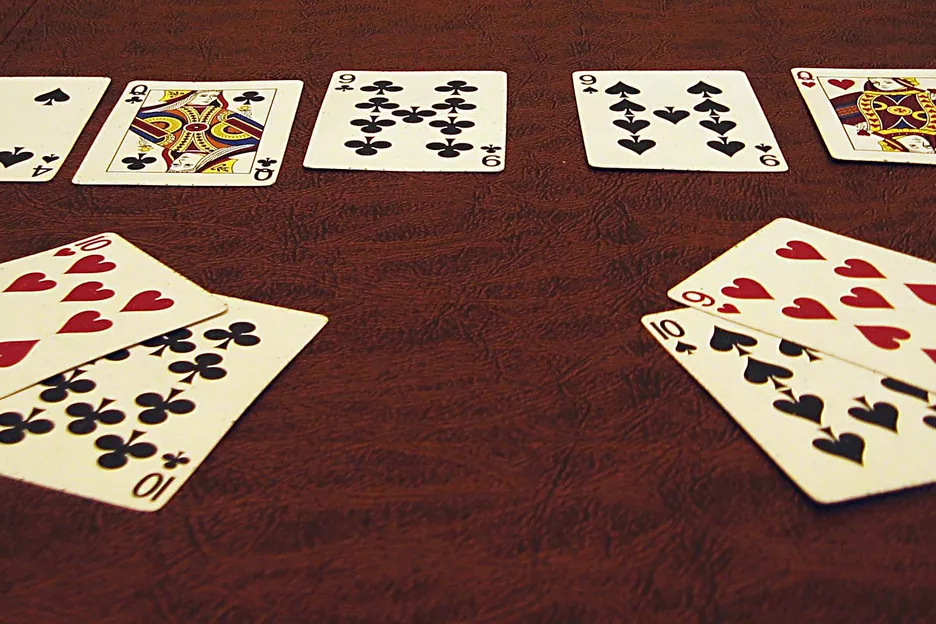
Texas Hold'em is popular worldwide not only because of its relatively simple rules, but also because it combines probability, psychology, position, information, and decision-making. For beginners, the most important first step is not to rush into learning Bluff or advanced strategies, but to truly understand the rules, the flow of a hand, betting methods, hand comparison logic, and how to determine the winner. If the basic rules aren't clear, learning more strategies later will easily be based on misunderstandings. This article will guide you through the complete process of playing Texas Hold'em, from two hands and five community cards to the Preflop, Flop, Turn, and River, helping you quickly establish a correct and solid foundation of basic knowledge.
Many players know that Chip EV (Chip EV) and Dollar EV (Bonus EV) are different, but are unclear about how they are converted. In fact, the core of ICM (Integrated Game Module) is converting chip value into bonus value. This article will fully explain the EV conversion principle and why the same chip earnings can produce completely different bonus EVs under different circumstances.
Many players who learn ICM theory don't struggle with understanding it, but rather with how to examine their decisions. The players who improve the most are often not the ones who play the most hands, but the ones who review their plays the most. This article will provide a complete analysis of the ICM review process, helping you identify mistakes in Bubble, final table, and All-in decisions.
Many players believe that short stacks are the most difficult, but in reality, the middle stack is often the most challenging position in tournaments. Short stacks have push/fold strategies, large stacks can use ICM (Independent Chip Counting) to apply pressure, while middle stacks face both the risk of elimination and chip pressure simultaneously. This article will provide a comprehensive analysis of the core challenges for middle stack players and how to make the best decisions in an ICM environment.
The greatest strength of ICM (Intensive Compressor) isn't teaching you to fold, but rather how to make others fold. When opponents face elimination or a payout jump, their calling range shrinks significantly. Players who understand how to exploit this pressure often accumulate large chips at the Bubble and final tables. This article will provide a complete analysis of the core principles and practical applications of ICM pressure strategies.
All-in is one of the most important decisions in Texas Hold'em, but in the ICM (Independent Cup of Management) environment, it's not just about hand strength and win rate. The risk of elimination in the Bubble, final table, and prize jump stages is often more important than the extra chips gained. This article will fully analyze the logic behind all-in decisions in the ICM environment and how professional players avoid costly mistakes.

ICM Disaster(ICM 災難)是指德州撲克錦標賽中,玩家因忽略 ICM、淘汰風險與獎金結構,而做出造成巨大 Dollar EV 損失的決策 ICM Disaster 並不是一般的小失誤,而是即使 Chip EV 看起來合理,卻嚴重破壞獎金權益的重大錯誤。例如在 Bubble、Final Table 或 Satellite 中,用邊緣牌跟注 All-in、與另一位大籌碼進行高風險 Coin Flip、忽略桌上更短籌碼存在等,都可能形成 ICM Disaster 真正理解 ICM Disaster,需要同時分析 ICM、ICM Pressure、Risk Premium、Bubble Factor、Dollar EV、Pay Jump、Stack Distribution、Cover 與 Payout Structure。避免 ICM Disaster,往往比追求多贏幾個 Blind 更重要
ICM Pressure(ICM 壓力)是指德州撲克錦標賽中,玩家因為 淘汰風險、獎金結構、Pay Jump、相對籌碼與其他短碼存在,無法單純按照 Chip EV 做決策時所承受的策略壓力 ICM 壓力最常出現在 Money Bubble、Satellite Bubble、Final Table Bubble、重大 Pay Jump 與 Final Table。在這些階段,失去籌碼造成的 Dollar EV 損失,通常高於贏得相同籌碼所增加的獎金價值,因此玩家面對能淘汰自己的對手時,常需要收緊 Call、Bluff Catch 與邊緣 All-in 範圍 ICM Pressure 並不代表所有玩家都應該變緊。大籌碼可以利用其他玩家承受的 ICM 壓力,擴大 Steal、Open Raise、3-Bet Bluff 與部分 Open Jam;中等籌碼通常承受最高壓力,需要避免在短碼之前被大籌碼淘汰;短籌碼則必須在等待 Pay Jump 與保留 Fold Equity 之間取得平衡 真正理解 ICM Pressure,需要同時分析 ICM、Risk Premium、Bubble Factor、Chip EV、Dollar EV、Payout Structure、Stack Distribution、Cover 與行動類型

Bubble Factor(泡沫因子/泡沫係數)是德州撲克錦標賽中,用來衡量失去籌碼造成的獎金權益損失,相對於贏得相同籌碼所增加獎金權益的比例 在 Cash Game 或純 Chip EV 環境中,贏得與失去相同數量籌碼的價值通常接近對稱,因此 Bubble Factor 接近 1。但在 Money Bubble、Satellite、重大 Pay Jump 與 Final Table 等 ICM 壓力較高的階段,失去籌碼的代價可能明顯高於贏得籌碼的收益,使 Bubble Factor 大於 1 Bubble Factor 越高,代表玩家承擔淘汰風險的成本越大,面對 All-in 時通常需要更高 Equity,跟注範圍也需要比純 Chip EV 更緊。它與 ICM、Risk Premium、Dollar EV、Payout Structure、Stack Distribution、Cover 與 Pay Jump 密切相關 Bubble Factor 並非全桌固定數字。不同玩家之間的籌碼覆蓋關係、相對籌碼、獎金權益和淘汰後果不同,因此同一個局面中,每組玩家之間都可能具有不同的 Bubble Factor
Risk Premium(風險溢價)是德州撲克錦標賽中,玩家因為承擔淘汰風險與獎金權益損失,所需要的額外勝率或 Equity 門檻 在純 Chip EV 環境中,玩家只要手牌 Equity 高於 Pot Odds 所要求的最低勝率,跟注通常便是盈利的。但在 Bubble、Satellite、重大 Pay Jump 與 Final Table 等 ICM 壓力較高的階段,輸掉全部籌碼造成的獎金損失,往往大於贏得相同數量籌碼所增加的獎金價值。因此,玩家需要比純 Chip EV 更高的 Equity 才能跟注 例如,某個 All-in 在 Chip EV 下只需要 40% Equity,但加入 ICM 後可能需要 48%、55%,甚至更高,兩者之間增加的 Equity 門檻,就是 Risk Premium 的實戰表現 Risk Premium 並不是所有玩家都相同。它會受到 Stack Distribution、Payout Structure、Pay Jump、誰能淘汰自己、桌上是否存在更短籌碼、Bubble Factor 與賽事階段影響。一般而言,中等籌碼面對能淘汰自己的大籌碼時,通常承受最高 Risk Premium;大籌碼則可以利用對手的風險溢價增加施壓

Chip Value(籌碼價值)是指德州撲克籌碼在特定牌局或錦標賽環境中所代表的實際價值 在 Cash Game(現金桌)中,籌碼通常可按照固定比例直接兌換現金,因此每一枚相同面額籌碼的金錢價值基本固定。例如,價值 $1 的籌碼通常就代表 $1 但在 Tournament(錦標賽)中,籌碼不能直接兌換現金,其價值會受到 Payout Structure、ICM、剩餘玩家、Stack Distribution、Bubble、Pay Jump 與淘汰風險影響。玩家籌碼翻倍,獎金權益通常不會同步翻倍;相反地,一旦失去所有籌碼,便會被淘汰並失去後續獎金機會 因此,錦標賽中的 Chip Value 通常具有 邊際價值遞減特徵:玩家擁有的籌碼越多,每額外獲得一枚籌碼所增加的獎金價值通常越低;而失去最後一部分籌碼的代價,往往遠高於獲得相同數量籌碼的收益 真正理解 Chip Value,需要同時理解 Chip EV、Dollar EV、ICM、Risk Premium、Tournament Equity 與邊際籌碼價值