





In Texas Hold'em, 3-bet pots often mean higher risk and greater pressure to go all-in. This tutorial will guide you through understanding the core concept of SPR (Stack-to-Pot Ratio) and, through a practical Standard Operating Procedure (SOP), teach you to simplify post-flop decisions, make accurate bets, and avoid common mistakes, helping you consistently profit in high-pressure pots.
In Texas Hold'em, multi-way pots (3 or more players) are the most error-prone and quickest-to-lose-money scenarios. This article will analyze the core strategies of multi-way pots, combining multiway pot strategy thinking to help you understand why bluffing fails in multi-way pots, and how to consistently profit in highly complex situations through value betting and pot control.

In Texas Hold'em, the turn and river are crucial stages in determining the outcome. This article will guide you through the core logic of the double barrel strategy, teaching you when to fire a second barrel, when to fold, and how to avoid fatal mistakes like "curiosity calling," helping you make more accurate decisions and achieve consistent profits on the last two streets.

In Texas Hold'em, position is the most critical structural advantage influencing decision-making quality and long-term profitability. This article delves into the Texas Hold'em position strategy, explaining why those in position (inside) control information and tempo, while those in position (out of position) face higher risk and passive pressure. By understanding how position affects range, betting, and overall strategy, you will progress from simply relying on hand strength to making decisions based on structural advantages, improving consistency and overall win rate.

How to Play Poker: 10-Minute Beginner's Guide (Rules & Gameplay)
How to Play Poker: 10-Minute Beginner's Guide (Rules & Gameplay)

In Texas Hold'em, what truly differentiates players isn't technical skill, but rather their mindset. The biggest difference between experts and novices lies in whether they understand the concept of "long-term EV" (Effective Value). Many players focus excessively on the wins and losses of individual hands, leading to emotional fluctuations and unbalanced decision-making. Experts, on the other hand, focus on whether each decision is correct. Even if they experience a series of losses in the short term, as long as their decisions are sound, the long-term outcome will inevitably return to positive value. This article will delve into EV, Variance, and outcome bias to help you develop a truly stable and profitable poker mindset.

In Texas Hold'em tournaments, the final hand determines more than just the pot; it decides the outcome of the entire tournament. When the game reaches Heads Up, every decision is magnified. There's no ICM buffer, no third-party pressure, only pure strategy, range battles, and psychological warfare. Many players believe the final hand is just luck, but in reality, it's often the culmination of strategy throughout the game. This article will analyze the champion's crucial hand, helping you understand what decisions truly determine victory or defeat in the final showdown.

In Texas Hold'em tournaments, many players don't lose gradually; instead, they "collapse in a single hand." From a chip lead to instant elimination, this often stems from poor decision-making at crucial moments, rather than simply bad luck. These collapses typically occur under high-pressure situations, such as ICM pressure, chip battles, or emotional fluctuations. The real issue isn't losing the hand, but whether you entered a high-risk situation when you shouldn't have. This article will break down the essence of collapse clutches, helping you understand what decisions are most likely to cause an instant loss of advantage, and how to avoid making fatal mistakes at critical junctures.
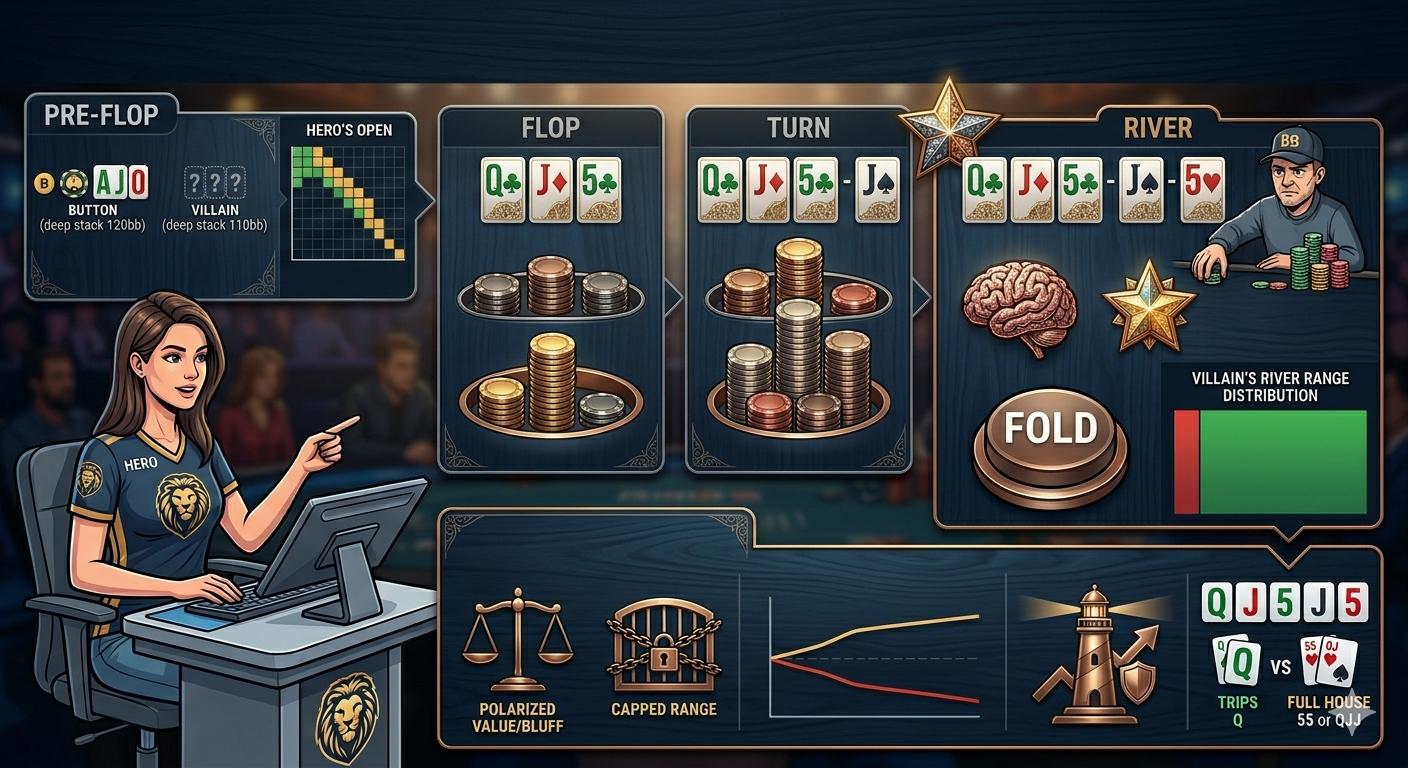
In Texas Hold'em tournaments, what truly determines the outcome is often not overall performance, but one or two pivotal hands. These hands may appear in the middle game or at the final table, but they share a common thread: they alter the chip structure, pressure distribution, and overall pace. Many players attribute wins and losses to "bad luck" in one hand, but the real focus of post-game analysis should be: Was the decision made in that hand reasonable? Was it executed with the right risk-EV balance? This article will analyze pivotal hands in tournaments to help you understand what decisions truly impact the entire game and how expert players avoid making fatal mistakes at crucial moments.

In Texas Hold'em tournaments, every hand at the Final Table is no longer just a simple chip battle, but a complex interplay of ICM pressure, prize jumps, and risk management. Many players become overly conservative at the final table, missing opportunities to attack; others become overly aggressive, collapsing when they shouldn't be taking risks. True masters precisely adjust every decision based on chip distribution, opponent coverage, prize structure, and range matchups. This article will analyze a key final table replay to fully understand how ICM influences advancement, calling, and folding, helping you understand what the optimal long-term strategy is in high-pressure situations.

In Texas Hold'em, going all-in is one of the most stressful and misused decisions in the game. Many players treat it as an emotional shortcut, shoving whenever a hand feels strong, or using all-in to escape more difficult decisions. Strong players don't think in terms of courage alone. They know when an all-in is a sound EV-driven decision and when it's simply turning a hand into an unnecessary high-risk mistake. Whether it's a preflop shove, a short-stack push-fold spot, a postflop protection line, or a fold-equity-driven pressure play, all-ins must be grounded in stack depth, opponent ranges, board texture, and overall line logic. This article explains when going all-in makes sense, when it doesn't, and how to avoid turning pressure into expensive errors. True masters aren't defined by whether they dare to go all-in, but by knowing when an all-in is a sound EV decision and when it simply turns the hand into a high-risk mistake. Whether it's pre-flop shove, short-stack push-fold, post-flop hand protection, or using Fold Equity to create pressure, all-in must be based on stack depth, opponent range, board texture, and overall strategy. This article will provide a comprehensive analysis of when to go all-in and when to avoid impulsively wiping out your entire stack, helping you make more precise and logical decisions in high-pressure situations.

In Texas Hold'em, many players don't lose because of strategy alone. They lose because of emotion. A bad beat, a misread, or a string of lost pots can destabilize an otherwise solid decision-making process, leading to reckless calls, unnecessary bluffs, revenge play, overaggression, or a complete loss of rhythm. This emotionally driven state is called tilt. Long-term winning players aren't those who never get angry or frustrated. They are those who recognize emotional escalation early, cool down quickly, and prevent one painful hand from turning into a losing session. This article explains what tilt is, how it damages EV (Earnings Per Second), and how to build a practical emotional control system that protects decision quality in high-variance poker environments. Truly consistently profitable players aren't those who never get angry or frustrated, but rather those who can promptly recognize and quickly cool down when emotions rise, preventing the negative emotions of one hand from escalating into losses for the entire session. This article will provide a comprehensive analysis of what Tilt is, how it undermines your EV, and how to build an actionable emotion management system to help you maintain composure and decision-making quality in highly volatile environments.
In Texas Hold'em, confidence itself isn't the problem. The real danger is overconfidence. Many players win a few hands, catch a couple of bluffs, or learn some theory, and then begin overestimating their judgment while underestimating opponent ranges and game complexity. The result is usually not stronger play, but a chain of costly mistakes such as overcalling, overbluffing, excessive hero calls, poor adjustments, and resistance to honest review. This article explains what overconfidence is, how it distorts your table decisions, and why long-term winners are not the most confident players, but those who know how to keep confidence within disciplined boundaries. This article will provide a complete analysis of what overconfidence is, how it distorts your judgment at the poker table, and why truly profitable players are not the most confident, but rather those who best control the boundaries of their confidence.

In Texas Hold'em, many players don't fail because they lack theory. They fail because, in real play, their thoughts become scattered, and their decisions turn emotional or random. Strong players make fast and accurate decisions not because they think faster in a raw sense, but because they follow a stable, repeatable decision-making process. From position, range, board texture, stack depth, and opponent type to bet sizing and EV evaluation, each factor is checked in a clear order. This article explains how strong players organize information quickly under pressure, prioritize the right variables, and make higher-quality decisions that lead to long-term profitability. This article will provide a complete analysis of how experts quickly organize information, prioritize tasks, and make higher-quality, more profitable practical choices within a limited timeframe.

In Texas Hold'em, one of the biggest reasons players misjudge their skill is result bias. Many people win a hand and assume they played correctly, or lose a hand and start doubting what was actually a high-EV decision. In reality, poker is a high-variance game, and the outcome of a single hand often says very little about decision quality. Strong players do not judge a hand by whether they won or lost. They judge it by the available information, range interaction, probabilities, and EV at the moment of decision. This article explains what result bias is, how it distorts learning and judgment, and how to build a long-term mindset that values decision quality over short-term outcomes. True masters don't judge a hand by wins or losses, but by information, scope, probability, and EV (Earnings Value). This article will provide a complete analysis of outcome bias, how it distorts your learning and judgment, and how to cultivate a long-term profitable mindset that prioritizes decision-making over outcomes.
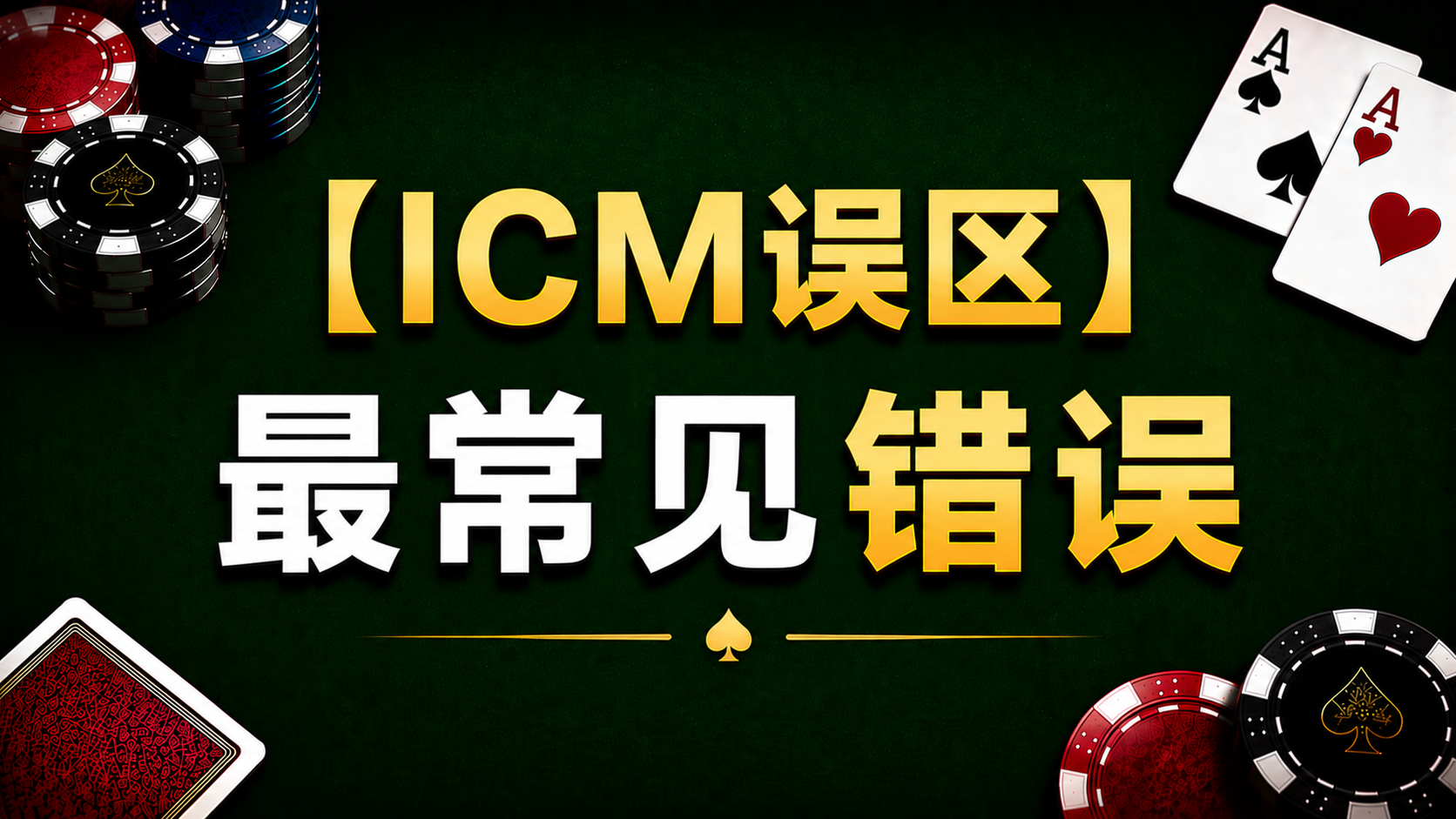
Many players have studied ICM (Independent Chip Management), yet still make mistakes during the bubble and at the final tables. The reason is often not a lack of mathematical understanding, but rather a misunderstanding of ICM. This article will summarize the most common ICM misconceptions, including being overly conservative, overly aggressive, ignoring the Risk Premium, and misjudging chip value.
Many players believe that 1000 chips always equals 1000 chips, but this isn't the case in tournaments. When prize structure and elimination risk are taken into account, the value of chips changes non-linearly. This article will fully analyze the principle of diminishing returns, the ICM effect, and why the value of winning 1 million chips is often less than the cost of losing 1 million chips.
Reaching the final table is the goal of every tournament player, but it's also one of the most impactful stages of the ICM (Intense Competition Management) period. Many decisions that are correct in the later stages can be completely wrong at the final table. This article will provide a comprehensive analysis of final table EV (Earnings Per Expectation), prize jumps, ICM pressure, and how professional players maximize their returns under high pressure.

The Push/Fold Chart is one of the most important tools for short-stacked players. When stacks are low, post-flop skill becomes less important, while the decisions to push or fold become crucial. This article will provide a complete analysis of the principles, reading methods, and practical application techniques of the Push/Fold Chart.
Many players believe that short stacks are only for waiting for good hands, but in fact, the short stack phase is one of the times in Texas Hold'em where precise mathematical calculations are most needed. When stacks are low, push/fold strategies are often more important than post-flop skills. This article will provide a complete analysis of short stack EV, push/fold logic, and the decision-making process of professional players.
Min Cash(最低獎金)是指德州撲克錦標賽中,玩家剛進入 ITM(In The Money,獎金圈)時可以獲得的最低名次獎金 例如,一場錦標賽前 100 名可以獲獎,而第 81 至第 100 名都獲得 $150,那麼 $150 就是該場比賽的 Min Cash Money Bubble 破裂後,所有剩餘玩家通常至少已經鎖定這筆最低獎金 不過,Min Cash 不一定代表實際盈利。若玩家使用多次 Re-entry、Rebuy 或 Add-on,總投入可能高於最低獎金。過度追求 Min Cash 也可能讓玩家在 Bubble 階段棄掉太多正 EV 機會,導致進入獎金圈後只剩極短籌碼,降低 Deep Run、Final Table 與冠軍機率 真正理解 Min Cash,需要同時分析 Buy-in、總投入、Payout Structure、ITM、Bubble、Pay Jump、ICM、ROI 與籌碼累積價值
Payout Structure(獎金結構)是指德州撲克錦標賽中,總獎池如何分配給不同最終名次的規則 獎金結構會決定多少玩家可以進入獎金圈、Min Cash 金額、各名次之間的 Pay Jump,以及冠軍能獲得多少比例的總獎池。常見類型包括 Top-Heavy Payout(頭重型獎金結構)、Flat Payout(平坦型獎金結構)、Satellite 的等值門票結構,以及 Winner-Take-All 等形式 Payout Structure 不只影響最終獎金,也會直接改變 ICM、Risk Premium、Bubble Strategy、Final Table Strategy、ROI 與 Variance。同樣的籌碼、手牌與位置,在不同獎金結構下,最佳決策可能完全不同 真正理解 Payout Structure,不只是查看冠軍獎金,而是分析整體獎金分布如何影響每個賽事階段的籌碼價值與風險門檻
Heads-Up(簡稱 HU)是德州撲克中僅剩 兩位玩家 對戰的牌局形式,也是錦標賽冠軍誕生的最後階段 由於場上只有兩名玩家,起手牌範圍(Range)、位置(Position)、盲注壓力(Blind Pressure) 與 侵略性(Aggression) 都會與多人桌完全不同。許多在 Full Ring 或 6-Max 屬於棄牌的手牌,在 Heads-Up 中反而可能成為標準 Open 或 Value Bet 真正理解 Heads-Up,不只是知道「剩兩個人」,更需要理解 Position、Range Advantage、ICM、Exploit、Bet Frequency 與心理對抗 等概念
Final Table(決賽桌)是德州撲克錦標賽最後剩餘玩家共同競爭冠軍的階段,也是整場比賽 獎金最集中、ICM 影響最大 的時刻之一 多數 MTT 在剩下 9 位(部分賽事為 8 位) 玩家時進入 Final Table。雖然所有玩家都已經進入獎金圈,但每淘汰一位玩家,都可能迎來一次 Pay Jump(獎金跳級),因此策略與一般牌局有明顯不同 真正理解 Final Table,不只是知道「進入最後一桌」,更需要理解 ICM、Pay Jump、Risk Premium、Stack Distribution、Heads-Up 與冠軍 EV 如何影響每一次決策
ITM 是 In The Money 的縮寫,中文通常稱為「進入獎金圈」或「獲得獎金」。當玩家在德州撲克錦標賽中的最終名次進入官方獎金分配範圍,就代表成功 ITM 例如,一場錦標賽共有 1,000 名玩家,前 150 名可以獲得獎金,只要玩家最終排名第 150 名或更高,就屬於 ITM。剛進入獎金圈所獲得的最低獎金通常稱為 Min Cash ITM 是衡量錦標賽穩定性的重要數據,但不能單獨代表玩家是否盈利。玩家即使擁有很高的 ITM Rate,也可能因多數成績只是 Min Cash 而缺乏長期 ROI;相反地,部分高波動玩家的 ITM Rate 較低,但依靠 Final Table 與冠軍成績仍可能取得更高獲利 真正理解 ITM,需要同時分析 Bubble、Payout Structure、ICM、ITM Rate、ROI、Average Buy-in 與深度晉級能力