




Texas Hold'em Poker Tutorial Articles
Poker Position Strategy provides an in-depth analysis of how positional advantage influences Texas Hold'em decision-making. Through hand analysis, it explains the differences in range, strategy adjustments, and EV (Effective Value) across different positions, helping you improve your overall win rate.
Poker Position Strategy It is one of the most underrated yet most influential core advantages in poker.
Many players focus on card strength but overlook the fact that "position" itself is a form of information and control.
When you understand positional advantage, you'll find that the same hand has completely different value depending on your position.
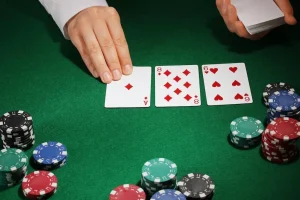
→ Is my hand strong or not?
→ Should we fight?
But the real question is: how should I play from this position?
Key takeaway: Poker Position Strategy = Creating information and control advantage through "action sequence"
The essence of location lies in:
→ Late Position has more information
→ Can be the last to act.
→ Easier to control the pot and make decisions
A favorable location can directly amplify the quality of your decision-making.
Hand situation review
1. You hold K♣ J♣
Scenario A: You are in the UTG (front position)
→ Need to face most players
→ Action comes first, information is minimal
Scenario B: You are in the BTN (post-position)
→ Almost the final action
→ All actions have been observed
The same hand can require completely different strategies depending on your position.
Incorrect thinking: Only look at the strength of the hand, not the position.
Many players will:
→ If you think KJ is good, then play.
→ Ignore whether you are in the front or back position
→ No adjustment strategy
This can lead you to invest too many chips when you are at a disadvantage.
Correct thinking: Location determines the strategic range.
Different ranges should be used for different locations:
→ Front position (UTG): Tight Range
→ Median (MP): Medium range
→ BTN (Browser Tolerancing): Width
The later your position, the more cards you can play.
Three major advantages brought by location
1. Information Advantage
→ Observe the opponent's actions before making decisions.
2. Control Advantage
→ You can choose to bet or check to control the pot.
3. Pressure Advantage
→ Can put more pressure on the opponent
How does position influence betting decisions?
In the latter position:
→ It's easier to do Bluff (because there's information available).
→ Easier to make thin value bets
→ Allows for more flexible strategy adjustments
In front position:
→ Must be more conservative
→ Easily subject to betting increases or suppression
→ High decision-making risk
Location directly affects your EV.
Advanced concept: Combining position with betting strategy
Experts will combine location with Line:
→ Backcourt: More proactive offense
→ Front position: More control and defense
→ Design different three-street plans based on location
Location is not a single factor, but rather the core of the overall strategy.
Common location errors
→ Playing too many marginal cards in early position
→ Insufficient offense in the backcourt
→ Ignore opponent's position
These mistakes will cause you to lose the advantages you should have had.
How to make good use of position in actual combat?
→ Adjust your starting hand range based on position
→ Increase offensive frequency in the back position
→ Reduce risk by being in the front line
→ Practice observing the opponent's position and actions
Core Decision Conclusions
Location is not a bonus, but rather the foundation that determines whether your strategy is correct.
When you truly grasp the advantages of your position, every decision you make becomes simpler and more accurate.
Advanced Thinking Review: From "Knowing How to Play Cards" to "Making the Right Decisions"
When you stop just looking at your own hand, what truly sets you apart is how well you understand Range, EV, Blocker, position, and overall betting strategy.
The following advanced thinking methods are key to most players' progress from "occasionally getting it right" to "long-term stable profitability":
[Range Thinking] How to truly apply Range thinking in actual gameplay? Hand review and analysis.
[River Decision Making] How does the Blocker influence River's calling, raising, and folding? Strategy Breakdown
[Result Bias] EV vs Result: Why did we still lose even when we bet correctly? Retrospective Analysis
[Bluff Core] What constitutes proper Bluff? Hand replay analysis
[Semi-Bluff Timing] When is the most profitable time to use a semi-bluff? Strategy Analysis
[Bet Line] How to construct a complete betting line? Practical analysis and review.
[Position Advantage] Why does position directly influence your every decision? Hand Analysis
[SPR Application] How does SPR affect your playing style and pot planning? Strategy Analysis
[Vulnerability Analysis] How to identify vulnerabilities in an opponent's Range vulnerability? Post-mortem analysis and breakdown.
[Marginal Hands Problem] Why do expert players rarely play marginal hands? Decision Analysis
【Lập kế hoạch ba vòng cược】Làm sao thiết kế chiến thuật cho flop, turn và river? Phân tích thực chiến trong poker
[Fold Equity Pressure] How to Create Fold Equity? Hand Replay Analysis
[Area Contraction] How to analyze the process of the opponent's area being compressed? Strategy breakdown
[Strategy Selection] Balance vs. Exploit: Which to Choose in Practice? Retrospective Analysis
[Long-Term Profitability] How to Train a Long-Term EV Mindset? Decision Model Analysis
The biggest difference between advanced players and casual players isn't remembering more terminology, but rather the ability to integrate range, EV, position, blocking cards, and betting lines in every decision. Through these advanced thought processes, you can gradually build a more complete Texas Hold'em decision-making framework.
Extended Reading for Teaching
Hand resumption
[Review Methods] How do professional players review their hands?
Hand resumption
[Long-term planning] How to build a long-term profit strategy?
Hand resumption
[Strategy Selection] GTO vs Exploit: Which to choose in actual gameplay?
Hand resumption