




Texas Hold'em Poker Tutorial Articles
Poker Range Narrowing Strategy: In-depth analysis of how to gradually compress your opponent's range through actions and hand dynamics, improving decision-making accuracy and long-term EV, and creating a strategy system with a higher win rate.
Poker Range Narrowing Strategy It is the core capability to gradually compress the opponent's "possibility space" into a predictable range.
Many players only look at a single action, but skilled players will continuously narrow down their opponent's range by using information from every street.
When you can accurately track the range contraction process, your decisions will be closer to certainty.
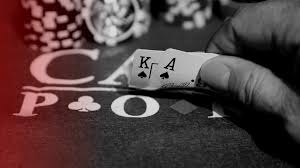
→ Does he have this hand?
→ How strong is he really?
But the real question is: what's left of his Range now?
Core conclusion: Poker Range Narrowing Strategy = Eliminating the impossible step by step through action.
Every action changes the range:
1. Raising → Favoring strong hands or specific hand structures
2. Call → Keep medium-strength hands and some draws
3. Discard → Exclude the entire range
Your task is to continuously narrow down this scope.
Hand situation review
1. You hold A♣ J♣ in BTN
2. The opponent is defending at BB.
3. Flop: K♦ 9♠ 4♣, you c-bet, your opponent calls.
4. Turn: 2♠, opponent calls again.
The question is: What cards might the opponent still have?
Incorrect thinking: Staying at the original range
Many players will:
→ Always use the forward range to determine
→ No updates
→ Ignore the changes brought about by the action
This will cause your judgment to be seriously inaccurate.
Correct thinking: Shrink the range street by street
Call after the flop:
→ Keep Kx, 9x, draw cards, and some air.
Turn and call again:
→ The proportion of strong hands has decreased (fewer slowplays).
→ Increased proportion of medium-sized cards
→ The draw still exists
The range is gradually shrinking and shifting towards a specific structure.
Three key sources of range shrinkage
1. Action
→ Raising, calling, and checking will all change the Range.
2. Board
→ New cards may affect possible combinations
3. Frequency
→ Some actions will not be performed with all cards.
How can we use Range to shrink?
When you discover:
1. Opponent's Range is relatively weak → Increase Bluff
2. Competitor range is relatively concentrated → Allows for precise value analysis.
3. Opponent lacks certain strong cards → Apply pressure.
You don't need to guess the cards, you just need to understand the structure.
Advanced concept: Range contraction = information advantage
When Range is compressed:
→ Reduced uncertainty
→ Improved decision-making accuracy
→ Can execute strategies with greater confidence
This is one of the reasons why expert traders can consistently make profits.
Common errors
→ Range not updated
→ Over-guessing a single hand
→ Ignore opponent's behavior patterns
These will keep your analysis superficial.
How to improve Range contraction ability in actual combat?
→ Reassess the Range for each street
→ Practice eliminating impossible combinations
→ Record the frequency of opponent's behavior
→ Focus on Range changes during debriefing
Core Decision Conclusions
Poker is not about guessing what your opponent has, but about eliminating what they can't possibly have.
Once you master Range contraction, your judgment will transform from vague to precise.
Advanced Thinking Review: From "Knowing How to Play Cards" to "Making the Right Decisions"
When you stop just looking at your own hand, what truly sets you apart is how well you understand Range, EV, Blocker, position, and overall betting strategy.
The following advanced thinking methods are key to most players' progress from "occasionally getting it right" to "long-term stable profitability":
[Range Thinking] How to truly apply Range thinking in actual gameplay? Hand review and analysis.
[River Decision Making] How does the Blocker influence River's calling, raising, and folding? Strategy Breakdown
[Result Bias] EV vs Result: Why did we still lose even when we bet correctly? Retrospective Analysis
[Bluff Core] What constitutes proper Bluff? Hand replay analysis
[Semi-Bluff Timing] When is the most profitable time to use a semi-bluff? Strategy Analysis
[Bet Line] How to construct a complete betting line? Practical analysis and review.
[Position Advantage] Why does position directly influence your every decision? Hand Analysis
[SPR Application] How does SPR affect your playing style and pot planning? Strategy Analysis
[Vulnerability Analysis] How to identify vulnerabilities in an opponent's Range vulnerability? Post-mortem analysis and breakdown.
[Marginal Hands Problem] Why do expert players rarely play marginal hands? Decision Analysis
【Lập kế hoạch ba vòng cược】Làm sao thiết kế chiến thuật cho flop, turn và river? Phân tích thực chiến trong poker
[Fold Equity Pressure] How to Create Fold Equity? Hand Replay Analysis
[Area Contraction] How to analyze the process of the opponent's area being compressed? Strategy breakdown
[Strategy Selection] Balance vs. Exploit: Which to Choose in Practice? Retrospective Analysis
[Long-Term Profitability] How to Train a Long-Term EV Mindset? Decision Model Analysis
The biggest difference between advanced players and casual players isn't remembering more terminology, but rather the ability to integrate range, EV, position, blocking cards, and betting lines in every decision. Through these advanced thought processes, you can gradually build a more complete Texas Hold'em decision-making framework.
Extended Reading for Teaching
Hand resumption
[Review Methods] How do professional players review their hands?
Hand resumption
[Long-term planning] How to build a long-term profit strategy?
Hand resumption
[Strategy Selection] GTO vs Exploit: Which to choose in actual gameplay?
Hand resumption