




What is a Texas Hold'em pot? This article explains the concepts of Texas Hold'em pot, effective stack, and SPR to help players understand stack depth and decision-making strategies.
In Texas Hold'em, betting is not just an action, but the core of decision-making. This article delves into the three betting objectives in Texas Hold'em: value bluff, semi bluff, and more, helping you determine when to take value, when to apply pressure and force concede, and in what situations a semi bluff is appropriate. Through simple and clear judgment logic, you will learn to define your goals before each bet, progressing from "playing by feel" to "making strategic decisions," effectively reducing errors and improving long-term profitability.

In Texas Hold'em, checking, calling, and raising are not just basic actions, but also the core language for players to communicate. This article will analyze the true meaning of check-call-raise in Texas Hold'em, helping you understand the purpose behind each action—whether it's controlling the pot, extracting value, or putting pressure on your opponents. Through behavioral logic and situational analysis, you will learn to progress from simply "watching the actions" to "reading the intentions," making every decision more informed and improving overall stability and profitability.

In Texas Hold'em, understanding your opponents' types is more important than simply reading their hands. This article will guide you to quickly develop player classification skills, identifying four common player types (Nit, TAG, Station, Maniac) through two main dimensions: "tight or loose" and "passive or aggressive," and teaching you corresponding practical strategies. You don't need precise hand reading; simply classifying your opponents will effectively reduce mistakes, improve decision-making consistency, and make each hand more logical and profitable.

In Texas Hold'em, the Hero Call is one of the most classic decision-making processes, both highly esteemed and easily misused. Many people see a skilled player with a seemingly weak hand call a large bet on the River and still manage to bluff, concluding that a Hero Call relies on guts, intuition, or the ability to read opponents. However, a truly high-quality Hero Call is never as simple as "I feel he's bluffing." It's built upon range analysis, betting patterns, pot odds, blockers, opponent tendencies, and overall bluff density. This article will provide a complete analysis of the most classic hand reading and calling decisions, explaining when a Hero Call is high EV and when it's merely emotional bravado.
In Texas Hold'em, an epic bluff may seem like the ultimate display of courage, momentum, and psychological warfare, but a truly successful high-risk bluff is never simply about "daring to play." A viable bluff must simultaneously possess a reasonable range representativeness, a clear betting path, sufficient fold equity, a suitable blocker, and the opponent's genuine ability to fold a medium-to-strong hand. Many players only see expert players making large bluffs on the River, but they overlook the fact that every flop and turn beforehand is actually setting the stage for a story. This article will provide a complete analysis of how high-risk bluffs succeed, helping you understand that a true epic bluff is not reckless, but a high-EV operation executed precisely using range, board presence, and pressure.

In Texas Hold'em, all-in reversals are the most emotionally draining for players because you were leading at showdown, but a single turn or river card can change the outcome. Many players immediately interpret this as "I got screwed over," "My opponent played recklessly and still won," or "Should I have gone all-in?" However, a true hand review shouldn't just look at who won at the end, but rather go back to the win rate, stack depth, opponent range, and decision EV at the moment of the all-in. A reversal doesn't necessarily mean you made a mistake, and being reversed doesn't mean your decision was wrong. This article will use classic all-in reversal scenarios to fully analyze how win rate changes with the board, why the result cannot be used to deduce the decision, and how to view reversal hands with a long-term EV mindset.
In Texas Hold'em, many players believe their greatest advantage lies in "reading" opponents, but the real problem is that misreading can often have worse consequences than not reading at all. The most common forms of misinterpreting opponent behavior include over-reliance on rhythm, facial expressions, betting speed, unusual sizing, or directly translating a single action as "he must be weak" or "he must be strong." True masters don't take a single surface signal from an opponent as a complete conclusion; instead, they analyze behavior, position, board presence, betting patterns, player type, and range structure together. This article will fully analyze the impact of misinterpreting opponent behavior, how it undermines your judgment, and how masters avoid turning reading into misreading.

In Texas Hold'em, many players treat position as an add-on, believing that a good hand and strong skill are enough to compensate for a less-than-ideal position. However, the real issue is that position isn't a minor detail; it's the underlying structure of the entire decision-making system. Whether you're in early or late position directly impacts your starting hand range, risk tolerance, bet sizing, bluffing frequency, pot control, and overall EV. Ignoring position isn't just about making the game more difficult; it leads to consistently making low-quality decisions in situations with insufficient information, limited action, passive following, and challenging post-flop situations. This article will fully analyze the consequences of ignoring position and how expert players truly translate positional advantage into long-term profitability.

In Texas Hold'em, Game Theory (GTO) and exploit are often presented as opposites. One side emphasizes theoretical optimal play, balance, and protection against counter-strategies. The other focuses on targeting opponent leaks and maximizing real-world profit. Many players eventually reach a stage where they feel stuck between the two: should they follow GTO more closely, or deviate hard to exploit mistakes? In reality, strong players do not treat this as a strict either-or decision. They use GTO as a baseline and deviate when the situation clearly rewards it. This article explains the core differences between GTO and exploit, the strengths and weaknesses of each approach, and how to choose the most profitable strategy in real games based on opponents, information, and table conditions. In fact, true masters don't choose between the two, but rather know when to use GTO as a base and when to proactively deviate to capitalize on the opponent's mistakes. This article will fully analyze the core differences between GTO and Exploit, their respective advantages and disadvantages, and how to make the most EV strategy choice in actual gameplay based on the opponent, available information, and the game environment.
In Texas Hold'em, many players believe that learning a standard strategy is enough to handle everyone. But long-term profitability doesn't come from playing every hand perfectly balanced. It comes from adjusting precisely to different player types. That is the essence of exploit strategy: when opponents are too tight, too loose, too passive, too aggressive, or overly predictable in certain lines, you don't need to remain neutral. You should actively target their leaks and build your strategy around their mistakes. This article explains what exploit strategy is, outlines the most common player types, and shows how to adjust your value betting, bluffing, 3-betting, check-raising, and river decisions to create a more profitable and stable poker system. This is the core of Exploit Strategy: when your opponent is tight, loose, overly passive, overly aggressive, or even has obvious betting habits, you don't need to follow the textbook. Instead, you should actively amplify their weaknesses and direct your strategy directly at their mistakes. This article will provide a complete analysis of what Exploit Strategy is, what common player types exist, and how to adjust Value, Bluff, 3-bet, Check-Raise, and river decisions based on different opponents to build a higher EV and a more stable profit system.
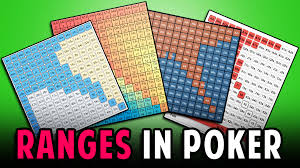
In Texas Hold'em, true hand reading isn't about guessing the exact two cards your opponent holds. It's about using position, actions, board texture, and betting lines to eliminate unlikely combinations until the opponent's range becomes clearer. This process is called range narrowing. Strong players don't begin with "he must have this exact hand." They begin with "what hands he reasonably could have," and then refine that range after every raise, call, check, and new board card. This article explains how to narrow ranges step by step so your reads become more accurate, your decisions more logical, and your long-term EV more stable. This article will provide a complete analysis of how to understand your competitors' range step by step, enabling you to make more accurate judgments, more logical decisions, and improve long-term EV and profitability stability.

In Texas Hold'em, many players focus solely on the strength of their own hand, but strong players also consider whether their cards are blocking key combinations in an opponent's range. That's the core concept of blockers. A blocker doesn't directly strengthen your hand, but it alters the likelihood that your opponent holds certain value hands, draws, or calling combinations, significantly influencing bluffing, value betting, calling, and folding decisions. Especially on the turn and river, blockers often become one of the most crucial factors in deciding whether to fire a final barrel. This article explains what blockers are, how they affect range analysis and betting logic, and why blocker awareness is essential for advanced poker decision-making. Blockers don't directly strengthen your hand, but they alter the probability of your opponents having strong hands or draws, thus influencing bluff, value, call, and fold decisions. Especially in Turn and River betting, blocks often become crucial in determining whether or not to fire the final shot. This article will provide a complete analysis of what blocks are, how they affect range judgment and betting logic, and why blocks are an essential tool for advanced players.
Check-raise is one of the most powerful and high-pressure moves in Texas Hold'em. While many players respond to bets with calls or folds, strong players know when to fight back. A well-timed check-raise can shift initiative, reshape range dynamics, and put opponents in extremely difficult situations. It is not only a tool for strong hands but also a key weapon for bluffs and semi-bluffs. This article explains when to check-raise, how to construct a balanced raising range, and how to use board texture, position, and opponent tendencies to execute profitable counterattacks. This article will analyze when check-raise is appropriate, how to construct a reasonable counter-attack range, and how to utilize the board, position, and opponent's tendencies to make your counter-attack both persuasive and have long-term EV.

Many players develop a "go all-in" mentality at cash games, but in tournaments, ICM pressure often turns this mindset into a disaster. When the risk of elimination impacts the potential winnings (EV), even a lead in equity isn't necessarily worth the risk. This article will provide a comprehensive analysis of the mathematical logic behind ICM pressure, Risk Premium, and the All-in decision.
The bubble phase is one of the most crucial stages in Texas Hold'em tournaments. At this point, only one player is left to claim the prize, and ICM pressure reaches its peak. Many hands that would normally require a call may have to be folded during the bubble phase. This article will provide a comprehensive analysis of the mathematical logic behind the bubble phase, ICM pressure, and optimal decision-making models.
Many players, after understanding EV (Earnings Per Expectation), believe that positive EV decisions are always correct. However, in tournaments, the existence of ICM (Independent Transaction Management) changes everything. Some decisions that are profitable from a Chip EV perspective can result in huge losses from an ICM perspective. This article will fully analyze the differences between EV and ICM, and why professional players often forgo seemingly correct all-in moves at the final table.

The Independent Chip Model (ICM) is one of the most important mathematical models in Texas Hold'em tournaments. Many cash game players new to tournaments often mistakenly believe that chip value is always the same, but in tournaments, chips are not of equal value. This article will provide a complete analysis of the basic concepts of ICM and why decisions with the same EV can be completely different in tournaments.

Many people think Bluff is just math, but advanced Bluff actually combines psychology and probability. Professional players don't just calculate Fold Equity; they also analyze their opponent's emotions, fears, stress, and decision-making habits. This article will provide a complete analysis of how Bluff incorporates psychological warfare to create higher success rates and EV.
Bubble Boy(泡沫出局者)是指德州撲克錦標賽中,在獎金圈前最後一位被淘汰的玩家 例如一場比賽共有 100 位玩家,前 15 名可獲得獎金,第 16 名遭淘汰時,就被稱為 Bubble Boy 由於只差一步便能進入 ITM(In The Money),因此 Bubble Boy 往往是錦標賽最令人惋惜的位置之一 不過,成為 Bubble Boy 並不一定代表玩家犯了錯誤。若當時的 All-in 或跟注屬於長期正 EV 的決策,即使最後遭遇 Bad Beat 或 Cooler 出局,依然可能是正確的打法 真正需要分析的是 ICM、Risk Premium、Bubble Factor 與當時的牌局資訊,而不是只根據結果判斷決策是否正確
Bubble(泡沫期)是德州撲克錦標賽中,距離進入獎金圈(In The Money, ITM)只差最後幾位淘汰者的階段,也是整場比賽策略變化最大的時刻之一 在 Bubble 期間,玩家除了考慮 Chip EV(籌碼 EV),更必須考慮 ICM(Independent Chip Model)、Risk Premium(風險溢價)、Bubble Factor(泡沫係數) 與自己的 Stack Size(籌碼量) 許多在一般情況下可以跟注的牌,在 Bubble 可能因淘汰風險而必須棄牌 真正理解 Bubble,不只是知道「快進獎金圈了」,而是理解不同籌碼量、不同位置與不同對手,在 Bubble 所承受的壓力完全不同
Satellite(衛星賽/資格賽)是德州撲克錦標賽的一種特殊形式,玩家並非競爭現金獎金,而是爭奪 大型錦標賽的參賽資格(Seat 或 Ticket) 與一般 MTT 不同,Satellite 的目標不是累積最多籌碼或爭取第一名,而是成功取得門票即可。因此,Satellite 的策略高度受到 ICM(Independent Chip Model) 影響,尤其在 Bubble 階段,許多 Chip EV 看似正確的決策,可能因為 Seat 的固定價值而變成錯誤 理解 Satellite、Seat、Target Stack、Bubble、Risk Premium 與 ICM,是所有錦標賽玩家的重要能力
Add-on(增購/加購籌碼)是指玩家在錦標賽指定時間點,支付額外費用購買更多比賽籌碼的機制 Add-on 最常出現在 Rebuy Tournament(重買賽)中,通常安排於 Rebuy Period 結束、第一次休息或 Late Registration 關閉時。與 Rebuy 不同,Add-on 通常不要求玩家籌碼歸零或低於特定數量,只要仍在比賽中,便可能具備購買資格 判斷 Add-on 是否值得,不能只看能否增加籌碼,而應比較 Add-on 費用、獲得籌碼數量、當前盲注、平均籌碼、每單位籌碼成本、獎池結構與自己的 Bankroll。部分 Add-on 提供的籌碼價格明顯優於初始 Buy-in,通常具有較高賽事價值;但若價格過高、增加的籌碼太少或已超出預算,也不一定需要購買
Rebuy(重買/重新買入)是指玩家在錦標賽規定的 Rebuy Period(重買階段)內,符合指定條件時,可以支付額外費用購買更多比賽籌碼 與 Freezeout(凍結賽)不同,Rebuy 賽事允許玩家在輸光籌碼後繼續參賽,部分賽事也允許籌碼低於起始數量時提前重買。與 Re-entry(重新參賽)不同,Rebuy 通常是在原有參賽資格與座位中補充籌碼,而不是被淘汰後重新建立一個新的 Entry Rebuy Period 內,由於玩家仍有補充籌碼的機會,牌局通常較鬆、All-in 頻率較高,部分玩家也會採取更高 Variance 的累積籌碼策略。重買階段結束後,賽事通常轉為 Freezeout 結構,籌碼歸零便正式淘汰,因此策略也需要明顯調整