




Texas Hold'em Poker Tutorial Articles
Poker Epic Bluff Hand Review analyzes the core logic behind successful high-stakes bluffs in Texas Hold'em. This article breaks down how epic bluffs are executed, examining range, board position, blockers, betting patterns, and the Fold Equity.
Poker Epic Bluff Hand Review This is one of the most exciting, yet most easily misunderstood, types of cases in Texas Hold'em hand debriefing.
Many players' first reaction when they see a high-risk bluff succeed is "This person is really brave," but a truly epic bluff is never based on mere courage.
The essence of high-risk bluffing is to use a complete, credible betting line that represents a strong hand to convince your opponent that continuing to pay out is no longer worthwhile.
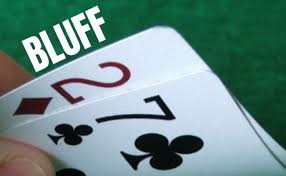
1. Why do some skilled players dare to release super-large bluffs on the River?
2. Is high-risk Bluffing simply a matter of courage, or is it supported by logic?
Key takeaway: Poker Epic Bluff Hand Review = High-risk Bluff success relies on a believable story, not just sheer courage.
The essence of Epic Bluff:
1. You can represent a sufficiently strong range of values.
2. Your betting strategy is consistent throughout.
3. The opponent holds a medium-strong hand that can be forced to fold.
4. You have enough Blockers and Fold Equity to support this.
A truly successful high-risk bluff isn't about "I dare to fight," but about "the opponent having reason to believe I really have it."
What is Epic Bluff?
Epic Bluff
1. This refers to successfully forcing out better cards with weak or even worthless cards in a high-pressure, high-cost, and high-risk situation.
2. This usually happens during a turn or river, especially when the opponent has already invested a significant amount of chips.
3. The key to success is not size, but a credible route, a reasonable range, and the opponent actually being able to fold.
Epic Bluff may look like an adventure, but the best version is actually a carefully crafted pressure-based decision-making process.
What conditions are required for a high-risk bluff to succeed?
1. You can reasonably represent a strong hand.
→ Your front position, flop action, turn continuation, and river size must all be believable.
2. The opponent has enough disposable space.
→ If your opponents are all left with strong hands or players who won't fold, even a beautiful bluff is unlikely to be profitable.
3. You hold a key blocker
→ Blocking the opponent's strongest value combination increases the success rate of Bluff.
4. The betting route must be consistent throughout.
→ A good Bluff doesn't just suddenly start playing in the River; it's built up from every street before it begins.
The key to success in Epic Bluff is not how big your bet is, but how complete your story is.
Classic practical scenarios
1. You open on the BTN, and the BB calls.
2. Flop: A♠ 10♠ 6♦, you hold K♠ Q♦
3. You C-bet, BB calls.
4. Turn: 4♣, your second shot, BB follows up.
5. River: 9♠, BB checks, you choose a high-ranking bluff.
Question: If you didn't make a hand, why might a high-risk bluff here have the potential to succeed?
Misconception: I didn't win, so I can only rely on my courage to play recklessly.
Many players will:
→ Feeling like they're nothing but air, River's big fight is purely adventurous.
→ Only focusing on your own failures, without considering whether you blocked key strong hands.
→ Ignore whether the previous betting lines have established representativeness for A-high, strong Ax, flush, and high-pressure values.
As a result, you will see a structured bluff as simply a gamble; you will also mistakenly believe that many situations where you shouldn't bluff are acceptable as long as you dare to do it.
Correct thinking: This isn't about brute force, but about using Blockers and routes to apply pressure.
In this context:
→ BTN opening hand inherently represents a large number of Ax, high-card and strong flush combinations.
→ Flop and Turn betting allows your line to represent a strong AX or sustained pressure range.
→ River plays the third spade, and your king (K♠) blocks some high flush combinations, making your bluff more reasonable.
→ After calling on the first two streets, there are still likely to be a lot of pairs of Aces, Tx, weak flushes, and medium-strong hands, which will be very difficult to handle against large hands.
Conclusion: The key to this Bluff's success is not that you suddenly become very brave, but that your position, route, River card, and Blocker together make the story believable.
Epic Bluff's Three Core Principles
1. First ask yourself what value you represent.
→ If you don't have a reasonable strong hand, even a big bluff is hard to be reliable.
2. First ask your opponent if they can fold.
→ High-risk bluffs are most afraid of hitting players who won't give up.
3. First ask yourself if your candidate cards are good enough.
→ A Bluff with Blockers, route extensions, and key blocking markers has more potential than just randomly attacking in thin air.
High-risk Bluff most common mistakes
→ Mistaking large size for high-quality Bluff
→ Without a value structure to support it, yet still trying to tell a story
→ Make complex bluffs against players who won't fold
→ River was only decided on at the last minute, and the previous route was completely different.
The biggest reason for failure in Epic Bluff is not a lack of courage, but rather a failure to lay a solid foundation for the story beforehand.
Advanced strategies: Bluff × Blocker × Line × Fold Equity
Experts' Gathering:
→ First, determine which strong hands your line represents.
→ Use Blocker to select the most suitable candidate card to fire.
→ Determine whether he can truly fold a medium-to-strong hand based on the type of opponent.
→ Build credibility by following the entire betting path, rather than just scaring people with the final shot.
A truly sophisticated bluff is not about making nothing seem like something terrible, but about making weak cards seem like legitimate strong cards.
Core Decision Conclusions
An epic bluff in Texas Hold'em is not achieved through a moment of courage, but through a combination of position, range, board, blocker, opponent type, and betting strategy.
When you truly understand high-risk bluffing, you'll stop just envying others' daring to bluff, and start to understand: is there really a story, a range, and room for your opponent to fold behind that shot? A truly successful bluff isn't about making yourself look like a crazy player, but about making your opponent rationally feel that continuing to pay up is not worthwhile.
Classic Case Study: Learning Decision-Making Essence from a Key Hand
Some hands are considered classic not because of the outcome, but because of the decision-making logic and way of thinking they embody.
These examples will give you a more intuitive understanding of the key choices made in high-level games:
[Classic Reversal] All-in Reversal Hand Analysis
How does one successfully achieve a high-risk bluff in the "Epic Bluff"?
【Hero Call】The most classic card reading and calling decision
[Final Table Key] Final Table: A First-Hand Review
[Turning Point of the Game] A single hand that changed the outcome of the match.
[The Key to Collapse] Why does a single hand turn you from a leader into an out?
[Key to the Championship] How does the final move determine the outcome?
[Long-Term EV] Why do expert players not care about winning or losing?
The value of classic hands lies not in the outcome, but in the decision-making process. By reviewing these key cases, you can quickly absorb the thinking methods of high-level players and apply them to your own gameplay.
Extended Reading for Teaching
Hand resumption
[Review Methods] How do professional players review their hands?
Hand resumption
[Long-term planning] How to build a long-term profit strategy?
Hand resumption
[Strategy Selection] GTO vs Exploit: Which to choose in actual gameplay?
Hand resumption