




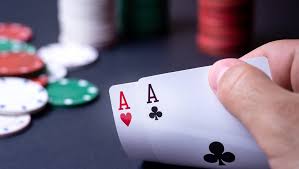
In Texas Hold'em, the place where many players truly lose a lot of money isn't pre-flop or the flop, but the last street. Even though they can calmly assess the situation up to the flop, they suddenly don't want to fold on the river, always thinking, "He might be bluffing," "I've already called this far," or "This hand doesn't look too bad." This is the classic "not folding" flaw. Its biggest problem isn't occasionally getting hit by a value bet, but repeatedly making low-quality payments on the most expensive, most polarized, and most precise-judgment-required street. This article will fully analyze why many people always lose on the last street, the psychological and strategic reasons behind their inability to fold, and how expert players use range, pot odds, blockers, betting lines, and opponent tendencies to make truly high-quality river folds or river calls.
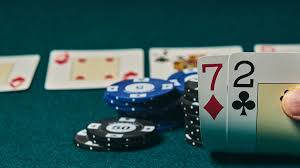
In Texas Hold'em, many players believe that simply daring to bluff and apply pressure signifies an advanced playing style. However, the real issue is that more bluffing isn't necessarily better. When your bluffing frequency exceeds a reasonable range, your overall strategy begins to unbalance. The biggest cost of over-bluffing isn't just getting caught, but continuously giving away valuable experience (EV) that could be preserved on the wrong boards, against the wrong opponents, and on the wrong lines. True masters aren't those who don't bluff, but those who know which situations warrant bluffing, which candidate hands are good enough, which opponents will fold, and when to fold. This article will fully analyze the costs of over-bluffing, how it disrupts your overall strategic structure, and how to build a more balanced, EV-enhancing pressure strategy.
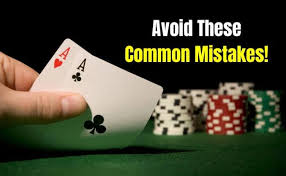
In Texas Hold'em, many players' biggest mistake isn't playing too aggressively, but rather playing with too much reluctance to give up. As long as there's a sliver of hope, as long as they feel their opponent might be bluffing, as long as they've already invested some chips, they can't resist calling all the way to the end. This is overcalling. It doesn't seem like a big mistake because each call is just "adding a little more," but the truly dangerous part is that this low-quality payout will bleed you out over the long term, slowly giving away potential earnings that could have been preserved. This article will provide a complete analysis of why constantly calling will make you lose money, in which situations calling is actually unreasonable, and how expert players make higher-quality continuation or folding decisions based on range, odds, blockers, and opponent's lines.
Long-term EV Poker Strategy is one of the core mental models in Texas Hold'em, determining whether a player can achieve consistent profitability. Through the concept of Expected Value (EV), players should evaluate each decision based on long-term average returns, rather than short-term results. This article uses real-world hand analysis to explain how to distinguish between correct decisions and short-term wins and losses, and analyzes the impact of volatility on outcomes. When players can develop a long-term EV mindset, focusing on the quality of decisions rather than the results, they will achieve stable and consistent profitability.
Balance vs. Exploit Poker Strategy is a core issue in advanced Texas Hold'em decision-making. A balanced strategy (GTO) avoids being targeted by opponents, while an exploit strategy maximizes the exploitation of opponent weaknesses. This article uses real-world hand analysis to explain how to choose the appropriate strategy based on opponent type, and analyzes when to maintain balance and when to deviate to exploit weaknesses. When players can flexibly switch between these two strategies, they can maintain stable and efficient profitability across different opponents and environments.
In Texas Hold'em, many players know when to bet, but not how much to bet. Bet sizing directly affects an opponent's range, calling frequency, fold equity, and the EV of your overall strategy. Betting too small may lose value, while betting too big can overexpose your range. Strong players do not only decide whether to bet, but also choose the most effective size based on board texture, position, range advantage, and strategic goals. This article explains how bet sizing influences profitability and the logic behind different sizing choices. This article will provide a complete analysis of how bet sizing affects your profitability, and the strategic logic behind different scales.
3-betting is one of the most powerful offensive tools in Texas Hold'em. While many players only 3-bet with strong hands, advanced players use it as a strategic weapon to apply pressure and control ranges. By combining value betting and bluffing 3-bets, they force opponents into difficult decisions. This article explains when to 3-bet, how to construct a balanced 3-bet range, and how to exploit different opponents to maximize long-term EV.
In Texas Hold'em, beginners often focus only on their own two hands, while strong players think in terms of overall range structure. Range thinking isn't about guessing one exact hand, but about understanding the full set of hands an opponent can realistically have based on position, action, and board texture. This approach leads to more accurate betting, calling, raising, and folding decisions, while preventing costly mistakes caused by overvaluing a single hand. In this article, we break down why strong players think in ranges instead of isolated hands, and how range thinking becomes a core skill for long-term profitability. This article will provide a complete analysis of why expert players don't look at individual hands but rather at ranges, and will guide you through understanding how range thinking becomes a core competency for consistent profitability.
Poker position strategy is one of the most important factors in long-term poker profitability. Instead of focusing solely on hand strength, professional players rely on positional advantage to gain more information and make better decisions. This article explains the strategic differences between the BTN, CO, SB, and BB, and how position impacts range, aggression, and overall expected value (EV).
The Poker Tournament Strategy Guide is a systematic decision-making model from entry to victory. This guide breaks down Texas Hold'em tournaments into the early, middle, bubble, final table, and championship stages, providing in-depth analysis of the optimal strategies and decision-making logic for each stage. By understanding ICM pressure, pace changes, and opponent behavior, players can make optimal decisions at different stages, ultimately increasing consistent profitability and their chances of winning.
The Triple Barrel (three-street betting bluff) is one of the most aggressive offensive strategies in Texas Hold'em. Many players dare to bet on the flop and turn, but are hesitant to fire the third barrel on the river. In fact, professional players' Triple Barrels are not indiscriminate betting, but rather an EV strategy built on accumulated flop equity and range pressure. This article will provide a complete analysis of the mathematical logic and practical application of the Triple Barrel bluff.
The check-raise bluff is one of the most threatening offensive weapons in Texas Hold'em. By feigning weakness and then applying pressure, players can create a higher fold equity than with a regular bet. This article will provide a complete analysis of the success rate, mathematical logic, and practical application of the check-raise bluff.
The same bluff can yield completely different results against different player types. Professional players not only calculate Fold Equity but also adjust their strategies based on their opponents' habits. This article will provide a comprehensive analysis of common player types and their differences in Fold Equity, helping you improve your bluff success rate and long-term EV.
Polarized strategy is one of the most important concepts in modern Texas Hold'em. When players bet, their range typically consists of the strongest value hands and bluffs, while medium-strength hands are excluded. This article will provide a complete analysis of the ratio of bluffs to value, and how professional players use polarized strategy to maximize EV.
River is the only street in Texas Hold'em where there are no future cards to draw, so all pure bluffs rely entirely on fold equity. Professional players don't rely on intuition when bluffing on the River; instead, they use mathematical models to calculate how many times their opponents need to fold to profit. This article will provide a complete analysis of the mathematical foundations and practical applications of River Bluff.
Loose Player(鬆玩家)是德州撲克中指翻前願意使用較寬起手牌範圍(Wide Range),參與較多底池(High VPIP)的玩家 Loose 並不是技術等級,而是一種翻前風格。鬆玩家可能是 LAG(鬆凶玩家)、Loose Passive(鬆被動玩家)、Fish(魚玩家),甚至是高水平職業玩家。真正的差異不在於玩多少牌,而在於是否知道哪些牌、哪些位置、哪些對手值得參與 面對 Loose Player,玩家應觀察其侵略性、VPIP、PFR、Bluff Frequency 與 Position 意識,再透過 Exploit 做出針對性調整
Aggressive Player(激進玩家)是德州撲克中指傾向主動 Bet(下注)、Raise(加注)與 Re-Raise(再加注),而不是以 Check(過牌)或 Call(跟注)為主要策略的玩家 Aggressive 並不是技術等級,而是一種打法風格。激進玩家可能是 TAG(緊凶玩家)、LAG(鬆凶玩家)、Maniac(瘋狂玩家),也可能是採用 GTO 或 Exploit 策略的高水平玩家 面對 Aggressive Player,玩家需要判斷其進攻是否合理、Bluff Frequency 是否平衡,以及是否存在過度進攻或下注頻率失衡等漏洞,再進行針對性的 Exploit
Passive Player(被動玩家)是德州撲克中指傾向以 Check(過牌)與 Call(跟注)為主,而較少主動 Bet(下注)或 Raise(加注)的玩家 Passive 並不是技術等級,而是一種打法傾向。被動玩家可能是 Calling Station、娛樂玩家、Fish,也可能只是採取較保守策略的 Regular。真正的 Passive Player 共同點,是缺乏主動施壓與爭取 Fold Equity 的意識 面對 Passive Player,通常應增加 Value Bet、減少低品質 Bluff,並根據對手的跟注與棄牌傾向進行 Exploit,而不是一味採用 GTO 的平衡策略
Whale(鯨魚玩家)是德州撲克中指資金雄厚、下注金額高,並能為牌局帶來大量 Action 與流動性的高價值玩家 Whale 並不一定是 Fish,也不代表技術一定差。Whale 的核心特徵是資金規模大、願意承受高額波動,並經常參與高額牌局。有些 Whale 是成功企業家、投資人或高淨值人士,他們打牌主要為了娛樂與挑戰,而非追求長期 EV 最大化 對於職業玩家而言,Whale 是最重要的牌局資源之一,因此 Table Selection、座位選擇與針對性 Exploit 都具有極高價值
Reg(Regular)是德州撲克中指經常固定出現在某個級別、某個平台或某個牌局的常規玩家 Reg 並不代表一定是職業玩家或盈利玩家,也不是一種固定打法。Reg 可以是 TAG、LAG、Balanced、Exploit 風格,也可能是長期打牌但技術普通甚至虧損的玩家。真正的 Reg 更強調的是出勤率與穩定參與牌局,而不是技術等級 面對 Reg,通常需要更多 Range、Frequency、Population Tendencies 與 GTO 思維,而不像面對 Fish 一樣可以依靠明顯漏洞進行 Exploit