




Poker Range Narrowing Strategy is a key ability in Texas Hold'em to improve the accuracy of judgment. By analyzing opponents' actions and board changes on each street, players can gradually eliminate impossible hand combinations, narrowing down their opponents' range to a more predictable range. This article uses practical hand analysis to explain how to use action, board presence, and frequency to track range changes and bluff or value at the appropriate time. When players can master the range narrowing process, they will significantly improve the quality of their decision-making and long-term profitability.
Fold Equity Poker Strategy is a crucial concept in Texas Hold'em that allows players to profit even before they have a complete hand. By creating fold pressure, players can force opponents to fold in unfavorable situations, thus winning the pot directly. This article analyzes how to improve Fold Equity using position, board presence, bet size, and strategic approaches through real-world hand replays, and explains when to apply pressure or fold. When players can combine Fold Equity with Hand Equity, they can significantly improve their overall strategic depth and long-term profitability.
Three-Street Planning Poker Strategy is a crucial ability in Texas Hold'em, evolving from single-point decision-making to holistic strategic planning. Many players make decisions independently on each street, leading to inconsistent strategies and difficulty in maximizing EV. This article analyzes real-world hands to demonstrate how to plan a complete Turn and River strategy on the Flop, and introduces three typical three-street strategies: Value, Control, and Bluff. When players can establish clear and consistent three-street planning, they can significantly improve decision-making quality and long-term profitability.
Marginal Hand Poker Strategy is one of the key factors affecting long-term profitability in Texas Hold'em. Many players fail to assess the true value of marginal hands, leading them to invest chips in unfavorable situations and thus lowering their overall EV. This article uses hand analysis to explain why marginal hands are easily suppressed and difficult to play for value, and why expert players deliberately avoid such decisions. When players can reduce their use of marginal hands and focus on high-quality opportunities, they can effectively reduce losses and improve long-term profitability.

Poker Range Leak Exploit Strategy is a key skill in Texas Hold'em, evolving from standard strategy to maximizing profitability. By identifying imbalances and behavioral biases in an opponent's range, players can adjust their strategies accordingly, increasing the bluff or value ratio to improve overall EV. This article delves into how to identify range vulnerabilities, understand opponent frequency errors, and apply exploit strategies in practice through hand replays. When players can effectively exploit their opponents' weaknesses, rather than simply following standard play, they can significantly improve their long-term profitability.
Poker bankroll management is one of the most crucial long-term profitability skills in Texas Hold'em tournaments. Many players lose not because of a lack of skill, but because of their inability to manage risk. This article provides an in-depth analysis of how to avoid collapses, how to make the right decisions under ICM pressure, and how to control risk in different chip situations. Mastering bankroll management will enable you to consistently improve your tournament performance and build a long-term EV advantage.

Final Table Winning Strategy is the most crucial turning point in Texas Hold'em tournaments. From reaching the final table to ultimately winning the championship, players need to adjust their strategies at different stages, including the three main phases of survival, accumulation, and harvesting. This article provides an in-depth analysis of how to make the right decisions under ICM pressure, how to control the pace, and how to adjust strategies against different opponents. Mastering Final Table Winning Strategy will significantly improve your final ranking and chances of winning the championship.

ICM (Independent Combat Pressure Transfer) is one of the most crucial advanced strategies in Texas Hold'em tournaments. Once players understand ICM pressure, true masters will further leverage chip advantage and opponent psychology to transfer the risk of elimination to other players. This article delves into how to choose targets, how to apply pressure, and how to control the pace of the game through pressure in the Bubble and final tables. Mastering pressure transfer will transform you from a passive responder to an active player in control.
Medium stack strategy is one of the most challenging decision-making phases in Texas Hold'em tournaments. Medium-stacked players face pressure from both large stacks and the unpredictable nature of short stacks, and struggle to play freely under ICM pressure. This article delves into the core reasons for the medium stack dilemma, explaining how to avoid high-risk confrontations, how to choose aggressive opponents, and how to consistently build an advantage under pressure. Mastering medium stack strategy is key to progressing from an average player to a consistently profitable one.

Stealing and re-stealing are among the most important strategies in Texas Hold'em tournament bubble play. Stealing frequency increases significantly when most players become conservative due to ICM pressure, making re-stealing a crucial countermeasure. This article provides an in-depth analysis of when to re-steal, how to judge your opponent's range, and the best strategies for different stack sizes. Mastering stealing and re-stealing will allow you to dominate the game and maximize your EV during the bubble phase.
Semi-bluffs are considered by many professional players to be one of the most powerful weapons in Texas Hold'em. Unlike pure bluffs, semi-bluffs still offer the opportunity to win by outswiping even if called. This article will provide a complete analysis of the EV (Effective Value) origin, mathematical logic, and practical applications of semi-bluffs.
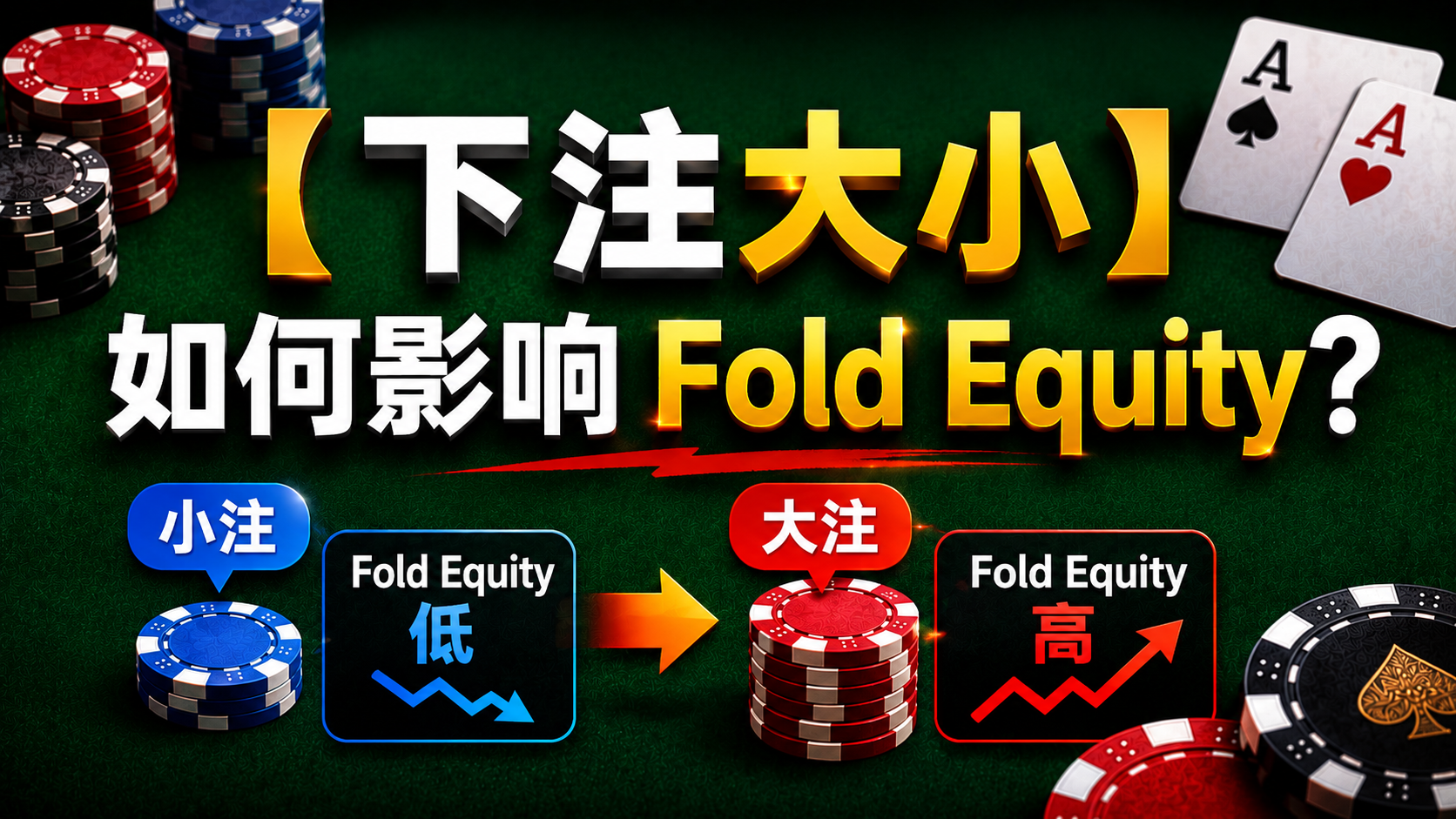
The same hands, the same situation, different bet sizes can produce completely different fold equities. Betting too small makes opponents unwilling to fold; betting too large may involve taking on excessive risk. This article will provide a complete analysis of how bet size affects fold equity and how professional players use sizing to create maximum EV.

Many players know about bluffing, but they don't know what success rate is needed to be profitable. In fact, as long as the opponent's fold rate reaches a certain threshold, even if you have no hand strength, bluffing can still result in positive EV. This article will provide a complete analysis of the bluff success rate formula and its practical application.

Fold Equity (EV) is one of the most important offensive concepts in Texas Hold'em. Many players only focus on their own hand strength, but true professionals know that even without the best hand, as long as you can get your opponent to fold, you can create EV. This article will provide a complete analysis of the concept, calculation logic, and practical applications of Fold Equity.
Many players have learned the EV formula but still consistently lose money. The reason is often not that they don't know how to calculate it, but rather that their thinking is flawed. This article summarizes the most common EV pitfalls in Texas Hold'em, helping you avoid the traps that beginners and intermediate players easily fall into, and develop a truly professional-level EV mindset.
Shark(鯊魚玩家)是德州撲克中對技術成熟、能夠長期穩定盈利的高水平玩家的非正式稱呼 Shark 並不是某一種固定打法,而是代表玩家具備完整的撲克思維,包括 Range Analysis、GTO、Exploit、Position、Pot Odds、Bet Sizing、心理素質與 Bankroll Management 等能力,並能依據不同對手持續調整策略 真正的 Shark 並非每一手牌都贏,而是透過長期做出正 EV 決策,在大量樣本中建立穩定優勢
Fish(魚玩家)是德州撲克中用來形容技術較弱、決策容易出現明顯錯誤,並長期處於虧損狀態的玩家 Fish 並不是特定打法,而是一種對玩家整體技術水平的描述。Fish 可能是 Calling Station、Maniac、Loose Passive、過度緊手(Nit),甚至是不熟悉 GTO、Pot Odds、Range 與 Position 的新手玩家 面對 Fish,最重要的策略通常不是使用複雜的平衡打法,而是根據其明顯漏洞進行 Exploit(利用型打法),透過 Value Bet、位置優勢與減少低品質 Bluff,持續累積長期 EV
Calling Stations are players who participate in many pots, prefer calling, rarely raise, and are not prone to folding to bets. Calling Stations typically have a high VPIP (Voluntary Participation Percentage), a low to medium PFR (Pre-Flop Raise Percentage), and a wide calling range. They may use weak Top Pairs, Second Pairs, Pocket Pairs, low-quality draws, Ace High, or even draws without enough Pot Odds to continue calling against a Calling Station. Their most important exploit is not increasing bluffs, but expanding their value range, increasing thin value, using larger value sizing, and significantly reducing pure bluffs. When such players suddenly raise large amounts on the turn or river, their range should usually be reassessed, as many Calling Stations' raising ranges are biased towards strong value.
Maniacs are players who participate in large pots, bet and raise frequently, and often bluff, 3-bet, 4-bet, or apply pressure across multiple streets at an excessively high frequency. Maniacs differ from typical LAGs (Loose Aggressives). A skilled LAG's aggression is built on position, range, blocker, fold equity, and opponent tendencies; maniacs, on the other hand, are more likely to ignore hand strength, position, and risk, resulting in over-bluffing, spewing, over-calling, and unreasonable all-ins. Against a maniac, players generally don't need to compete in aggression, but rather should tighten their range, increase value bets, increase reasonable bluff catches, reduce low-quality bluffs, and profit from the opponent's tendency to over-push.
LAG (Loose Aggressive) refers to a player type who participates in a significant number of pots pre-flop and continues to employ aggressive betting, raising, and pressure strategies post-flop. LAGs typically have a high VPIP (Voluntary Participation Percentage), a high PFR (Pre-flop Raising Percentage), and actively utilize 3-Bet, Continuation Bet, Double Barrel, Triple Barrel, and Bluff to compete for pots. A skilled LAG can generate substantial EV through position, range advantage, Fold Equity, and sustained pressure; however, a lack of discipline can easily lead to becoming a Spewy Player.