




International news
Ken Strauss, who suffered a breakdown in the WSOP Main Event seven years ago, now shares his recovery journey of battling mental health issues, rebuilding his life, and staying away from alcohol, and encourages others to seek help.
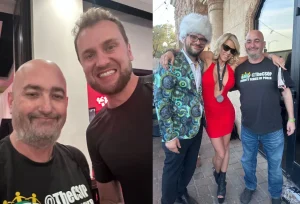 Ken Strauss, who suffered a breakdown in the WSOP Main Event seven years ago, now shares his recovery journey of battling mental health issues, rebuilding his life, and staying away from alcohol, and encourages others to seek help.
Seven years ago, Ken Strauss experienced a very public breakdown during the World Series of Poker (WSOP) Main Event. Most people would watch a bizarre event and then move on, but Strauss couldn't. What followed was years of struggle, rebuilding, and an honest reckoning with his mental health.
When I sat down for an interview with Strauss (the man known online as the "Naked Thief"), the goal wasn't to revisit news headlines. Instead, we had an honest and emotional conversation about mental health, responsibility, and realities that many poker players silently face but rarely discuss.
"I think when my incident happened, everyone thought I just had a stupid moment," he said. "But it was a psychotic episode."
A perfect storm
Strauss said that in the days leading up to the incident, things were slowly spiraling out of control. He was sleep-deprived, drinking heavily, and eating unhealthily. All of this contributed to his distorted thinking.
"Everything felt like it was playing in slow motion," he said. "I thought everyone else at the table was cheating. Maybe they weren't. But at that moment, I lost control."
The pressure of the biggest poker stage didn't cause a collapse, but it didn't help either. "This could happen anywhere," he said. "It just happened in the Main Event."
Looking back, Strauss could see where he went wrong and how stubbornly he had refused to face the problem.
“If this were 2019 and someone tried to help me, I would probably say, ‘I’m fine,’” he admitted. “But I didn’t.” He believes this denial mentality is one of the biggest obstacles to seeking help, not only in the poker world, but everywhere.
The recovery process was neither quick nor smooth. For a long time, Strauss was lost, until little by little, he regained his sense of direction. What truly helped him break through was an article published in The Players' Tribune by tennis player Jessica Pegula, about her mother's cardiac arrest, grief, near-give-up, and perseverance. Shortly after reading that article, Strauss began to proactively reach out, call, and text, rebuilding his estranged connections. "That was the starting point of my recovery."
"If this were 2019, and someone tried to help me, I would probably say, 'I'm fine.' But I wasn't."
A small but stable circle of friends helped him piece his life back together. His college roommate Jeff; Andy and Aaron, who stayed in touch during those tough years; Mike, a colleague who later became close; and Jim and Diane Barber, people he had known for years who continued to offer support and perspectives when he needed them most.
“Realizing who your true friends are is very important,” Strauss said. “Those who care about you and make you feel good when you talk to them. These are the people you should keep around.” At the same time, he also made the tougher decisions about who he couldn’t keep around. “Some people I knew before 2019, I will never talk to again,” he said. “Not because I hate them. It’s just not good for my mental health.” As his personal life began to settle down, another issue remained unresolved.
Clarify the truth
The stories people tell about the WSOP are not his story, and that needs to change. The WSOP itself has a life of its own. Two years ago, an interview with Chad Holloway of PokerNews gave Strauss a rare opportunity: to tell his own story in his own words.
"I am truly grateful to Chad and PokerNews for giving me that platform two years ago. It made my life better and changed my life."
Since sharing his experiences publicly over the past two years, Strauss says the response has been overwhelmingly positive. "People have reached out to me. Some who didn't understand before now do."
For him, telling this story was never about rewriting the past. It was about ensuring that others didn't have to go through the same thing alone. "If it helps even one person," he said, "it's worth it."
Establishing a new foundation, viewing poker from different angles.
Recovery also meant fundamentally changing his daily habits. "I haven't drunk alcohol for seven years," Strauss said. "That's something I'm very proud of."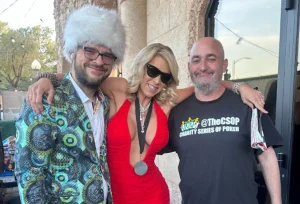
Psychotherapy was another breakthrough, even though it wasn't his initial choice. "I had to undergo mental health treatment during my probation," he explained. "At the time, I was still denying it. But talking to a therapist helped me realize: yes, I have some issues, and I need to address them." From then on, things slowly began to improve—through better habits, a healthier lifestyle, and a growing sense of self that he had never had before.
When asked what advice he would give to players who see themselves in his story, Strauss didn't hesitate: "Not every day is perfect, but you have to be willing to face what's happening." He also pointed out warning signs he hadn't fully noticed in the past: "If you're not sleeping well, if you've drunk too much, if you're feeling unwell, don't ignore it. Talk to someone." Knowing when to ask for help is not a sign of weakness. In poker and in life, it may be the wisest thing you can do.
"At the time, I was still denying it. But talking to my therapist helped me realize: Yes, I have some problems, and I need to address them."
Today, poker plays a much smaller role in his life than before. "Ten years ago, poker was a significant part of my life; now, it's more of a secondary part." He still plays, but with a different mindset: less stress and a more balanced life. Strauss has also started participating in sporting events again, which still brings him joy, but at a controlled pace. He now prioritizes a healthier lifestyle, staying sober, and meaningful friendships.
Events like the Charity Series of Poker (CSOP) completely reshaped his relationship with poker.
“The CSOP completely transformed my poker life,” he said. “It’s a real community. People care about each other.” He pointed out that this sense of community is something often lacking but desperately needed throughout the poker world. “You don’t have to go through all this alone,” Strauss said. “I didn’t realize it then, but I do now.” To prove he can continue playing with a fresh mindset, Strauss recently finished eighth in Event 97 of the CSOP.
This article is dedicated to Stephen E. Kabakoff, a cherished friend of Ken's, whose presence and spirit remain a part of his journey.
Want to change Texas Holdem from "can understand" to "can win"?
If you want to learn more about Texas Hold'em, you can continue reading:
The Origins of Texas Hold'em: Why is it the World's Most Popular Poker Variant?
Texas Hold'em Hand Rankings and Showdown Rules (Beginner’s Essentials)
Texas Hold'em Betting teaching: Check / Bet / Call /Raise and Betting Strategy Analysis
The importance of Texas Hold'em position? Why is the back position more advantageous?
How to play Texas Hold'em? Novices learn Texas Hold'em rules, processes and betting teaching in 10 minutes
Texas Hold'em Starting Hands Strategy Guide: Which Hands to Play?
Texas Holdem Starting Hands Chart Tutorial: Complete Starting Hand Chart and Position Strategy
How to play Texas Hold'em? Complete rules and a hand's flow (Preflop / Flop / Turn / River)
Hunter Poker offers comprehensive tutorials, hand analysis, and strategy sharing to help players upgrade from simply "reading the cards" to understanding the range . This allows you to make better decisions in every hand.
▶️ In Facebook Follow Hunter Poker.
📘 In Youtube Follow Hunter Poker.
Want to learn more about Texas Hold'em gameplay and strategies?
DX Poker, as one of the online Texas Hold'em platforms, offers a variety of table types and tournament modes, allowing players to accumulate experience through actual games and gradually improve their strategy and judgment.
Further News Reading
International news
Nick Rigby's Main Event performance was hilarious! His "Dirty Diaper" bluff turned the tide, eliminating his opponent with only half a hand.
International news
Dzmitry Urbanovich wins the WSOP Eight-Event Mixed Championship! Adding his sixth gold bracelet to his collection, he continues his legendary run.
International news
WSOP Day 39 | Michael Mizrachi makes a strong comeback in the Main Event! Negreanu and Kabrhel both advance.
International news