




Regional news
The 2026 WSOP Summer Series has concluded, with 200 Chinese players making it into the money, accumulating 515 cashes and a total prize pool of $10.77 million, winning four WSOP bracelets. This article provides a comprehensive review of the Chinese team's performance at this year's WSOP, analyzing data on prize money, cashes, final table performance, champions, and overall competitiveness.

The 2026 World Series of Poker (WSOP) Summer Series has officially concluded. Although the nine-player final table of the Main Event (Event #82) will return to Las Vegas in early August to determine the world champion, all 99 live bracelet events have been completed, and the overall statistics for this year's WSOP have been officially released.
The 2026 WSOP hosted 100 live bracelet events, attracting a total of 251,899 participants, setting a new record; the total prize pool reached $469.9 million, continuing its status as the world's largest poker series.
This was also a summer worth recording for Chinese poker.
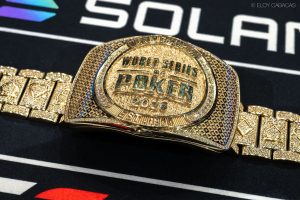
The Chinese contingent had 200 players who made it into the money at least once, completing 515 cashes and winning a total of $10,770,000 in prize money. They also won four WSOP gold bracelets, making it one of the most representative overall performances in recent years.
2026 WSOP Overall Data
| Category | Figures |
|---|---|
| Live gold bracelet competition | 100 games |
| Total Entries | 251,899 (All-time high) |
| Total prize pool | $469,900,000 |
| Event service fee (Rake) | $47,300,000 |
| WSOP retention | $33,100,000 |
| Dealer and staff allocation | $14,200,000 |
| Main event participants | 9,208 people |
| Main Event Total Prize Pool | $85,600,000 |
Although the total prize pool is slightly lower than the historical high in 2025, the total number of participants has reached a new high for the second consecutive year, indicating that the overall scale of the WSOP continues to grow.
Overall performance of the Chinese team
Chinese players delivered outstanding results at this year's WSOP:
| Category | Figures |
|---|---|
| Players who enter the prize pool | 200 people |
| Cash count | 515 times |
| Total winnings | $10,770,000 |
| gold bracelet | 4 |
| Final Table (FT) | 27 times |
Compared to the sheer number of championships, the overall cash flow capability is more worthy of attention.
The 515 Cash wins demonstrate the consistent competitiveness of Chinese players across different buy-in levels and tournament formats, and also reflect the continuous improvement in overall professionalism.
Performance of the Chinese team's champions, runners-up, and third-place finishers
Gold bracelets (4 pieces)
The Chinese team won a total of 4 WSOP gold bracelets this year, with a total prize money of:
$1,507,116
The four gold bracelet winners include:
Wang Yang
Chen Dong
Wang Yongshuang
Zixuan Liu
The four champions not only brought glory to the Chinese team, but also became an important source of the overall prize money.
Runner-up (3 times)
Chinese athletes have won the silver medal three times.
Total Bonus:
$1,186,235
Third place (3 times)
The Chinese team won the bronze medal three times.
Total Bonus:
$1,150,304
Top 10 Chinese Players in Prize Money Ranking
The prize money distribution for the Chinese contingent in this year's competition still exhibits a "concentration at the top" characteristic.
The top three are:
| Place | player | bonus |
|---|---|---|
| 1 | Ding Biao | $1,720,399 |
| 2 | Wang Yang | $709,965 |
| 3 | Miao Chenxiang | $491,906 |
The top three combined:
$2,922,270
Approximately 10% of the total prize money for the Chinese contingent:
27.13%
The top ten cumulatively:
$5,694,581
Approximately 10% of the total prize money for the Chinese contingent:
52.87%
In other words, more than half of the prize money for the Chinese contingent came from the top ten players, showing that high-level performance remains a key factor in determining the total prize money.
More than 100 contestants completed multiple cash transactions.
This session has a total of:
105 Chinese contestants completed at least two cash transactions.
Compared to the past reliance on a few star players, this year more professional players have accumulated results through consistent progress, demonstrating the gradual improvement in the overall depth of Chinese poker.
27 final table (FT) matches
According to the statistics of the nine-person final table:
Chinese athletes completed:
27 FT.
Many of the players have reached the final table more than once, maintaining their competitiveness in various tournaments.
This also means that the Chinese team is no longer just making occasional breakthroughs, but has begun to have the ability to continuously challenge for the championship.
Performance of the four gold bracelet winners
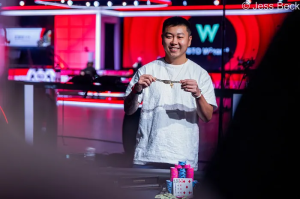
Wang Yang
Wang Yang is one of the biggest winners for the Chinese team in this tournament.
The results include:
Event #5 Champion: $595,388
Event #51 Rank 28
Event #64, 9th place
annual:
Cash: 3 times
Prize money: $709,965
A gold bracelet and a final table appearance propelled him to second place on China's prize money list.
Chen Dong
Chen Dong represents the stability of the Chinese military.
Major achievements:
Event #38 Champion: $285,200
Event #94, 10th Place: $65,643
The other 8 cash transactions
annual:
Cash: 10 times
Prize money: $383,789
Besides the gold bracelet, he is also one of the players with the most cashes in China.

Wang Yongshuang
Wang Yongshuang made a breakthrough at the end of the series.
Major achievements:
Event #96 Champion: $407,137
Event #16, 35th place
Event #35 Rank 70
Event #28, Rank 501
annual:
Cash: 4 times
Prize money: $426,837
Winning the final stage propelled him to the top of China's prize money list.
Zhu Yueqi
In terms of consistency, Zhu Yueqi is one of the most representative players in the Chinese team.
Major achievements:
Event #97, 5th place: $199,071
Event #48, 9th place: $29,428
The other 10 cash transactions
annual:
Cash: 12 times
Prize money: $321,988
Twelve cashes also represent one of the most consistent performances by the Chinese team in this tournament.
Ding Biao: No championship, but China's prize money king
The biggest prize winner for the Chinese team this year was not the gold bracelet champion, but Ding Biao.
His main achievements include:
Cash: 9 times
FT: 3 times
Event #19 Third Place: $819,504
Total for the whole year:
$1,720,399
Although he did not win the championship, Ding Biao became the top earner on the 2026 Chinese team prize money list thanks to his impressive performance in multiple races.
Chinese team bonus echelon
First Tier
Ding Biao
Wang Yang
Miao Chenxiang
Wang Yongshuang
Chen Dong
Zhu Yueqi
Second tier
Lin Ren
Yang Chongxian
Liu Xiaohu
Yixi Tang
Liu Yuhong
The top tier relies on championships and large final tables to accumulate high prize money; the second tier continuously improves its overall strength through stable cash and multiple deep runs.
There are still 18 events where no Chinese athletes have made it into the finals.
According to official WSOP results, no Chinese players made it into the money in 18 bracelet events this year.
include:
Event #8, #23, #24, #27, #41, #42, #46, #50, #55, #58, #60, #61, #67, #75, #76, #80, #90 and #92.
This also shows that the Chinese team still has room for growth in some special competition formats and niche events.
Behind the data, Chinese poker is changing.
If we were to summarize the performance of the Chinese teams at the 2026 WSOP in one sentence, it would be:
A few top-level breakthroughs drive overall steady improvement.
The four gold bracelets represent that Chinese athletes have the competitiveness to become world champions.
The total prize money of $10.77 million comes from the accumulated achievements of many professional players over a long period of time.
From Ding Biao's $1.72 million prize to the four gold bracelet winners Wang Yang, Chen Dong, Zixuan Liu, and Wang Yongshuang, and then to the many stable deep runners such as Zhu Yueqi, Miao Chenxiang, Lin Ren, Liu Xiaohu, and Yang Chongxian, it can be seen that Chinese poker is gradually forming a more complete talent pool.
A champion represents peak strength, while a large amount of cash represents overall competitiveness.
The 2026 WSOP may not be the best year for Chinese teams, but judging from the prize money structure, cash amount, number of final table appearances, and depth of participation, this team is moving towards a more mature, diverse, and professional direction.
Want to change Texas Holdem from "can understand" to "can win"?
If you want to learn more about Texas Hold'em, you can continue reading:
The Origins of Texas Hold'em: Why is it the World's Most Popular Poker Variant?
Texas Hold'em Hand Rankings and Showdown Rules (Beginner’s Essentials)
Texas Hold'em Betting teaching: Check / Bet / Call /Raise and Betting Strategy Analysis
The importance of Texas Hold'em position? Why is the back position more advantageous?
How to play Texas Hold'em? Novices learn Texas Hold'em rules, processes and betting teaching in 10 minutes
Texas Hold’em starting hands guide: Which hands should you play? A complete guide to Starting Hands strategy
Texas Holdem Starting Hands Chart guide: Complete starting-hand charts and positional strategy
How to play Texas Hold’em: Complete rules and the flow of a hand (Preflop / Flop / Turn / River)
Hunter Poker offers comprehensive tutorials, hand analysis, and strategy sharing to help players upgrade from simply "reading the cards" to understanding the range . This allows you to make better decisions in every hand.
▶️ In Facebook .
📘 In YouTube .
Want to learn more about Texas Hold'em strategy and gameplay?
Online Texas Hold'em freerolls typically require no buy-in, making them suitable for beginners to familiarize themselves with the rules while also allowing advanced players to test strategies and gain tournament experience. View the full brand introduction to learn about each platform's freeroll schedule, tournament features, and suitable player groups.
Further News Reading
Regional news
Sean Winter 贏得撲克大師賽收官戰 620,000 美元;Mateos 奪得紫夾克
Regional news
撲克傳奇Sammy Farha涉嫌在現金局中攻擊發牌員
Regional news
Will Kassouf 第二天出局仍贏得第三名獎金
Regional news