



International news
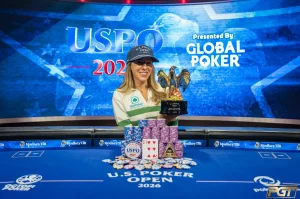
Kristen Foxen defeated top players such as Jeremy Ausmus in the U.S. Poker Open $10,000 event to win her fifth PGT title and a $198,000 prize.
Final table results
Champion's reaction
Final Day Results
High-stakes specialist and five-time GPI Female Player of the Year, Kristen Foxen, added another title to her already illustrious career after defeating a field of 66 players. She won her fifth PGT title in the #4: $10,000 No-Limit Hold'em event.
Foxen defeated a strong final table lineup including Michael Rossitto, Brock Wilson, Sam Soverel, and Jeremy Ausmus. She triumphed heads-up over Ausmus to take home the $198,000 champion's prize, while Ausmus finished as runner-up for the second time in this series.
Final table results
| Ranking | player | country | bonus |
|---|---|---|---|
| 1 | Kristen Foxen | Canada | $198,000 |
| 2 | Jeremy Ausmus | United States | $128,700 |
| 3 | Sam Soverel | United States | $89,100 |
| 4 | Brock Wilson | United States | $66,000 |
| 5 | Michael Rossitto | United States | $49,500 |
| 6 | Brandon Wilson | United States | $36,300 |
| 7 | Nate Silver | United States | $26,400 |
Champion's reaction
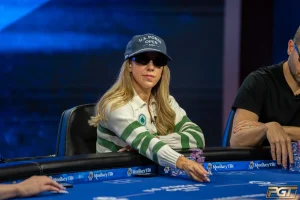
"I'm super happy," Foxen told PokerNews after the match. "This was the easiest final table I've ever had, it was a huge relief because the last few final tables haven't gone this smoothly. It was both easy and fun."
Foxen also gained 198 PGT leaderboard points with this victory, temporarily placing her fourth on the U.S. Poker Open leaderboard. Foxen spoke about the extra motivation the leaderboard provides – the series champion will receive a $25,000 PGT entry and the Golden Eagle Trophy.
"That eagle was really beautiful. On my way here, I was thinking that the benefits of winning this game weren't just the championship itself, but also the leaderboard points I would get, which would help me in this series and even the series all year. I really used those points as my motivation today."
As one of the most consistent performers in high-stakes tournaments over the past few years, Foxen attributes her success to her adaptability at the poker table.
"I might be wrong, but I think my strength lies in my ability to deviate from the norm, which some people might not be able to do. Sometimes this leads me to make bad calls or bad folds, but that's the style of poker I like."
Final Day Results
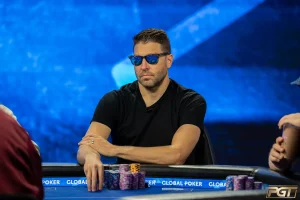
Ausmus started the day with nearly half the chips, while Rossitto was extremely short-stacked with only 7 big blinds. Although Rossitto doubled up early against Wilson, the comeback failed, and he became the first player eliminated that day—he went all-in pre-flop with A9 suited, only to be outplayed by Soverel who flopped a "Broadway" straight with K10. Soverel then eliminated Wilson in fourth place, narrowing the gap with Ausmus, while Foxen was far behind in third.
Foxen's turning point in the three-way battle came when she flopped an open-ended straight draw with 10-8, while Ausmus held top pair with AK. Foxen check-raised her draw on the flop and made her straight on the turn, maximizing her value and doubling up on the river to take the chip lead, leaving Ausmus short-stacked.
Ausmus quickly retaliated, successfully catching Soverel's bluff and recovering most of his lost chips. Soverel was then reduced to less than a big blind before being eliminated, leaving Foxen and Ausmus in heads-up play, with Foxen holding a slight chip advantage. Both players had fairly deep stacks, with Ausmus's effective stack slightly over 70 big blinds.
“This heads-up match was really fun,” Foxen said. “It was great because we started a bit deeper than usual. Usually, when you get to heads-up here, you only have about 30 big blinds. We played a few really interesting hands. He did a really fun check-raise on the flop, then check-raise again on the turn. It was a lot of fun, and luckily the cards were on my side.”
The heads-up match, though brief, was full of exciting action. In one hand, Ausmus executed a double check-raise early on: he checked-raised on the flop with a gutshot straight draw, and then checked-raised again on the turn with a flush draw. Foxen correctly called on the turn with second pair, but Ausmus completed a flush on the river, bringing both players to near-even in chips.
In the final hand of the tournament, Foxen made a set with 6s on the flop, facing Ausmus's pocket overpair of 9s. Both players went all-in on the river, forcing Ausmus to finish as runner-up for the second time in this series.
Specific Scenario Retrospective: Key Decisions in Different Situations
Certain scenarios can drastically alter decision-making logic, such as tournament pressure, chip depth, positional structure, range matchups, and betting patterns.
When you enter different situations, the correct approach isn't just about looking at your hand, but about understanding the overall context. The following specific scenarios and core themes are key to influencing wins and losses and long-term profitability:
I. Special Scenarios in the Championship
[ICM Pressure] How to make decisions in the ICM tournament scenario?
[Bubble Phase] Should we be aggressive or conservative during the Bubble phase?
[Final Table] How should key moves be handled?
[Short Code Strategy] How should Short Stack be typed?
[Deep Stack Strategy] What are the differences in how Deep Stack is played?
[Blind Stealing Strategy] How to consistently steal blinds in tournaments?
【Stealing Blinds vs. Counter-Stealing Blinds】Strategies for Countering Blinds in the Bubble Phase
[Middle Chip Dilemma] Why is the middle chip the hardest to beat?
[Pressure Transfer] How to transfer ICM pressure to the opponent?
[Final Table Mindset] How to go from the final table to the championship?
[Chip Management] How to control risk and avoid collapse?
[Complete Tournament Strategy] The entire process from entry to victory
II. Core of the Underlying Strategy
[Position Advantage] How to play in different positions? A complete analysis of BTN / CO / SB / BB
[Range Thinking] Why do expert players look at the range instead of their hand?
[3-bet strategy] When should you raise your bet? How to counter your opponent's opening?
How does bet sizing affect your EV?
[Betting Line] How to design a complete Flop / Turn / River Line?
Fold Equity: How can you win without showing your cards?
III. Practical Decision-Making After the Cards Are Flipped
[C-bet Strategy] When should you continue betting?
[Turn Strategy] Should we fire the second shot?
[River Decision] Should the last street be Value or Bluff?
When should you retaliate?
[Blocker Application] What is a blocking sign? How does it influence decision-making?
[Range Shrinking] How to understand your opponent's range step by step?
IV. Advanced Competition and Professional Mindset
[Exploit Strategy] How to achieve stable profits for different player types?
[GTO vs Exploit] How to choose in actual combat?
[Result Bias] Why do I still lose even when I guess correctly?
[Decision-making process] How do experts make the right decisions quickly?
Why does overconfidence actually lead to more losses?
[Emotional Management] How to avoid Tilt?
How to establish a stable profit-making mindset for long-term EV (Electronic Vehicle) businesses?
V. Common Hand Issues and Practical Problems
[All-in Decision] When should you go all in?
[Missed Card] What should I do if I missed?
[Slow Play Judgment] When should you slow play?
Why do expert players rarely play marginal hands?
[Key Fold] When should you fold?
VI. Basics for Beginners and Traffic Sources
[Starting Hand Strategy] A Complete Guide for Beginners
Texas Hold'em Rules: Complete Gameplay Tutorial (2026 Latest Version)
[Poker Card Rankings] Card Rankings and Comparison Rules
Texas Hold'em Terminology: A Complete Guide from Beginner to Advanced Players
How to win money in Texas Hold'em? A complete analysis of the thought process.
Different scenarios require entirely different decision-making logic. From tournament pressure and chip depth to position, range, and post-flop strategy, each situation demands a different framework for thinking. When you can systematically understand these specific situations, you're no longer just playing by feel, but truly establishing a sustainable and profitable decision-making system.
Further News Reading
International news
Brazilian duo achieves their Las Vegas dream! Breno Drumond and Henrique Lessa team up to win the WSOP Doubles Team Championship.
International news
A poker coach who plays soccer will face the United States in the World Cup.
International news
Japan has a strong showing at the 2026 WSOP. Here’s why.
International news