



Hand resumption

Hand resumption

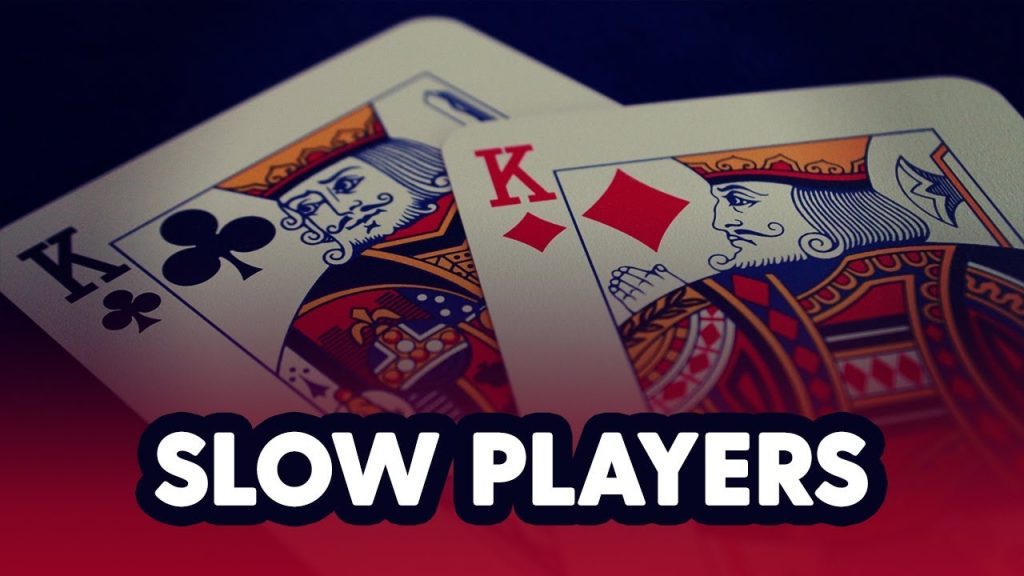
Poker Slow Play Mistakes: Illustrations showing how slow play can lead to losing big pots due to missed value, giving away free cards, and being overtaken.

[Slow Play Error] Why do I lose big pots when I play slowly?

Poker Strategy / Tutorials, Hand resumption

In Texas Hold'em, many players, when given a strong hand, don't immediately focus on extracting value, but rather on how to "act" like they have no hand at all. This is the most common misconception about slow play. Slow playing itself isn't wrong; the real problem is that too many people deliberately hide their strong hands on boards where they shouldn't slow play, against opponents who won't pay out, or in situations where they need to protect their hand strength. Ultimately, this either results in less value extraction or being overtaken and losing large pots. True masters don't automatically feign weakness just because they have a strong hand; instead, they first assess board safety, the opponent's aggressive tendencies, range protection, and subsequent pot-building capabilities. This article will provide a complete analysis of why slow play leads to large pot losses, which slow plays are actually advanced mistakes, and how to turn strong hands into genuine long-term value propositions.
Poker Cannot Fold Leak: A diagram illustrating how players continuously lose EV (Effective Value) due to reluctance to fold, sunk costs, and incorrect Hero Calls in Texas Hold'em.

Why do you always lose on the last street? [Never fold]

Poker Strategy / Tutorials, Hand resumption

In Texas Hold'em, the place where many players truly lose a lot of money isn't pre-flop or the flop, but the last street. Even though they can calmly assess the situation up to the flop, they suddenly don't want to fold on the river, always thinking, "He might be bluffing," "I've already called this far," or "This hand doesn't look too bad." This is the classic "not folding" flaw. Its biggest problem isn't occasionally getting hit by a value bet, but repeatedly making low-quality payments on the most expensive, most polarized, and most precise-judgment-required street. This article will fully analyze why many people always lose on the last street, the psychological and strategic reasons behind their inability to fold, and how expert players use range, pot odds, blockers, betting lines, and opponent tendencies to make truly high-quality river folds or river calls.

Poker Bluff Imbalance: A diagram illustrating how excessive bluffing can lead to a continuous loss of EV (Effective Value) on the wrong board, against the wrong opponent, and on the wrong path.

[Bluff Imbalance] What are the costs of excessive bluffing?

Poker Strategy / Tutorials, Hand resumption

In Texas Hold'em, many players believe that simply daring to bluff and apply pressure signifies an advanced playing style. However, the real issue is that more bluffing isn't necessarily better. When your bluffing frequency exceeds a reasonable range, your overall strategy begins to unbalance. The biggest cost of over-bluffing isn't just getting caught, but continuously giving away valuable experience (EV) that could be preserved on the wrong boards, against the wrong opponents, and on the wrong lines. True masters aren't those who don't bluff, but those who know which situations warrant bluffing, which candidate hands are good enough, which opponents will fold, and when to fold. This article will fully analyze the costs of over-bluffing, how it disrupts your overall strategic structure, and how to build a more balanced, EV-enhancing pressure strategy.