




Texas Hold'em Poker Tutorial Articles
Poker Float Strategy is an advanced Texas Hold'em technique. This article analyzes how to deal with opponents' float calls through hand review, helping players understand delayed aggression and counter-strategies.
Poker Float Strategy This is one of the common but easily overlooked opponent behaviors in Texas Hold'em.
Many players, after C-betting on the flop, are called (float) by their opponents with weak hands and don't know how to respond, ultimately getting counter-attacked on the turn or river and losing the initiative.
This article will analyze the essence of Float through hand replays and how to make the right decisions in actual gameplay.
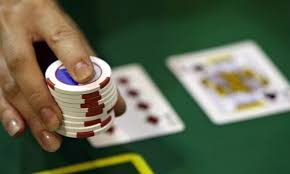
This is very likely Float.
But the real problem isn't that the opponent is using Float, but rather:Are you prepared to deal with this strategy?
Key takeaway: The Poker Float Strategy is a delayed attack, not a passive call.
Many people assume that if their opponent calls, it means they have a hand.
But the essence of Float is:Call with a weak hand and regain the initiative after you fold.
This means:
1. The opponent is not in a hurry to counterattack on the flop.
2. Instead, apply pressure on the Turn or River.
3. Use your checks to represent weaknesses.
Hand situation review
1. You are at CO, holding A♣ Q♦
2. You raise pre-flop, and the BTN calls.
3. Flop: K♠ 6♦ 2♣ → You C-bet, your opponent calls.
4. Turn: 9♥ → You check, your opponent bets.
What should you do in this situation?
The first misconception: Treating every call as a sign of having a hand.
On this board, the opponent's call could include:
1. Kx (Strong hand)
2. Middle pair (66, 77)
3. Ready to win
4. Float (Air)
If you assume your opponent "must have a card," you'll over-fold.
The second misconception: Turning away too early and giving up the initiative.
When you make a turn check, you are actually sending a signal:I don't have any strong cards.
This is exactly the time that Float players have been waiting for.
Once you relinquish the initiative:
1. The opponent can start Bluffing.
2. You will find yourself in a passive defensive position.
3. It's difficult to make the right decisions on the River.
Three strategies for dealing with Float
1. Double Barrel
If the turn is in your favor, you can fire a second shot directly.
→ Eliminate the opponent's Float range
→ Maintain the initiative
2. Check-Call (Inducing Bluff)
If you have some showdown value, you can let your opponent continue to bluff.
→ Keep the opponent's air cards
→ Control pool
3. Check-Raise (Counter Float)
To counter players who frequently use Float, you can directly counterattack.
→ Make it difficult for opponents to call freely
→ Increase pressure
The best decision in this hand
Prefer check-calls or low-frequency double bars.
reason:
→ A-high has some showdown value
→ The opponent may have a large number of Float
→ No need to give up immediately
What kind of players will use Float?
→ I like to observe my opponent's weaknesses
→ More aggressive after the rollover
→ Not afraid of entering multi-street confrontation
→ Understanding Location Advantages
In what situations should you be especially careful?
→ Opponent in the back position
→ Opponents frequently call Flop
→ Turn frequently
→ River experiences high pressure frequency
Core Decision Conclusions
When facing Float, the key is not defense, but not to easily give up the initiative.
When you can identify your opponent's delayed attacks and counter them with the right strategies, you can avoid being passively attacked and instead turn your opponent's float into a source of profit.
Core Decision Retrospective: The Crucial Moments That Truly Determine Your Profitability
Once you've mastered the basic rules, what truly influences your long-term wins and losses is whether your decisions on each street are correct.
The following scenarios are key turning points for most players, marking the point where they begin to "lose money or make a profit":
[Continuing the Attack] Should you continue firing after a C-bet and turn? Hand replay analysis
[Common Mistakes] Why does Double Barrel fail? Analysis of Reasons
[Decision Disagreement] Check-Call vs. Check-Raise: Which to Choose? Strategy Breakdown
[Advanced Scenarios] How to play after the flop in a 3-bet pot? Practical analysis
[Pre-flop Strategy] The Real Reason for a Failed BTN Blind Steal? Hand Review
[Opponent Behavior] How to deal with an opponent's Float (floating call)? Decision Analysis
[Multi-Party Pots] Why shouldn't you bet recklessly in multi-party pots? Strategy Analysis
[Abnormal Signal] What does it mean when a passive player suddenly attacks? Retrospective Analysis
[Counter-Strategy] How to adjust when facing aggressive players? Practical analysis
[Sizing Error] How can a wrong betting sizing ruin a good hand? Case study.
[Advanced Techniques] When to Use Overbet? Strategy Analysis
[Slow Play Judgment] When should you slow play? Retrospective Analysis
[All-in Decision] When to go all in? Risk and return analysis
[Missing the Flop] What should you do if you miss the flop? Strategy Analysis
[Key Folding] When to Fold? Decisions to Avoid Continuous Losses
These decisions have no standard answers, but they follow a clear logic. By reviewing your hands, you can understand the real reasons behind every bet, call, and fold, and gradually build your own profitable decision-making model.
Extended Reading for Teaching
Hand resumption
[Review Methods] How do professional players review their hands?
Hand resumption
[Long-term planning] How to build a long-term profit strategy?
Hand resumption
[Strategy Selection] GTO vs Exploit: Which to choose in actual gameplay?
Hand resumption