




Poker Turn Strategy It is one of the most crucial and controversial decisions after the flop in Texas Hold'em.
Many players will C-bet on the flop, but what really creates a gap is not the first shot, but whether or not to fire a second shot on the turn.
The essence of a turn is not just about perpetuating pressure, but about judging whether this new card makes your overall strategy more EV (Effective Value).
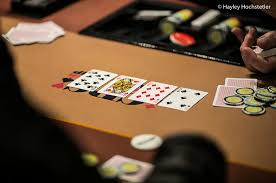
1. Flop has already fired one shot, should Turn continue?
2. If we stop now, won't all our previous efforts have been for nothing?But the real question is: Does this turn truly make my scope, story, and pressures more reasonable?
Key takeaway: Poker Turn Strategy = The second shot should only be fired when you have the right hand and the right situation.
Turn to the essence of decision-making:
→ Reassess the scope structure
→ Reassess Fold Equity
→ Reassess River's ability to continue
The second shot isn't because you've already fired, but because this Turn card truly gives you more reason to fire.
What is the Second Barrel?
Second Barrel
1. This refers to turning around and placing bets after a Flop C-bet.
2. Typically used to extend Value, Bluff, or overall pressure.
3. It is one of the most important screening points in the post-flop betting path.
Turn is the watershed moment of the entire route, because many incomplete Bluffs and Values will be exposed here.
Why is Turn so important?
→ After the opponent calls on the flop, their range has usually narrowed.
→ Turning the cards will change the power distribution between the two sides.
→ The second shot will significantly impact River's feasibility.
→ An incorrect turn barrel can easily cause EV loss quickly.
If you make a mistake with Flop, you still have a chance to correct it; but if you make a mistake with Turn, the entire line often becomes unbalanced.
Under what circumstances is it appropriate to fire a second shot?
1. Turning the cards clearly favors your range.
→ For example, high cards, Aces, Kings, or extensions that represent more strong hands.
2. The opponent still has a lot of medium to weak hands after calling the flop.
→ These cards will find it even harder to continue facing pressure in the turnaround.
3. Your hand has follow-up benefits or blocking effects.
→ For example, a winning hand, a backdoor formation, an Ace-high blocking hand, etc.
A good second shot isn't just about momentum; it's about having substance, scope, and follow-up EV support.
In what situations is it not advisable to fire a second shot?
→ Turning the board gives your opponent a better calling range.
→ The opponent is a sticky player who is difficult to fold on a turn.
→ Your Bluff lacks backdoors, barriers, and the River Plan.
→ Your Value cards don't actually want to be discarded in large numbers by worse cards.
Not every shot needs to be fired; sometimes, stopping is the better decision for higher EV.
Classic practical scenarios
1. You open on the BTN, and the BB calls.
2. Flop: A♣ 7♦ 2♠, you C-bet, your opponent calls.
3. Turn: K♥, you hold Q♠ J♠
Question: If you can still C-bet even if you miss the flop, then if you get a K on the turn, is it more appropriate to bet a second shot?
False thinking: If you've hit the flop, you have to hit the turn.
Many players will:
→ They felt that not firing a second shot was tantamount to admitting defeat.
→ Treat Turn as a simple continuation of an action
→ Ignore the opponent's strengthened range after calling on the flop
Result: The second shot lost its logic and instead pushed itself into an even worse situation.
Correct thinking: Does this turn truly improve your overall approach?
In this context:
→ A-high flops tend to favor the opening player's range
→ The appearance of K in the Turn further strengthens the Ax, Kx, AK, AA, and KK structures that BTN can represent.
→ Although QJ has not yet formed a hand, its pressure narrative is more complete than that of Flop.
Conclusion: This K Turn is usually a good hand to continue with a second shot because it makes your range story more convincing.
Turn Three Core Principles
1. First, check if Turn changes the range advantage.
→ If the new cards favor you, the value of the second shot usually increases.
2. First, observe what your opponent has left after calling the flop.
→ You need to know whether he has a medium-sized hand, is drawing to a winning hand, or already has a very strong hand.
3. First, see if River can continue.
→ The second shot was not an isolated action; can River still represent the same importance as applying pressure?
Turning the most common mistake
→ Flop will automatically fire a second shot after being fired.
→ Put all your bets on the turn, no matter if the cards are favorable or not.
→ Bluff has no blocking signs or follow-up plans.
→ Overprotecting strong hands can scare away weaker hands.
The most common consequence of making a mistake is not getting caught, but rather ruining what could have been a profitable business opportunity.
Advanced strategies: Turn × Range × Runout × River
Experts' Gathering:
→ During the flop, first consider which turns are suitable for a second shot.
→ Use the Turn card to selectively continue Bluff or Value
→ Adjust Barrel frequency based on opponent type
→ Before firing the second shot, think carefully about which cards River has left to complete the entire line.
Truly sophisticated turn decisions are not about whether you know how to fight, but about knowing which turns are worth fighting and which turns should be stopped.
Core Decision Conclusions
In Texas Hold'em, it's not about extending pressure from every flop to a turn, but rather about seeing if the new card truly justifies your second shot.
Once you understand the Turn strategy, you'll no longer treat the second shot as a habitual action, but rather as an offensive decision with range support, a River plan, and a real ability to improve EV.
Specific Scenario Retrospective: Key Decisions in Different Situations
Certain scenarios can drastically alter decision-making logic, such as tournament pressure, chip depth, positional structure, range matchups, and betting patterns.
When you enter different situations, the correct approach isn't just about looking at your hand, but about understanding the overall context. The following specific scenarios and core themes are key to influencing wins and losses and long-term profitability:
I. Special Scenarios in the Championship
[ICM Pressure] How to make decisions in the ICM tournament scenario?
[Bubble Phase] Should we be aggressive or conservative during the Bubble phase?
[Final Table] How should key moves be handled?
[Short Code Strategy] How should Short Stack be typed?
[Deep Stack Strategy] What are the differences in how Deep Stack is played?
[Blind Stealing Strategy] How to consistently steal blinds in tournaments?
【Stealing Blinds vs. Counter-Stealing Blinds】Strategies for Countering Blinds in the Bubble Phase
[Middle Chip Dilemma] Why is the middle chip the hardest to beat?
[Pressure Transfer] How to transfer ICM pressure to the opponent?
[Final Table Mindset] How to go from the final table to the championship?
[Chip Management] How to control risk and avoid collapse?
[Complete Tournament Strategy] The entire process from entry to victory
II. Core of the Underlying Strategy
[Position Advantage] How to play in different positions? A complete analysis of BTN / CO / SB / BB
[Range Thinking] Why do expert players look at the range instead of their hand?
[3-bet strategy] When should you raise your bet? How to counter your opponent's opening?
How does bet sizing affect your EV?
[Betting Line] How to design a complete Flop / Turn / River Line?
Fold Equity: How can you win without showing your cards?
III. Practical Decision-Making After the Cards Are Flipped
[C-bet Strategy] When should you continue betting?
[Turn Strategy] Should we fire the second shot?
[River Decision] Should the last street be Value or Bluff?
When should you retaliate?
[Blocker Application] What is a blocking sign? How does it influence decision-making?
[Range Shrinking] How to understand your opponent's range step by step?
IV. Advanced Competition and Professional Mindset
[Exploit Strategy] How to achieve stable profits for different player types?
[GTO vs Exploit] How to choose in actual combat?
[Result Bias] Why do I still lose even when I guess correctly?
[Decision-making process] How do experts make the right decisions quickly?
Why does overconfidence actually lead to more losses?
[Emotional Management] How to avoid Tilt?
How to establish a stable profit-making mindset for long-term EV (Electronic Vehicle) businesses?
V. Common Hand Issues and Practical Problems
[All-in Decision] When should you go all in?
[Missed Card] What should I do if I missed?
[Slow Play Judgment] When should you slow play?
Why do expert players rarely play marginal hands?
[Key Fold] When should you fold?
VI. Basics for Beginners and Traffic Sources
[Starting Hand Strategy] A Complete Guide for Beginners
Texas Hold'em Rules: Complete Gameplay Tutorial (2026 Latest Version)
[Poker Card Rankings] Card Rankings and Comparison Rules
Texas Hold'em Terminology: A Complete Guide from Beginner to Advanced Players
How to win money in Texas Hold'em? A complete analysis of the thought process.
Different scenarios require entirely different decision-making logic. From tournament pressure and chip depth to position, range, and post-flop strategy, each situation demands a different framework for thinking. When you can systematically understand these specific situations, you're no longer just playing by feel, but truly establishing a sustainable and profitable decision-making system.