




Texas Hold'em Poker Tutorial Articles
Poker Slow Play Strategy is one of the advanced value techniques in Texas Hold'em. This article analyzes when to slow play and when not to play weak, and combines board presence, opponent type, range, and EV to improve long-term profitability.
Poker Slow Play Strategy It is one of the most misunderstood and most easily misused value techniques in Texas Hold'em.
Many players try to play weak when they get a strong hand, thinking that slow play is sophisticated. But what truly determines long-term profitability is not whether you play well, but whether you preserve value and EV in the right situation.
The essence of slow betting is not to deliberately refrain from betting, but to judge whether, in this situation, it is truly more profitable to get the opponent to actively invest more chips than to directly build a pot yourself.
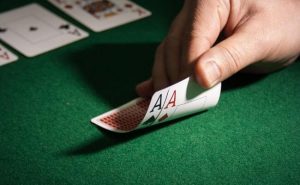
1. I have a very strong hand right now. Should I play slowly to lure my opponent into a losing position?
2. If I place a bet directly, will it scare away my opponent?But the real question is: given this hand, this opponent, and this path, is playing slowly really more EV than actively taking value?
Key takeaway: Poker Slow Play Strategy = Slow play only yields high EV in safe and induced situations.
The essence of slow playing:
1. Preserve the opponent's space for sustained attack.
2. Conceal your hand strength
3. Using inducement to obtain greater value
Playing slowly isn't about having a strong hand and then deliberately underperforming; it's about judging that your opponent will continue to send money into your account.
What is Slow Play?
Slow Play
1. This refers to intentionally not immediately launching a maximum-pressure attack when you have a strong hand.
2. By checking, calling, or delaying to accelerate, you can give your opponent room to continue betting.
3. It is a strategy that combines value maximization and inducement.
The value of Slow Play lies not in its mystique, but in whether your opponent will actually pay more for your feigned weakness.
Why is Slow Play so easily misused?
→ Many players consider slow-paced gameplay a high-level skill, rather than an EV (Effect Value) assessment.
→ It will ignore whether the card needs protection.
→ Misjudging whether the opponent truly has the ability to fire continuously.
→ Being greedy and wanting to eat more at once can cause you to miss out on stable value.
The most common problem with slow play is not failing to win the biggest pot, but rather giving up pots that you could have easily won.
When is Slow Play suitable?
1. The hand is relatively safe.
→ With few draws, the turn card doesn't easily change the situation drastically.
2. The opponent has a strong offensive tendency.
→ When facing players who love bluffing, C-betting, and applying constant pressure, slow play is more likely to be valuable.
3. Your range reasonably contains a card-passing protection line.
→ This slow, deliberate approach prevents the entire line from appearing overly weak or unbalanced.
4. Direct betting may not yield more value.
→ In some hand situations and with certain opponent types, taking the initiative will only cause your opponent to fold in large numbers.
Good slow betting isn't about betting less, but about getting your opponents to bet more on your behalf.
In what situations is Slow Play not suitable?
→ A wet hand, many draws, and easy to be overtaken
→ The opponent is in a very passive position and will not actively help you build a pot.
→ Your strong cards actually need protection, not just feigning weakness.
→ You're just afraid of scaring people away, not because you have a clear plan to attract them.
In many situations where a slow and deliberate approach is not advisable, choosing to feign weakness is essentially a voluntary abandonment of value and protection.
Classic practical scenarios
1. You are defending on BB, BTN starts.
2. Flop: A♣ 7♦ 7♠
3. You hold A♠ 7♣
Question: Here you hit a gourd-level monster. Should you immediately place a bet to build a pot, or should you consider checking and letting your opponent keep firing?
Misconception: If you have a strong hand, you must play slowly.
Many players will:
→ Feeling that since you got the Monster card, you should act weak.
→ Regardless of the hand or the opponent's type, they habitually check to induce others to play.
→ Without first considering whether this line of defense would actually make the opponent invest more money.
Result: You are not engaging in sophisticated inducement, but rather destabilizing a situation where value is easily obtained.
Correct thinking: First, consider whether your competitor will willingly hand over their money.
In this context:
→ A77 is a relatively dry and safe hand.
→ BTN, as the pre-flop starter, usually still has a high-frequency C-betting motivation.
→ Your monster cards aren't too afraid of free cards causing too much damage.
Conclusion: This is a typical situation where a slow play is advisable because the hand is safe, the opponent has an incentive to attack, and you are not in a hurry to protect your hand.
Slow Play: Three Core Principles
1. First, check if the cards are safe.
→ The premise of being able to play slowly is that you are not afraid of diluting your advantage with too many free cards.
2. First, see if the other party is willing to pay voluntarily.
→ When facing a passive player, if you don't actively seek out value, your opponent usually won't help you accomplish that task.
3. First, see if slow betting is more profitable than direct betting.
→ Slow motion is not a performance move, but rather the result of EV comparison.
Slow Play: Most Common Mistakes
→ Slow play on a wet board gives your opponent free access to their rights.
→ Playing slowly against passive players resulted in no one betting for you the entire way.
→ Overly conservative because of fear of scaring people away
→ No Turn/River plan in place, how to speed up pool rebuilding?
The biggest mistake of slow acting is not that the acting is not convincing enough, but that you didn't first determine whether the scene was worth acting in.
Advanced Strategy: Slow Play × Card Value × Opponent × Route
Experts' Gathering:
→ Retain the option of slow play in dry boards and safe situations.
→ Increase the proportion of inducing attacks when facing high-frequency attackers.
→ When facing passive players, I prefer to directly take their value.
→ Before slowing down the flop, plan when to accelerate pool building for Turn and River.
Truly sophisticated slow play isn't about deliberately dragging things out; it's about knowing from the beginning how this seemingly weak approach will ultimately reap the rewards.
Core Decision Conclusions
In Texas Hold'em, it's not always necessary to play slowly just because you have a strong hand. It's only worth playing it weak when the game is safe, your opponents are willing to pay out, and playing slowly is more profitable than betting directly.
When you truly understand Slow Play, you will no longer see slow play as a way to show off, but will start to think in a more mature way: In this situation, should you immediately take value with this strong hand, or let your opponent say a few more words and then reap the rewards?
Specific Scenario Retrospective: Key Decisions in Different Situations
Certain scenarios can drastically alter decision-making logic, such as tournament pressure, chip depth, positional structure, range matchups, and betting patterns.
When you enter different situations, the correct approach isn't just about looking at your hand, but about understanding the overall context. The following specific scenarios and core themes are key to influencing wins and losses and long-term profitability:
I. Special Scenarios in the Championship
[ICM Pressure] How to make decisions in the ICM tournament scenario?
[Bubble Phase] Should we be aggressive or conservative during the Bubble phase?
[Final Table] How should key moves be handled?
[Short Code Strategy] How should Short Stack be typed?
[Deep Stack Strategy] What are the differences in how Deep Stack is played?
[Blind Stealing Strategy] How to consistently steal blinds in tournaments?
【Stealing Blinds vs. Counter-Stealing Blinds】Strategies for Countering Blinds in the Bubble Phase
[Middle Chip Dilemma] Why is the middle chip the hardest to beat?
[Pressure Transfer] How to transfer ICM pressure to the opponent?
[Final Table Mindset] How to go from the final table to the championship?
[Chip Management] How to control risk and avoid collapse?
[Complete Tournament Strategy] The entire process from entry to victory
II. Core of the Underlying Strategy
[Position Advantage] How to play in different positions? A complete analysis of BTN / CO / SB / BB
[Range Thinking] Why do expert players look at the range instead of their hand?
[3-bet strategy] When should you raise your bet? How to counter your opponent's opening?
How does bet sizing affect your EV?
[Betting Line] How to design a complete Flop / Turn / River Line?
Fold Equity: How can you win without showing your cards?
III. Practical Decision-Making After the Cards Are Flipped
[C-bet Strategy] When should you continue betting?
[Turn Strategy] Should we fire the second shot?
[River Decision] Should the last street be Value or Bluff?
When should you retaliate?
[Blocker Application] What is a blocking sign? How does it influence decision-making?
[Range Shrinking] How to understand your opponent's range step by step?
IV. Advanced Competition and Professional Mindset
[Exploit Strategy] How to achieve stable profits for different player types?
[GTO vs Exploit] How to choose in actual combat?
[Result Bias] Why do I still lose even when I guess correctly?
[Decision-making process] How do experts make the right decisions quickly?
Why does overconfidence actually lead to more losses?
[Emotional Management] How to avoid Tilt?
How to establish a stable profit-making mindset for long-term EV (Electronic Vehicle) businesses?
V. Common Hand Issues and Practical Problems
[All-in Decision] When should you go all in?
[Missed Card] What should I do if I missed?
[Slow Play Judgment] When should you slow play?
Why do expert players rarely play marginal hands?
[Key Fold] When should you fold?
VI. Basics for Beginners and Traffic Sources
[Starting Hand Strategy] A Complete Guide for Beginners
Texas Hold'em Rules: Complete Gameplay Tutorial (2026 Latest Version)
[Poker Card Rankings] Card Rankings and Comparison Rules
Texas Hold'em Terminology: A Complete Guide from Beginner to Advanced Players
How to win money in Texas Hold'em? A complete analysis of the thought process.
Different scenarios require entirely different decision-making logic. From tournament pressure and chip depth to position, range, and post-flop strategy, each situation demands a different framework for thinking. When you can systematically understand these specific situations, you're no longer just playing by feel, but truly establishing a sustainable and profitable decision-making system.
Extended Reading for Teaching
Specific scenario analysis (hand analysis)
Isolation Raise
Specific scenario analysis (hand analysis)
How to win money in Texas Hold'em? A complete analysis of the thought process.
Specific scenario analysis (hand analysis)
Texas Hold'em Terminology: A Complete Guide from Beginner to Advanced Players
Specific scenario analysis (hand analysis)