

Regional news
Carlos Chadha won the Borgata $2,700 Championship, earning a prize of $242,385. His years of research and hard work paid off, allowing him to stand out from a field of 565 competitors, proving the value of his dedication.
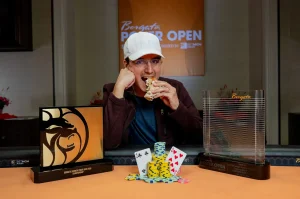 Carlos Chadha won the Borgata $2,700 Championship, earning a prize of $242,385. His years of research and hard work paid off, allowing him to stand out from a field of 565 competitors, proving the value of his dedication.
In his 20-year professional career, Carlos Chadha experienced every poker player's dream and their worst nightmares. He faced and defeated the world's best players, winning huge sums of money; he also spent years without winning anything, questioning whether all his hard work and research had been worthwhile. He won millions of dollars in live tournaments, and also endured long slumps, watching his winnings vanish. This extreme polarization is all too familiar to any professional poker player who has been in the game long enough.
Despite everything he's been through, Chadha has never lost what he originally had: a love for the game. This passion drives him to keep coming back, and this determination leads him to dedicate countless hours to studying and improving – all of which paid off handsomely at the final table of the 2026 Borgata Summer Poker Open $2,700 tournament.
Chadha entered the final table with a huge chip lead and swept through the field in just over three hours, emerging victorious from a field of 565 players. In the final hand, he made a crucial river call against Maxwell Young to win the first prize of $242,385.
Borgata Summer Poker Open $2,700 Final Table Results
| Ranking | player | country | bonus |
|---|---|---|---|
| 1 | Carlos Chadha Villamarin | United States | $242,385 |
| 2 | Maxwell Young | United States | $167,985 |
| 3 | Nicholas Verderamo | United States | $116,525 |
| 4 | James Tedrow | United States | $77,345 |
| 5 | Michael Renna | United States | $54,100 |
| 6 | Russ Dunlevy | United States | $42,975 |
| 7 | Andrew Porter | United States | $34,620 |
| 8 | Ricky Guan | United States | $28,160 |
| 9 | Mike Dentale | United States | $22,945 |
"This is fantastic. It's the culmination of four years of hard work on tournaments. Sixteen months of research into exploitative play, deep stacks, and multi-way cash games. All of that has come together in this tournament. I've used everything I have," Chadha said.
This Washington, D.C. resident's winnings bring his career total to over $3.5 million. If this title differs from all his previous victories, it's that this one seemed almost too smooth. "It was incredibly smooth. I felt like I played really well. I felt like everyone else played really well. Yeah, it was incredibly smooth. Usually there are more ups and downs. I mean, I only lost my chip lead for about half an hour or an hour. So, yeah, it was smooth, enjoyable, and I really enjoyed it. I felt like I basically knew what I was doing in every situation," he said.
"This has paid off with thousands of hours of research. It was finally worth it. You know, a lot of times you do research but don't get results, especially in multi-table live tournaments. So, it feels great to finally see tangible results from all that effort."
The championship title convinced Chadha that his efforts were worthwhile.
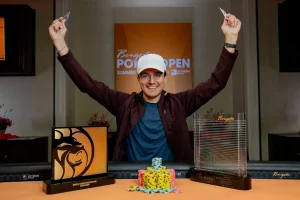
Chadha's career resume includes numerous final tables in major buy-in tournaments. From the World Series of Poker in Las Vegas to the Bahamas and the transatlantic EPT, he has competed in super high roller events around the world, making deep runs in some of the toughest tournaments. He acknowledges that this particular event wasn't at the same level as some of the top tournaments he's played in, but he took one thing from this victory—validation.
"It's not as high-stakes as those high-stakes tournaments where I do well. So, you know, when you're playing against the best players in the world, even if I don't win any of them, I think I'm more proud of those performances," he said.
"This time it felt more like hard work paying off. I mean, I'm more proud of this one. It wasn't as impressive. It didn't look as glamorous at The Hendon Mob. It wasn't my biggest win. I've had a few bigger wins. But it validated that I really am good at poker. Even though I know I'm very good at poker, you still lose money over the long term sometimes, especially in live MTTs. I've had years of slumps. I've had years of losses. I played 1,000 hours a year and lost $100,000. It's great to validate that yes, research, hard work, and experience do pay off. It's a relief that hard work has finally paid off in my life."
Chadha and Young quickly eliminated the rest of the final table opponents.
The final seven players returned to the Borgata poker room at midday to compete for the trophy, with Chadha holding nearly three times the chips of second-place Young. His strategy was to apply constant pressure and use ICM to create an advantage for himself. He felt he had played more, was more experienced, and had done more research than any of his opponents. But even with a huge lead and the ability to dominate the table, he still felt he was at a disadvantage heading into the final day.
“I’ve been opening pots—they’re probably keeping track of my VPIP or something—and I’m pretty sure I have around 501 TP 3T or more. I think I have a significant research advantage, I assume. I don’t know the other players very well, but I assume I’ve done more research than all of them. I’ve probably played more hands than all of them. So, yeah, pretty confident, but then again, you know, I’ve been in this position before and ended up in fourth place, which was really devastating. I know I probably came in with around 351 TP 3T, so I have about a 421 TP 3T chance of winning. I still consider myself to be on the losing end,” he said.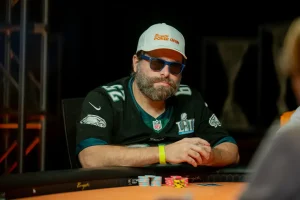
WSOP bracelet winner Andrew Porter was the first to be eliminated, as Young flopped eight pair while Porter failed to make a straight draw. Chadha then flopped top two pair, defeating Russ Dunlevy in the head-to-head match and eliminating Dunlevy in sixth place.
Michael Renna went all-in with 9 pair on an Ace-high flop, shoving his final 1,165,000 chips, but Young called with A-7 and improved to trips on the turn, securing his elimination. Young then hit two pair on the flop, beating Chadha's top pair of Kings, taking the chip lead for the first time today. He then made a straight on the river, eliminating James Tedrow (who won his seat in the $25 BetMGM qualifier) to finish in fourth place, further extending his lead.
Chadha made a crucial river call in the final hand.
Nicholas Verderamo doubled up in two consecutive hands, closing the gap with the two-handed leader, but then went all-in for the third consecutive hand, only to run into Chadha's King and be eliminated in third place. Chadha entered heads-up play against Young with a chip lead of 15,525,000 to Young's 7,000,000. After only eight hands, Young limped on the button, and Chadha raised to 675,000. Young called, and the flop came 5-high. Chadha slowed his pace and checked. Young bet 600,000, and Chadha called.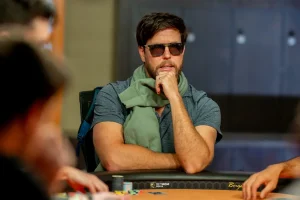
Young bet 1,100,000 on the turn, and Chadha called again. The river card was an 8, and Young went all-in for 2,450,000. Chadha thought for a few minutes, then called with 8-4, making two pair on the river. Young folded to 5 and 3. "I messed up on the river," he yelled to his friends and family after finishing in second place.
Chadha then gave a detailed, stream-of-consciousness explanation of his final hand. In summary, he felt he had more heads-up experience than Young and was ready to use that advantage.
"He might just bet continuation bet with Ace of Spades and King of Spades. He might have K-2 of different suits with King of Spades, A-2 of different suits with Ace of Spades, Q-2 of different suits with Queen of Spades, maybe. He might have any two cards. Any two cards are double-ended straight draws. So, basically, a lot of draws haven't hit... so I really think he has a 6 or A-2. Maybe triplets. It looks like I have an overpair and am just controlling the pot. Like, he might just type me out as top pair, overpair, and think he has a good hand. But he doesn't," Chadha said.
"You know, I guess he's a bit inexperienced in heads-up play because he'd never limped before. That was his first time limping. There are a lot of limping in heads-up. The ranges are really weird. I was a heads-up pro for three years. So I have a lot of heads-up experience. I'm assuming he probably doesn't realize how many weak hands I have, how many 4-8 suits. Like, he might just put me on an overpair, he might think he can beat the overpair, and then value bet. So that's okay. I mean, if you don't have experience—and this is a really deep game—that's okay. So, yeah, it's a tough situation."
The highs and lows of tournament poker are worthwhile for Chadha.
Chadha arrived in Atlanta a few weeks after his triumphant 51st place finish in the WSOP Main Event, where he emerged from a massive field. He understands that such a result is extremely rare in a professional poker player's career. The dizzying highs and terrifying lows of tournament poker can crush a player and drive them away from the game. What keeps players like Chadha coming back is pure passion.
“I’ve had two great results in a row. I just finished 51st out of 9,200 in the World Series. That was my last shot. I won that one game and did even better than my World Series finish. I love tournament poker. I love playing against stronger players in high roller tournaments. It’s not a great way to make money. A friend of mine told me that live tournaments are a luxury. So I’ll keep that in mind. I do enjoy live tournaments, but they really are a luxury, and the volatility is incredible. You can never reach the top in your lifetime, especially if you’re playing in a Main Event with over 100 players,” he said.
"I'm a super tight player. I've been selling a lot of shares to everyone. Yet, I've still experienced some agonizing volatility, having genuinely lost money for several years, and it was incredibly frustrating. I've been very depressed during my losing years. I'll try to avoid that again. I've said it before. Honestly, the pain is worth it. It's like raising a child. In tournament poker, you experience much higher highs and lows than in cash games. Cash games are stable, the money is easy to make, and that's the wise thing to do. Sometimes I wish I wasn't ambitious, just content with playing cash games and living a good life off cash games, but this is my passion. So, you know, I'll keep putting money into it until I stop loving it. I love it, so I'll keep doing it."
Want to change Texas Holdem from "can understand" to "can win"?
If you want to learn more about Texas Hold'em, you can continue reading:
The Origins of Texas Hold'em: Why is it the World's Most Popular Poker Variant?
Texas Hold'em Hand Rankings and Showdown Rules (Beginner’s Essentials)
Texas Hold'em Betting teaching: Check / Bet / Call /Raise and Betting Strategy Analysis
The importance of Texas Hold'em position? Why is the back position more advantageous?
How to play Texas Hold'em? Novices learn Texas Hold'em rules, processes and betting teaching in 10 minutes
Texas Hold'em Starting Hands Strategy Guide: Which Hands to Play?
Texas Holdem Starting Hands Chart Tutorial: Complete Starting Hand Chart and Position Strategy
How to play Texas Hold'em? Complete rules and a hand's flow (Preflop / Flop / Turn / River)
Hunter Poker offers comprehensive tutorials, hand analysis, and strategy sharing to help players upgrade from simply "reading the cards" to understanding the range . This allows you to make better decisions in every hand.
▶️ In Facebook Follow Hunter Poker.
📘 In Youtube Follow Hunter Poker.
Want to learn more about Texas Hold'em gameplay and strategies?
Online Texas Hold'em free tournaments typically have no entry fee, making them ideal for beginners to familiarize themselves with the rules and for advanced players to test strategies and gain experience. View full brand profiles to learn about each platform's free tournament schedule, features, and target audience.
Further News Reading
Regional news
The PartyPoker Tour will travel to Castellón, Spain on October 5th.
Regional news
Tsuf Saltsberg staged a comeback to win his first career €3,000 PLO High Roller title.
Regional news
Aido, Astedt, and Schemion have advanced to the GMillion $ final table, where four million-dollar prizes await.
Regional news