



Regional news
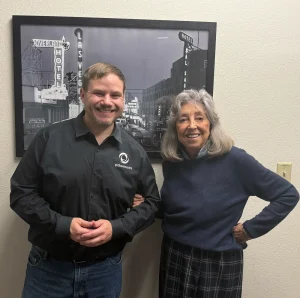
Nevada Representative Dina Titus gave an interview to PokerNews, discussing the progress of the Fair Bet bill, poker tax issues, and why she is optimistic that the bill will pass by the end of 2026.
One of the biggest news stories in the poker world last year was related to a provision in President Trump's "Big and Beautiful Bill" that limited gambling deductions to 90%. This gambling tax change led many poker players to question whether they could continue playing the game professionally.
At this point, Nevada Representative Dina Titus stepped forward. She introduced [a proposal/initiative] last July. FAIR BET ActThe legislation aims to restore the 100% tax deduction for gambling losses. It seeks to ensure that bettors are not taxed on money they did not win.
“This issue is very important to some of my constituents,” Representative Titus said in an exclusive interview with PokerNews’ Chad Holloway from her Las Vegas office. “But you know, it’s not just about professional poker players, it’s about the entire industry, and it’s about recreational bettors.”
Representative Titus continued, "Let me briefly explain the history. When the bill passed the House, it didn't include this clause. It was added in the Senate, almost behind closed doors. But it came from the committee to which our senator belongs, and I thought she would notice it, but she didn't."
"So when a bill goes back to the House, we always scrutinize bills that involve taxes and money very carefully because the gaming industry still has a stigma, and there are always some little traps set for us. So we found that clause during our review and said we had to remove it."
It turns out that this clause was secretly inserted by Republican Senator Mike Crapo of Idaho, surprising politicians from both parties. As a result, Representative Titus's bill received bipartisan support, including from the chairman of the appropriations committee and three members of the ways and means committee.
“I brought in the co-chair of the Game Theory Caucus, a Republican from Pennsylvania,” Representative Titus explained. “That shows the weight of our supporters. When the Ways and Means Committee held its hearing here in Las Vegas, we had the chairman in. I also attended that hearing and explained that this needed to be changed. So he has already made a public statement supporting this.”
Meeting with Seidel
Another person who met with Representative Titus to discuss the matter was Poker Hall of Famer Erik Seidel.
“Yes, he’s a legend,” Congressman Titus said of the poker legend. “It was very exciting to meet him and talk to him. He seems more like a sociology professor than a poker player. You wouldn’t particularly notice him in a crowd, but it’s really great to talk to someone who understands the game, makes a living from it, and is aware of some of the issues. So he can talk about it from both a personal and a policy perspective. He can also talk about some people he’s contacted who have changed their habits in the professional poker world because of this regulation.”
What is the current progress?
Unfortunately, the Fair Bet Act failed to pass in 2025, so the new provisions are now law and in effect. Poker players won't feel the impact until they file their 2026 taxes, meaning we still have time—in fact, until the end of this year—to change this.
“Many people were worried it had to pass by the end of last year, but that’s not the case,” Representative Titus explained. “It has to pass by the end of [2026]. But that doesn’t mean we want to wait. We want to act quickly and get it done because people are planning things: which tournaments to participate in, how much money to spend on gaming, and planning for the whole year.”
"I remain optimistic that we can accomplish this."
"So the sooner the better. We've used every possible method, and we'll continue to do so. My bill has been introduced, and I'm glad it has bipartisan support, and others have introduced bills that do the exact same thing. We're trying to attach it to the National Defense Authorization Act as an amendment to the appropriations bill, as an amendment to the continuing resolution."
"I've always said I don't care how we get it done, as long as we can fix it. So now, there might be another ongoing resolution, or it might have to wait until the end of the year, but it's a very active issue. It's not being shelved somewhere. And at the end of the year, there are always bills like the tax extension bill or the cleanup bill. They're kind of like a Christmas tree, you can put a lot of things on it. So we have a particularly good chance. I'm optimistic that we can get this done."
What can you do to help?
Representative Dina Titus encouraged all poker players, wherever they are, to contact their local representatives to help spread the message.
"The first step is actually education. So it's helpful to let people know that this is an unfair tax system. The way this change works is that if you win $100,000 and lose $100,000, for the past 50 years, you could write it off. Now, if you win $100,000 and lose $100,000, you have to pay taxes on $10,000 because you can only deduct 90%. And that $10,000 is ghost money you never received. So this is not a fair tax policy at all. We have to explain this to everyone."
"The gaming industry is present in every state except Utah and Hawaii. So people everywhere are affected. They need to write to their members of Congress and say, 'Please support us and get this bill passed.' And, you know, this isn't just about professional gamers or casual players. If these players move overseas, go to the black market, or go to platforms like Kalshi, local governments won't collect those taxes either."
To find your local representative and how to contact them, please visit [website address]. house.gov。
Want to change Texas Holdem from "can understand" to "can win"?
If you want to learn more about Texas Hold'em, you can continue reading:
The Origins of Texas Hold'em: Why is it the World's Most Popular Poker Variant?
Texas Hold'em Hand Rankings and Showdown Rules (Beginner’s Essentials)
Texas Hold'em Betting teaching: Check / Bet / Call /Raise and Betting Strategy Analysis
The importance of Texas Hold'em position? Why is the back position more advantageous?
How to play Texas Hold'em? Novices learn Texas Hold'em rules, processes and betting teaching in 10 minutes
Texas Hold'em Starting Hands Strategy Guide: Which Hands to Play?
Texas Holdem Starting Hands Chart Tutorial: Complete Starting Hand Chart and Position Strategy
How to play Texas Hold'em? Complete rules and a hand's flow (Preflop / Flop / Turn / River)
Hunter Poker offers comprehensive tutorials, hand analysis, and strategy sharing to help players upgrade from simply "reading the cards" to understanding the range . This allows you to make better decisions in every hand.
Further News Reading
Regional news
The PartyPoker Tour will travel to Castellón, Spain on October 5th.
Regional news
Tsuf Saltsberg staged a comeback to win his first career €3,000 PLO High Roller title.
Regional news
Aido, Astedt, and Schemion have advanced to the GMillion $ final table, where four million-dollar prizes await.
Regional news