




Texas Hold'em Poker Tutorial Articles
Passive player aggression is an important signal in Texas Hold'em. This article analyzes the meaning of a passive player's sudden aggression through hand replay, helping players avoid wrong calls and significant losses.
Passive Player Aggression It is one of the most easily overlooked, yet also one of the most dangerous, signals in Texas Hold'em.
Many players are used to viewing passive players as "safe opponents," but when such players suddenly start to attack, it often means that their hand strength is already very clear.
This article will analyze the true meaning of a passive player's sudden attack through hand replay, and how to respond.
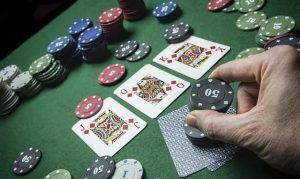
1. The opponent keeps checking and calling, appearing very passive;
2. But suddenly a certain street increased its bets, even going all-in.
This is often the most difficult situation to decide.
Because you will begin to doubt:Is he in Bluff?
Key takeaway: A passive player's offense is usually not about buffs, but about value.
Unlike aggressive players, passive players are characterized by:
1. Rarely place bets actively.
2. Prefers calling rather than raising.
3. Tendency to play strong hands slowly.
Therefore, when he suddenly attacks:It is usually not a random behavior, but is supported by clear card strength.
Hand situation review
1. You are on BTN, holding K♠ Q♠
2. You raise pre-flop, and the big blind calls (a more passive player).
3. Flop: Q♦ 8♣ 4♠ → Opponent checks, you bet, opponent calls.
4. Turn: 2♥ → Your opponent checks again, you bet again, and your opponent calls.
5. River: 8♦ → Opponent suddenly Check-Raise
At this point, how should you make your judgment?
The first misconception: interpreting your opponent using your own logic.
Many players would think this way:If it were me, I'd probably Bluff.
But the problem is:Your opponent is not you.
Passive players typically:
→ Will not frequently Bluff
→ I won't change the rhythm easily.
→ Will not launch a sudden attack with weak cards
The second misconception: Being held hostage by Top Pairs
Your KQ is a pretty good hand.
But in this line:
1. The opponent calls on both streets.
2. River (in pairs)
3. Sudden increase in betting amount
This is already a very strong signal.
Possible range of opponents
In this context, a passive player's Check-Raise typically means:
1. 8x (Trips)
2. Two pairs (Q8)
3. Full House
It contains almost no Bluff.
The best decision in this hand
Preferring Fold.
reason:
1. Opponent type is more passive.
2. Abnormal behavior (sudden attack)
3. The hand structure supports strong hands.
Blindly following suit at this time usually comes at a high price.
What are "abnormal signals"?
In poker, the most important thing is not a single action, but a change in behavior.
When a player:
1. From being passive to suddenly becoming proactive.
2. Always betting small amounts, then suddenly betting large amounts.
3. Always calling, then suddenly raising the bet.
These are all abnormal signals.
How to deal with an attack from a passive player?
1. Greater emphasis on opponent type
2. Reduce Bluff frequency
3. Increase Fold frequency
4. Don't overdo the hero calling.
Why do so many people lose in this scenario?
because:
→ I don't believe my opponent has a card
→ Being held hostage by one's own hand strength
→ Want to catch Bluff
→ Unwilling to Fold
However, in reality, such scene blurs are very rare.
Core Decision Conclusions
When a passive player suddenly attacks, the best thing to do is not to guess the Bluff, but to respect the signals.
Learning to identify unusual behavior can help you avoid significant losses at critical moments.
Core Decision Retrospective: The Crucial Moments That Truly Determine Your Profitability
Once you've mastered the basic rules, what truly influences your long-term wins and losses is whether your decisions on each street are correct.
The following scenarios are key turning points for most players, marking the point where they begin to "lose money or make a profit":
[Continuing the Attack] Should you continue firing after a C-bet and turn? Hand replay analysis
[Common Mistakes] Why does Double Barrel fail? Analysis of Reasons
[Decision Disagreement] Check-Call vs. Check-Raise: Which to Choose? Strategy Breakdown
[Advanced Scenarios] How to play after the flop in a 3-bet pot? Practical analysis
[Pre-flop Strategy] The Real Reason for a Failed BTN Blind Steal? Hand Review
[Opponent Behavior] How to deal with an opponent's Float (floating call)? Decision Analysis
[Multi-Party Pots] Why shouldn't you bet recklessly in multi-party pots? Strategy Analysis
[Abnormal Signal] What does it mean when a passive player suddenly attacks? Retrospective Analysis
[Counter-Strategy] How to adjust when facing aggressive players? Practical analysis
[Sizing Error] How can a wrong betting sizing ruin a good hand? Case study.
[Advanced Techniques] When to Use Overbet? Strategy Analysis
[Slow Play Judgment] When should you slow play? Retrospective Analysis
[All-in Decision] When to go all in? Risk and return analysis
[Missing the Flop] What should you do if you miss the flop? Strategy Analysis
[Key Folding] When to Fold? Decisions to Avoid Continuous Losses
These decisions have no standard answers, but they follow a clear logic. By reviewing your hands, you can understand the real reasons behind every bet, call, and fold, and gradually build your own profitable decision-making model.
Extended Reading for Teaching
Hand resumption
[Review Methods] How do professional players review their hands?
Hand resumption
[Long-term planning] How to build a long-term profit strategy?
Hand resumption
[Strategy Selection] GTO vs Exploit: Which to choose in actual gameplay?
Hand resumption