




Texas Hold'em Poker Tutorial Articles
The Poker Bluff Barrier is a key weakness for many players in Texas Hold'em. This article analyzes why players are hesitant to bluff and how to build offensive capabilities through range and strategy to improve overall profitability.
Poker Bluff Barrier This is one of the most common decision-making bottlenecks that many players encounter when entering the advanced stage.
You may understand ranges, hand values, and betting logic, but at crucial moments, you always hesitate to pull the trigger on Bluff.
This is not a technical problem, but rather a psychological and cognitive obstacle.
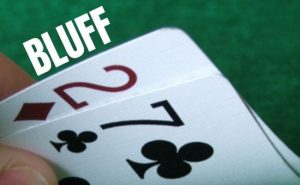
1. Despite having a very good hand to bluff with, they chose to check.
2. Despite the opponent's relatively weak range, they dare not apply pressure.
3. Giving up the opportunity to attack when one should have been playing a strong hand.
When you lack Bluff, your overall strategy becomes extremely predictable.
Key takeaway: Poker Bluff Barriers can cause your strategy to become unbalanced.
When you don't Bluff, you will see:
→ Only bet on strong hands
→ The opponent can easily read the cards.
→ Unable to counter players who discard cards
The result is that you miss out on a lot of pots that you could have won.
Hand situation review
1. You are in BTN, holding A♠ 5♠
2. Pre-flop raise, BB calls.
3. Flop: K♦ 9♣ 3♥ → BB check, you check back.
4. Turn: 7♠ → BB check, check again.
5. River: 2♣ → BB check, you give up.
You have no strong hand, but this hand actually has multiple opportunities to bluff.
Why are you afraid to use Bluff? Three core reasons.
1. Fear of Getting Caught
→ Worried about being called by the opponent, feeling like I've been seen through.
2. Treating Bluff as a "deception" rather than a strategy.
→ Consider Bluff to be risky, rather than part of a reasonable scope.
3. Overemphasis on short-term results
→ One failed attempt at Bluff made me afraid to try again.
What went wrong with this hand?
On this card:
→ BTN has a range advantage
→ BB has a lot of weak cards and missed cards.
→ You can represent strong hands like Kx and overpair.
This is a standard situation where C-bet Bluff can be played.
What is the essence of Bluff?
Bluff didn't bet randomly, but rather:
→ Exploit the opponent's range weaknesses
→ Utilize card advantage
→ Make your opponent fold a better card
Bluff is the key tool that lets you "win without cards".
Correct thinking: Bluff is part of the strategy.
A skilled player doesn't ask, "Do I have any cards?"
They would ask:
→ Do I have a range advantage?
→ Are your opponents prone to folding?
→ Is this location suitable for applying pressure?
If the answer is yes, Bluff has made the right decision.
How to overcome the Bluff barrier?
→ Failure to accept Bluff is a normal result.
→ Integrate Bluff into the overall strategy, rather than a single action.
→ Practice continuing to attack with favorable hands
→ Establish a framework for determining "when is it necessary to Bluff"
Core Decision Conclusions
When you're afraid to bluff, you're giving up one of the most important sources of profit in poker.
Truly profitable players don't always have a winning hand; they win the pot even when they don't.
Mental Model Review: What truly influences your decisions is not just technology.
Many players aren't bad at the game, they're just "thinking wrong." What truly influences winning or losing is often your judgment, mindset, and decision-making process.
The following mindset issues are the key reasons why most players are unable to achieve consistent profitability over the long term:
[Cognitive Bias] Why do you always overestimate your hand? Hand review analysis
[Results Trap] Results-Oriented vs. Correct Decision Making: Did You Really Make the Right Move?
[Psychological Impact] How does fear affect your betting decisions? Analysis
[Bluff Barrier] Why are you always afraid to Bluff? Analysis of the Reasons
[Overconfidence] Why does overconfidence actually lead to more losses? Retrospective analysis
[Decision-Making Process] How to establish a stable decision-making process? Teaching Analysis
[Emotional Management] How to prevent emotions from affecting your performance? Strategy Analysis
[Intuition Training] How to cultivate Range judgment intuition? Deconstruction and analysis.
[Insufficient Information] How to make decisions when information is incomplete? Practical analysis
[False Intuition] Why can "feelings" harm you? Hand review
[The Ability to Read People] How to determine if your opponent is faking it? Strategy Analysis
[Intuitive Judgment] When should we trust our intuition? Analysis
[Thinking Style] Thinking speed vs. thinking quality: which is more important?
[Reaction Delay] Why are you always one step behind? Analysis of the reasons.
[Profit Mindset] How to establish a mindset for long-term, stable profitability?
[Final Chapter] How to Build Your Own Complete Poker Profit System (Ultimate Guide)
These issues are not fundamentally technical, but rather differences in thinking. By reviewing mental models, you can refine your decision-making logic, avoid repeating mistakes, and gradually build your own long-term profitable decision-making system.
Extended Reading for Teaching
Hand resumption
[Review Methods] How do professional players review their hands?
Hand resumption
[Long-term planning] How to build a long-term profit strategy?
Hand resumption
[Strategy Selection] GTO vs Exploit: Which to choose in actual gameplay?
Hand resumption