



International news
The Roman Romanovsky poker debt incident has drawn attention, with the former MTT legend going from millions in charitable earnings to $3.5 million in debt, revealing the high risks and realities of professional poker.
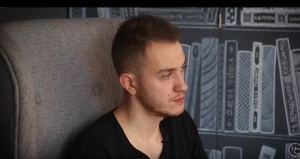 Roman Romanovsky's transformation from an MTT legend to being $3.5 million in debt.
In the professional poker world,Roman RomanovskyRomeopro (online name) was once a role model for countless MTT players. However, this professional player, who once created a charitable miracle, has now publicly admitted to being in debt for more than $3.5 million, with only about $7,500 left in his account, shocking the entire poker community.
This is not just a story of a "master falling from grace," but also a profound case study about poker volatility, confidence, and professional risk.
From Philanthropic Legend to Peak Moment
In 2016, Romanovsky launched a groundbreaking "charity marathon." His goal was to earn $600,000 in 666 days and donate two-thirds of it.
Ultimately, he far exceeded expectations—according to data websites Sharkscope According to statistics, he has accumulated a profit of $1.5 million, of which $1 million was donated to charity.
This feat made him famous among MTT (Multi-Table Tournament) players worldwide and solidified his status as a "top high-stakes player".
Retirement and Return: Challenging High-Paying Matches Again
In 2019, Romanovsky announced his retirement, but after a brief hiatus, he chose to return to the professional scene in 2022.
Upon his return, he launched high-priced courses and planned a new marathon challenge—to earn $5 million across 666 sessions. However, the plan ultimately failed to maintain its momentum and gradually faded from public view.
At the same time, the industry began to notice that he gradually shifted to low buy-in tournaments, a stark contrast to his previous high-stakes table style.
Debts Revealed: Where Did the $3.5 Million Come From?
In March 2025, Romanovsky personally disclosed his financial situation, confirming that his debts exceeded $3.5 million.
He summarized the core reasons that led to the financial collapse:
- Overconfidence and Decision-Making Errors
- The high volatility of MTT is severely underestimated.
- High living expenses in the long term
- In high-buy-in ($5,000+) tournaments, the ROI dropped to -30%, resulting in a cumulative loss of nearly $2 million.
Nevertheless, he still maintains that his technical skills are still at the top level in the mid-to-high stakes games, and believes that he can achieve a comeback through long-term accumulation of games.
Self-rescue plan: High-intensity traffic boosting and fund management
Romanovsky then proposed a highly controversial "self-rescue plan":
- Participate in approximately 200 matches per day
- The total number of matches per year exceeds 50,000.
- The goal is to raise the funds back to $50,000.
However, the actual results were not ideal. The initial 12 sessions, totaling over 2300 matches, resulted in a loss.
Its funds once fell to less than $3,000, but have now rebounded to about $7,500.
To reduce the risk, he began to... GGPoker The platform sells game shares to mitigate volatility pressures.
Controversy erupts: Strength and credibility questioned
As the incident unfolded, poker forums and communities engaged in heated discussions about Romanovsky.
Some players pointed out that its long-term EV data performance does not have a top-tier advantage, and even questioned its performance:
- Overestimating one's own strength
- Lack of transparency regarding information for investors and creditors
- The teaching content does not match the actual combat performance.
Supporters argue that he remains top-notch in strategic understanding and hand analysis, but his over-reliance on exploitative play has led to a loss of advantage in the current competitive environment.
Debt issues: Market confidence shaken
More controversially, some creditors have begun to publicly resell their debts, even offering discounts.
However, some voices warn that the actual value of these debts may be extremely low because:
- Lack of stable income
- Almost no realizable assets
- Long-term profitability is questionable.
This transformed the entire incident from a personal crisis into a discussion about the "business model of professional poker".
Industry Reflection: Poker is More Than Just a Skill
This incident has sparked deeper reflection within the industry:
Professional poker is not only a competition of skills, but also a comprehensive test of psychology, bankroll management, and lifestyle.
Even top players can get into trouble during long-term volatility if they neglect bankroll management and control of living expenses.
Summarize
Roman Romanovsky's case serves as a reminder to all poker players:
High returns are often accompanied by extreme risks. From a philanthropic legend to a debt crisis, his experience is not only a personal story, but also a mirror reflecting the entire professional poker ecosystem.
In this highly unpredictable competitive arena, what truly determines success or failure may not just be skill, but rather the awareness of risk and the ability to manage oneself in the long term.
Mental Model Review: What truly influences your decisions is not just technology.
Many players aren't bad at the game, they're just "thinking wrong." What truly influences winning or losing is often your judgment, mindset, and decision-making process.
The following mindset issues are the key reasons why most players are unable to achieve consistent profitability over the long term:
[Cognitive Bias] Why do you always overestimate your hand? Hand review analysis
[Results Trap] Results-Oriented vs. Correct Decision Making: Did You Really Make the Right Move?
[Psychological Impact] How does fear affect your betting decisions? Analysis
[Bluff Barrier] Why are you always afraid to Bluff? Analysis of the Reasons
[Overconfidence] Why does overconfidence actually lead to more losses? Retrospective analysis
[Decision-Making Process] How to establish a stable decision-making process? Teaching Analysis
[Emotional Management] How to prevent emotions from affecting your performance? Strategy Analysis
[Intuition Training] How to cultivate Range judgment intuition? Deconstruction and analysis.
[Insufficient Information] How to make decisions when information is incomplete? Practical analysis
[False Intuition] Why can "feelings" harm you? Hand review
[The Ability to Read People] How to determine if your opponent is faking it? Strategy Analysis
[Intuitive Judgment] When should we trust our intuition? Analysis
[Thinking Style] Thinking speed vs. thinking quality: which is more important?
[Reaction Delay] Why are you always one step behind? Analysis of the reasons.
[Profit Mindset] How to establish a mindset for long-term, stable profitability?
[Final Chapter] How to Build Your Own Complete Poker Profit System (Ultimate Guide)
These issues are not fundamentally technical, but rather differences in thinking. By reviewing mental models, you can refine your decision-making logic, avoid repeating mistakes, and gradually build your own long-term profitable decision-making system.
Further News Reading
International news
APT Jeju Station | Scott Margereson wins High Roller title, Hongsheng Zhang achieves career-best third place.
International news
Love from Paris: French warriors win hard-fought victory in Marrakech
International news
Nine cards flopped to determine the RGPS Lake Erie Main Event champion
International news