


Regional news
2013 WSOP Main Event champion Ryan Riess reflects on his path to victory, compares the poker landscape then and now, and shares his thoughts on the 2026 final table.
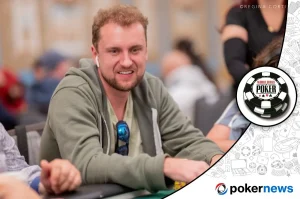 2013 WSOP Main Event champion Ryan Riess reflects on his path to victory, compares the poker landscape then and now, and shares his thoughts on the 2026 final table.
The concept of the "November Nine" was already widely known when Ryan Riess made it to the final table of the 2013 World Series of Poker (WSOP) Main Event.
Since 2008, the WSOP Main Event has had a four-month off-season, and the event's popularity has increased as the tournament is broadcast weekly on ESPN.
The last "November Nine" was in 2016, when Kenny Hallaert made his first appearance at the Main Event final table. But after years of 1-2 day breaks, 2026 will see a three-week gap.
In an interview with PokerNews, 2013 world champion Riess reflected on his victory 13 years ago and why he considered three weeks to be the "sweet spot" of the biggest poker final table.
From first competition to world champion

Anyone who enters the main event, even experienced professionals, has only one goal in mind: to win the championship. Fortunately for Riess, he achieved this goal on his very first attempt.
"2013 was my first time participating in the WSOP and the Main Event," Riess said. "(When I made it to the final table) my first reaction to the offseason was pure excitement and disbelief—I actually made it to the November Nine. That was every poker player's dream at the time."
"That was every poker player's dream back then."
Riess started the final table in the middle of a crowded arena. To his right were short-stacked players Sylvain Loosli, Michiel Brummelhuis, and Mark Newhouse, while he also had to contend with strong contenders like Amir Lehavot and Marc McLaughlin to his left, and chip leader JC Tran was also lurking in the shadows.
2013 WSOP Main Event Final Table Chip Count
| seat | player | country | Chip quantity |
|---|---|---|---|
| 1 | Sylvain Loosli | France | 19,600,000 |
| 2 | Michiel Brummelhuis | Netherlands | 11,275,000 |
| 3 | Mark Newhouse | United States | 7,350,000 |
| 4 | Ryan Riess | United States | 25,875,000 |
| 5 | Amir Lehavot | Israel | 29,700,000 |
| 6 | Marc McLaughlin | Canada | 26,525,000 |
| 7 | JC Tran | United States | 38,000,000 |
| 8 | David Benefield | United States | 6,375,000 |
| 9 | Jay Farber | United States | 25,975,000 |
But Riess had his own ideas. A 68th place finish in the Borgata Poker Open Main Event was all the preparation he needed.
"My plan is to play poker during the offseason," Riess said. "It's really cool because a lot of people have noticed me, wished me good luck, and given me a lot of positive energy and a great atmosphere."
"There were far fewer learning tools back then than there are now. I just traveled around playing poker tournaments to gain practical experience, but it would be a lie to say that I was burying myself in research."
Riess put it bluntly, but it's understandable. The poker environment a decade or so ago was vastly different from today's solver-dominated era. He said there was no discussion of GTO software or ICM simulation models back then.
"To be honest, I didn't prepare for my specific position as much as I should have. My goal and strategy were to win at all costs, and luckily, the God of Cards chose me."
Looking ahead to 2026
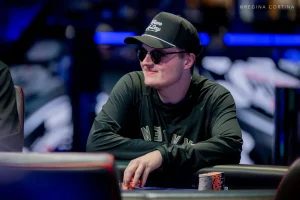
ESPN has already begun broadcasting the 2026 WSOP Main Event, and Riess says he looks forward to watching the final table.
"November 9 was fantastic, I loved every minute of it," he said. "But the break might have been a bit too long. I think three weeks would have been much better. One day off is the worst option right now."
"A few weeks is a perfect time to rest for the most important days of these people's lives."
Riess said he was particularly focused on one player: chip leader Lucas Jumalon.
"He was sitting in the driver's seat, but this is poker. Anything can happen."
Want to change Texas Holdem from "can understand" to "can win"?
If you want to learn more about Texas Hold'em, you can continue reading:
The Origins of Texas Hold'em: Why is it the World's Most Popular Poker Variant?
Texas Hold'em Hand Rankings and Showdown Rules (Beginner’s Essentials)
Texas Hold'em Betting teaching: Check / Bet / Call /Raise and Betting Strategy Analysis
The importance of Texas Hold'em position? Why is the back position more advantageous?
How to play Texas Hold'em? Novices learn Texas Hold'em rules, processes and betting teaching in 10 minutes
Texas Hold'em Starting Hands Strategy Guide: Which Hands to Play?
Texas Holdem Starting Hands Chart Tutorial: Complete Starting Hand Chart and Position Strategy
How to play Texas Hold'em? Complete rules and a hand's flow (Preflop / Flop / Turn / River)
Hunter Poker offers comprehensive tutorials, hand analysis, and strategy sharing to help players upgrade from simply "reading the cards" to understanding the range . This allows you to make better decisions in every hand.
▶️ In Facebook Follow Hunter Poker.
📘 In Youtube Follow Hunter Poker.
Want to learn more about Texas Hold'em gameplay and strategies?
Online Texas Hold'em free tournaments typically have no entry fee, making them ideal for beginners to familiarize themselves with the rules and for advanced players to test strategies and gain experience. View full brand profiles to learn about each platform's free tournament schedule, features, and target audience.
Further News Reading
Regional news
IPG Jiuhuashan Station | The final eight-player table for the main event is set, with Chen Jianghuai leading the championship battle with 9.445 million chips.
Regional news
Global Poker Championship | Zhang Congya wins $300,000 in Cyprus, bringing her career winnings close to $950,000 and returning to the top of the Chinese women's poker leaderboard.
Regional news
RSOP Dongying Station | Hou Xinwei reverses Yang Guohao's lead to win the Main Event title, Shang Fatao finishes third, and Li Yongsheng's title defense ends in fourth place.
Regional news