


International news
Lauri Saaskilahti's heroic call in the 2026 WSOP Main Event heads-up match sparked heated debate. Professional players believe this hand wasn't just a simple mistake, but a true reflection of top players' confidence in reading the game.
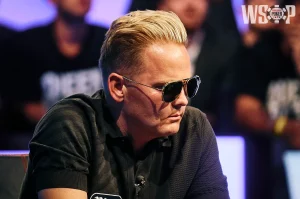 Lauri Saaskilahti's heroic call in the 2026 WSOP Main Event heads-up match sparked heated debate. Professional players believe this hand wasn't just a simple mistake, but a true reflection of top players' confidence in reading the game.
Ultimately, Lucas Jumalon became the 2026 WSOP Main Event champion with a prize of $10 million.
However, the outcome might have been very different had it not been for his crucial hand against Lauri Saaskilahti in the heads-up stage.
This Finnish player emerged victorious from a massive field of 9,208 participants, making a crucial, heroic call in heads-up play when only two remained, drawing mixed reactions. PokerNews recaps the hand and offers some expert insights from the poker world.
This hand

As he did throughout the final table, Jumalon maintained a chip lead at the start of heads-up play. Throughout the final table—not just in the heads-up stage—Saaskilahti made it clear that no matter how large Jumalon's chip lead, he wouldn't let it dictate his strategy.
This hand came after Saaskilahti had just doubled up and was just one step away from the chip lead. Jumalon limped in from the button with Q♠5♦, and Saaskilahti checked from the big blind with J♦3♦.
The flop came A♠K♠4♣, and Saaskilahti checked. Jumalon continued betting 4 million in the 12 million pot, and Saaskilahti called.
The turn J♠ gave Jumalon both a straight and a flush draw. Saaskilahti checked, and this time Jumalon bet twice the pot—40 million in a 20 million pot.
Saaskilahti called, and the river card, a 6♠, completed the board and also gave Jumalon a flush. Saaskilahti checked, and Jumalon overbet again—betting 180 million in a 100 million pot.
"Heroic call or tack?"
This bet put his opponent in deep thought. Saaskilahti knew that if he called but misjudged the situation, he would be left with only 8 big blinds and face a 12:1 chip disadvantage. Essentially, all his hopes in the Main Event rested on this hand.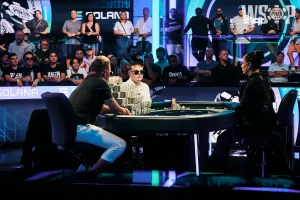
"Heroic call or fold?" Saaskilahti shouted a few minutes later. "Do you have a hand?"
Saaskilahti carefully observed his opponent, while Jumalon remained seated.
“I only have a Jack,” Saaskilahti continued. “But maybe that will be enough.”
After careful consideration, Saaskilahti called, only to receive bad news. The hand didn't immediately end his Main Event run—that happened two hands later—but it sparked heated debate within the poker community about whether he had single-handedly squandered his chance to win the $10 million prize.
Reactions from all sectors
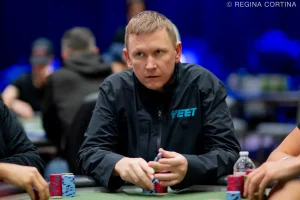
“I made a heroic call, but this time the result wasn’t what I wanted,” Saaskilahti said of the hand. He still took home the $6 million prize in second place and seemed unfazed by his decision. “That’s poker. Today was that one key hand.”
"My goal was to win the championship," he continued. "Unfortunately, I wasn't able to achieve my goal. This tournament was truly amazing, a very interesting journey; a once-in-a-lifetime experience."
"I can't be too disappointed. Second place, six million dollars. That's not too bad."
While most non-professional opinions online tend to consider Saaskilahti's call a huge mistake, others have more nuanced perspectives.
Ben Lamb, an experienced WSOP Main Event final table player who has reached the final table twice (in 2011 and 2017), says that what makes great players great is that they trust their hand reading.
“Sometimes, the read is wrong, or they get lost in the process,” he continued. “As Scott Seiver said, if the river is a blank and he calls a big bet with third pair, he looks like a genius.”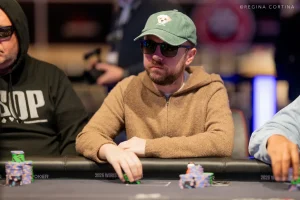
Seiver himself also shared his thoughts on Twitter, and received support from Jesse Lonis and others.
Patrick Leonard, who coached eventual champion Jumalon before this year's final table, offered a typical theoretical perspective. In a now-deleted post, he provided a detailed analysis of the possible hand ranges held by both players.
"The key is that every card that isn't Q♠ is the same card. If he had called with 10♠, people probably wouldn't have cared so much. Interestingly, the hands that Lucas would flat call with include Q♠ are different suit combinations from Qx2x to Qx6x, so blocking those hands with Jx3x is actually better than using straights or two pairs."
"J is also very good. He will never bluff if he has a J on the turn. So J is good, and 3 is good too. Calling with this hand is probably better than with many, many hands. The point is not that we have a 'third pair,' but that we have a hand that catches bluffs."
Others expressed dissatisfaction with the shouting and overall noise from Jumalon's family and friends during the decision-making process in Saaskilahti.
Want to change Texas Holdem from "can understand" to "can win"?
If you want to learn more about Texas Hold'em, you can continue reading:
The Origins of Texas Hold'em: Why is it the World's Most Popular Poker Variant?
Texas Hold'em Hand Rankings and Showdown Rules (Beginner’s Essentials)
Texas Hold'em Betting teaching: Check / Bet / Call /Raise and Betting Strategy Analysis
The importance of Texas Hold'em position? Why is the back position more advantageous?
How to play Texas Hold'em? Novices learn Texas Hold'em rules, processes and betting teaching in 10 minutes
Texas Hold'em Starting Hands Strategy Guide: Which Hands to Play?
Texas Holdem Starting Hands Chart Tutorial: Complete Starting Hand Chart and Position Strategy
How to play Texas Hold'em? Complete rules and a hand's flow (Preflop / Flop / Turn / River)
Hunter Poker offers comprehensive tutorials, hand analysis, and strategy sharing to help players upgrade from simply "reading the cards" to understanding the range . This allows you to make better decisions in every hand.
▶️ In Facebook Follow Hunter Poker.
📘 In Youtube Follow Hunter Poker.
Want to learn more about Texas Hold'em gameplay and strategies?
Online Texas Hold'em free tournaments typically have no entry fee, making them ideal for beginners to familiarize themselves with the rules and for advanced players to test strategies and gain experience. View full brand profiles to learn about each platform's free tournament schedule, features, and target audience.
Further News Reading
International news
All roads lead to London GUKPT Grand Finals: £1.2 million guaranteed prize money
International news
PokerStars on FanDuel bucks the trend and grows, while the US online poker market stagnates.
International news
The youngest South African gold bracelet winner wins the APC Main Event.
International news