




Poker Range Narrowing It is one of the core foundations of advanced card reading skills in Texas Hold'em.
Many players will directly guess their opponent's hand in actual games, but true masters do not guess the cards, but rather narrow down the opponent's overall range step by step.
The essence of range narrowing is not finding a single answer, but rather eliminating unreasonable combinations with each action and each new card.
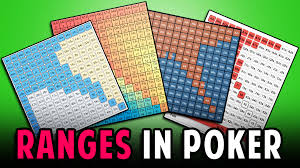
1. What cards did the opponent actually hold?
2. Does he have any big names here?
Key conclusion: Poker Range Narrowing = Understanding your opponent through the process of elimination
The essence of range contraction:
1. Start with the possible range
2. Eliminate gradually based on actions.
3. Make the opponent's range increasingly clear.
You're not guessing the answer; you're constantly eliminating illogical combinations.
What is Range Narrowing?
Range Narrowing
1. This refers to gradually narrowing down the opponent's possible hand set through each action and card information.
2. This is a practical interpretation method derived from Range thinking.
3. It is a crucial foundation for all advanced card reading, Hero Call, Hero Fold, Barrel, and Bluff decisions.
A true master doesn't guess correctly the first time, but rather reduces the opponent's chances of success.
Why is range shrinking important?
→ This can avoid result-oriented card guessing
→ This can make your bluffs, values, and calls more informed.
→ It can more accurately determine the ratio of strong to weak cards remaining in the opponent's hand.
→ Allows you to choose a higher EV option for Turn and River.
Many bad decisions are not because you don't know how to play cards, but because you have no idea what your opponents have left.
What four things should you look at when considering range contraction?
1. Position
→ The opening and calling ranges are inherently different in different positions.
2. Action
→ Opening, Call, 3-bet, Check, Call, and Raise are all within the filtering range.
3. Board Texture
→ Different card combinations will make some combinations reasonable and others unreasonable.
4. Route (Line)
→ The consecutive actions of Flop, Turn, and River will cause the range to converge more and more.
The concept of range contraction is not about looking at a single action, but about understanding the entire line as a whole.
Classic practical scenarios
1. You call on the BTN after the opening (CO).
2. Flop: K♣ 9♠ 4♦, your opponent bets, you call.
3. Turn: 2♣, opponent bets again.
Question: Now that we've reached this point, how should we gradually shrink the opponent's range?
Incorrect thinking: Directly guessing he has KQ or AA
Many players will:
→ If you see your opponent betting continuously, lock in one or two high-scoring hands.
→ Ignore the fact that your opponent may still have bluffs, semi-bluffs, and medium-value hands.
→ To make one's interpretations overly absolute
Result: You are not reading the cards, but using imagination instead of analysis.
Correct thinking: Start with a broad approach, then gradually eliminate unreasonable combinations.
In this context:
→ CO opening itself represents a relatively complete pre-vault range.
→ Flop on a K-high board involves continuation betting, typically retaining a large number of Kx, overpair, some air, and backdoor cards.
→ After turning and continuing to bet, weak air combinations will begin to decline, while the proportion of medium-to-strong value hands and bluffs with follow-up equity will increase.
Conclusion: Range shrinking is not a one-time event, but rather each action involves a combination of deletion and retention.
Three core principles of scope reduction
1. Start with a reasonable range of cards, not with a single hand.
→ If the initial perspective is too narrow, it's easy to make mistakes along the way.
2. For every action, ask yourself: Which cards would be played this way again?
→ It's not about what he did, but about which cards reasonably support that action.
3. The range structure must be reassessed for each new card.
→ Turn and River are not just supplementary information; they reorganize the entire strength distribution.
The most common mistake in range shrinking
→ Locking in your opponent to one or two hands too early
→ Ignore the effect of position on the range of the roll.
→ Only look at the betting, not the entire path and the changes in the cards.
→ They don't distinguish which hands they should continue betting on and which hands they should have folded long ago.
The worst thing about narrowing your scope is not a lack of information, but that you stop thinking too early.
Advanced strategies: Range Narrowing × Line × Combo × Blocker
Experts' Gathering:
→ First construct the initial range based on the location.
→ Delete unreasonable combinations based on each action.
→ Use combinations to determine the relative ratio of Value to Bluff
→ In the final interpretation, include the Blocker in the Turn and River phases.
Truly advanced card reading isn't about guessing correctly the first time, but about making your opponent's range clearer with every move.
Core Decision Conclusions
Texas Hold'em is not mind reading, but rather information censorship.
Once you learn to narrow down your options, you'll stop obsessing over "what move he's using" and start to truly understand: what might your opponent have left when they reach this point on this path. This is the most important analytical ability for advanced players.
Specific Scenario Retrospective: Key Decisions in Different Situations
Certain scenarios can drastically alter decision-making logic, such as tournament pressure, chip depth, positional structure, range matchups, and betting patterns.
When you enter different situations, the correct approach isn't just about looking at your hand, but about understanding the overall context. The following specific scenarios and core themes are key to influencing wins and losses and long-term profitability:
I. Special Scenarios in the Championship
[ICM Pressure] How to make decisions in the ICM tournament scenario?
[Bubble Phase] Should we be aggressive or conservative during the Bubble phase?
[Final Table] How should key moves be handled?
[Short Code Strategy] How should Short Stack be typed?
[Deep Stack Strategy] What are the differences in how Deep Stack is played?
[Blind Stealing Strategy] How to consistently steal blinds in tournaments?
【Stealing Blinds vs. Counter-Stealing Blinds】Strategies for Countering Blinds in the Bubble Phase
[Middle Chip Dilemma] Why is the middle chip the hardest to beat?
[Pressure Transfer] How to transfer ICM pressure to the opponent?
[Final Table Mindset] How to go from the final table to the championship?
[Chip Management] How to control risk and avoid collapse?
[Complete Tournament Strategy] The entire process from entry to victory
II. Core of the Underlying Strategy
[Position Advantage] How to play in different positions? A complete analysis of BTN / CO / SB / BB
[Range Thinking] Why do expert players look at the range instead of their hand?
[3-bet strategy] When should you raise your bet? How to counter your opponent's opening?
How does bet sizing affect your EV?
[Betting Line] How to design a complete Flop / Turn / River Line?
Fold Equity: How can you win without showing your cards?
III. Practical Decision-Making After the Cards Are Flipped
[C-bet Strategy] When should you continue betting?
[Turn Strategy] Should we fire the second shot?
[River Decision] Should the last street be Value or Bluff?
When should you retaliate?
[Blocker Application] What is a blocking sign? How does it influence decision-making?
[Range Shrinking] How to understand your opponent's range step by step?
IV. Advanced Competition and Professional Mindset
[Exploit Strategy] How to achieve stable profits for different player types?
[GTO vs Exploit] How to choose in actual combat?
[Result Bias] Why do I still lose even when I guess correctly?
[Decision-making process] How do experts make the right decisions quickly?
Why does overconfidence actually lead to more losses?
[Emotional Management] How to avoid Tilt?
How to establish a stable profit-making mindset for long-term EV (Electronic Vehicle) businesses?
V. Common Hand Issues and Practical Problems
[All-in Decision] When should you go all in?
[Missed Card] What should I do if I missed?
[Slow Play Judgment] When should you slow play?
Why do expert players rarely play marginal hands?
[Key Fold] When should you fold?
VI. Basics for Beginners and Traffic Sources
[Starting Hand Strategy] A Complete Guide for Beginners
Texas Hold'em Rules: Complete Gameplay Tutorial (2026 Latest Version)
[Poker Card Rankings] Card Rankings and Comparison Rules
Texas Hold'em Terminology: A Complete Guide from Beginner to Advanced Players
How to win money in Texas Hold'em? A complete analysis of the thought process.
Different scenarios require entirely different decision-making logic. From tournament pressure and chip depth to position, range, and post-flop strategy, each situation demands a different framework for thinking. When you can systematically understand these specific situations, you're no longer just playing by feel, but truly establishing a sustainable and profitable decision-making system.