

International news
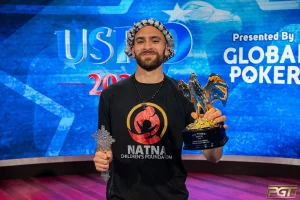
Latest report from US Poker Open 2026! Aram Zobian wins the $292,800 championship while also promoting children's charity projects, demonstrating that high-stakes poker and social responsibility go hand in hand.
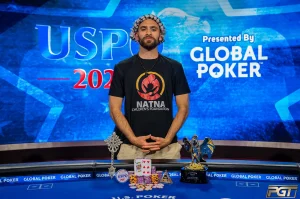 Aram Zobian wins the 2026 US Poker Open Championship and advocates for charity.
USPO 2026 Highlights: Aram Zobian Takes the Championship
The 2026 US Poker Open continues to draw global attention in the poker world, with Event #9 ($15,000 No-Limit Hold'em) reaching its final showdown. Professional poker players from the United States... Aram Zobian Successfully defeated the opponent Brandon WilsonHe won the championship and received a prize of $292,800.
This event attracted 61 players and had a total prize pool of $915,000. The final table lineup was star-studded, making it one of the most prestigious events of this year's USPO.
Final table results: Top players gathered together
The final table of this competition features many world-class players, including:
- Champion: Aram Zobian ($292,800)
- Runner-up: Brandon Wilson ($183,000)
- Third Place:Chino Rheem($128,100)
- Fourth place:Marius Gierse($91,500)
- Fifth place: Nicholas Seward ($68,625)
- Sixth place: Clemen Deng ($50,325)
This competition was not only fierce, but it also showcased the high level of skill and strategic depth required in today's high-stakes poker.
Consistent Performance: Outstanding Performance in Three Consecutive Final Table Matches
Zobian displayed extremely consistent performance at this year's USPO, having reached the final table in two consecutive tournaments before winning the title.
- Event #7: 4th place ($70,000)
- Event #8: 5th place ($68,625)
Reaching the final table three times in a row and ultimately winning the championship fully demonstrates its competitive strength and consistency in high-stakes events.
In a post-match interview, Zobian said, "I'm in great shape right now, and I'm very grateful. There was an element of luck involved, but I also made the right decisions."
Fighting for Charity: The Combination of Poker and Philanthropy
Beyond his poker skills, Zobian is also known for his charitable work. He is Natna Children's Foundation The co-founder of the organization, which is dedicated to helping children affected by war.
The foundation primarily supports children in the Tigray region of Ethiopia, providing:
- Food assistance
- Educational Resources
- Psychological support and trauma therapy
Zobian stated that due to his Armenian background, he has a deeper empathy for regions experiencing war and human rights issues, which is why he is involved in charitable work.
Key Mindset: Focus and Gratitude Lead to Champions
After coming close to winning several championships, Zobian didn't put too much pressure on himself. He emphasized that success comes from focusing on the present and maintaining a good mindset.
"I don't put pressure on myself; I just focus on making the best decisions while maintaining a grateful heart."
This stable mindset became a crucial factor in his ability to perform consistently under high pressure.
Key Match: The Final Move to Win the Championship
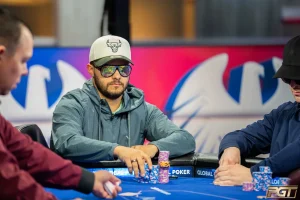
Entering the heads-up stage, Zobian initially trailed his opponent Brandon Wilson. However, he gradually caught up and overtook him in chips.
In the final decisive moment:
- Zobian: K-6
- Wilson: A-9
The flop came in Zobian's favor, allowing them to overtake Zobian and secure the victory, completing a comeback to win the championship.
High-stakes tournament trends: Emphasis on both strength and influence
Zobian's victory not only demonstrates the skill level of high-stakes players, but also shows that modern professional poker players are expanding their influence—from the poker table to public welfare and social responsibility.
This diversified development has also brought more positive attention to poker worldwide.
Specific Scenario Retrospective: Key Decisions in Different Situations
Certain scenarios can drastically alter decision-making logic, such as tournament pressure, chip depth, positional structure, range matchups, and betting patterns.
When you enter different situations, the correct approach isn't just about looking at your hand, but about understanding the overall context. The following specific scenarios and core themes are key to influencing wins and losses and long-term profitability:
I. Special Scenarios in the Championship
[ICM Pressure] How to make decisions in the ICM tournament scenario?
[Bubble Phase] Should we be aggressive or conservative during the Bubble phase?
[Final Table] How should key moves be handled?
[Short Code Strategy] How should Short Stack be typed?
[Deep Stack Strategy] What are the differences in how Deep Stack is played?
[Blind Stealing Strategy] How to consistently steal blinds in tournaments?
【Stealing Blinds vs. Counter-Stealing Blinds】Strategies for Countering Blinds in the Bubble Phase
[Middle Chip Dilemma] Why is the middle chip the hardest to beat?
[Pressure Transfer] How to transfer ICM pressure to the opponent?
[Final Table Mindset] How to go from the final table to the championship?
[Chip Management] How to control risk and avoid collapse?
[Complete Tournament Strategy] The entire process from entry to victory
II. Core of the Underlying Strategy
[Position Advantage] How to play in different positions? A complete analysis of BTN / CO / SB / BB
[Range Thinking] Why do expert players look at the range instead of their hand?
[3-bet strategy] When should you raise your bet? How to counter your opponent's opening?
How does bet sizing affect your EV?
[Betting Line] How to design a complete Flop / Turn / River Line?
Fold Equity: How can you win without showing your cards?
III. Practical Decision-Making After the Cards Are Flipped
[C-bet Strategy] When should you continue betting?
[Turn Strategy] Should we fire the second shot?
[River Decision] Should the last street be Value or Bluff?
When should you retaliate?
[Blocker Application] What is a blocking sign? How does it influence decision-making?
[Range Shrinking] How to understand your opponent's range step by step?
IV. Advanced Competition and Professional Mindset
[Exploit Strategy] How to achieve stable profits for different player types?
[GTO vs Exploit] How to choose in actual combat?
[Result Bias] Why do I still lose even when I guess correctly?
[Decision-making process] How do experts make the right decisions quickly?
Why does overconfidence actually lead to more losses?
[Emotional Management] How to avoid Tilt?
How to establish a stable profit-making mindset for long-term EV (Electronic Vehicle) businesses?
V. Common Hand Issues and Practical Problems
[All-in Decision] When should you go all in?
[Missed Card] What should I do if I missed?
[Slow Play Judgment] When should you slow play?
Why do expert players rarely play marginal hands?
[Key Fold] When should you fold?
VI. Basics for Beginners and Traffic Sources
[Starting Hand Strategy] A Complete Guide for Beginners
Texas Hold'em Rules: Complete Gameplay Tutorial (2026 Latest Version)
[Poker Card Rankings] Card Rankings and Comparison Rules
Texas Hold'em Terminology: A Complete Guide from Beginner to Advanced Players
How to win money in Texas Hold'em? A complete analysis of the thought process.
Different scenarios require entirely different decision-making logic. From tournament pressure and chip depth to position, range, and post-flop strategy, each situation demands a different framework for thinking. When you can systematically understand these specific situations, you're no longer just playing by feel, but truly establishing a sustainable and profitable decision-making system.
Further News Reading
International news
Brazilian duo achieves their Las Vegas dream! Breno Drumond and Henrique Lessa team up to win the WSOP Doubles Team Championship.
International news
A poker coach who plays soccer will face the United States in the World Cup.
International news
Japan has a strong showing at the 2026 WSOP. Here’s why.
International news