




Poker Position Strategy It is the most core and influential concept in Texas Hold'em.
Many beginners focus on "what cards they get", but overlook:From what position do you play this hand?
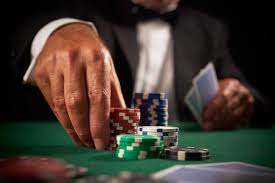
In fact, in the eyes of players who consistently profit, position is even more important.Higher than the hand itself。
This article will provide a complete analysis from both practical and strategic perspectives on why position determines your wins and losses.
Key conclusion: Position = Information advantage + Control
In Texas Hold'em, position represents:
1. Do you act first or later?
2. How much competitor information can you access?
3. Can you control the pot rhythm?
→ In position:You act last, giving you an informational advantage.
→ Out of position:You acted first, but lacked sufficient information.
Why does location have such a big impact?
Reason 1: You can see your opponent's decisions
When you are in the back position:
1. You can see your opponent's check/bet/raise.
2. Then decide on your actions.
→ This allows you to make more accurate decisions.
Reason 2: You can control the size of the pot.
In terms of location:
1. You can choose to increase the pot size.
2. Alternatively, you can choose to check (control the bottom pool).
→ You have the initiative.
Reason 3: You can bluff more effectively
When bluffing in the back position:
1. You have observed your opponent's weak behavior (check)
2. Higher success rate
→ Position directly affects the EV of a bluff.
Poker Position Strategy: Hand Review Part 1: Differences Between Different Positions in the Same Hand
Scene
1. You hold K♠Q♠
In BTN (post):
1. Can start the game
2. The rhythm can be controlled.
In UTG (front):
1. Higher risk
2. Easily suppressed
→ The same hand of cards can have completely different values.
Poker Position Strategy: Hand Review Part 2 - Position vs. Lack of Position
Scene
1. You hold A♣J♦
2. Flop: J♠ 8♣ 3♥
Having a position: You can decide whether to place a bet based on your opponent's actions.
No seats available:
1. You must take action first.
2. Easily suppressed
Poker Position Strategy: Hand Review Part 3 - The Bluff Advantage of Position
Scene
1. Opponent checks
2. You are in BTN
→ This is one of the best opportunities to bluff.
because:
1. The opponent is performing poorly.
2. You have the right of last action.
Decision Model: How does position affect your playing style?
1. Are you in your seat?
2. Do you act last?
3. Has the opponent's behavior revealed any information?
4. Are you able to control the pot?
5. Is your card suitable for this position?
→ Location will influence your decisions on every street.
Position is a "hidden advantage" in poker.
Poker Position Strategy The core is:
1. Information Advantage
2. Decision Control
3. EV Improvement
→ In the long run, players in better positions will naturally profit more.
5 essential questions for post-mortem analysis
1. Am I in a favorable position?
2. Should I act last?
3. Did I take advantage of the information?
4. Did I control the pot?
5. Is this hand in this position reasonable?
Conclusion: Location is not a detail, it's the core.
Many players consider location information as "additional information," but in reality:Position is the core of the entire strategy.
When you begin to truly understand your position, the quality of your decision-making will significantly improve.
Key points summary
1. Location determines the amount of information.
2. Location influences the order of decision-making.
3. Having a position makes it easier to bluff.
4. It's harder to operate without a designated spot.
5. Location affects long-term EV.
FAQ: Location-related FAQs
Why is the backcourt position better?
→ Because you can act last and have more information.
Is position really more important than cards?
→ In many cases, yes.
How can we take advantage of our location?
→ More frequent attacks and control of the pot.
Want to change Texas Holdem from "can understand" to "can win"?
The following hand situations are the key moments when most players most often lose money:
A must-read for beginners
These are the basic scenarios where most players make the most mistakes and most often lose money:
[Common Beginner Mistakes] Why do I always lose with AQ? A complete hand replay analysis
[Frequency Error] Should the top move have been executed with a three-street sweep? Real-world analysis.
[Common Dilemma] Should I attack or call if I have a draw on the flop? Strategy Breakdown
[Key Mistake] Why do beginners always lose big pots on the river? Analysis of Reasons
[Basic Concepts] How strong are middle pairs (JJ / TT)? Hand Analysis
Practical decision making
Once you know how to play cards, these decisions will directly determine whether you profit or lose:
[Key Decision-Making] When to Fold When Faced with a Raise? Retrospective Analysis
[Frequently Asked Questions] Why do I lose even after hitting a pair? Hand review and analysis
[Cognitive Error] Why do you always fall just short of winning? Decision Breakdown
[Hand Interpretation] How to play a high Ace hand? Practical strategy analysis
[Pot Control] How to use small pairs? A post-game tutorial.
[Pre-flop Selection] How to play hands like KQ/KJ? Strategy Analysis
[Advanced Mistakes] When should you not play slowly? Hand analysis
Key Insights
What truly sets you apart isn't your hand, but how you understand the situation and the range:
[Card Interpretation] What are "dangerous cards"? Retrospective Analysis
[Core Concept] Why is location so important? Strategy Analysis
[Advanced Techniques] What is "Controlled Pot"? Practical Analysis
Hunter Poker offers systematic Texas Hold'em instruction, hand analysis, and strategy analysis, from basic rules to advanced decision-making, helping players progress from "just looking at their hands" to "understanding ranges and decision-making logic," enabling them to make long-term profitable choices in every hand.