



Texas Hold'em Poker Tutorial Articles
River Decision Poker guide: Why do beginners lose big pots on the river? Learn common mistakes, hero calls, overvalue traps, and better decision-making in Texas Hold'em.
River Decision Poker This is the key point in Texas Hold'em where huge profit and loss differences are most likely to occur.
Many beginners play well on the first few streets, but often make the wrong decisions on the river.Ultimately, they lost the entire big pot.
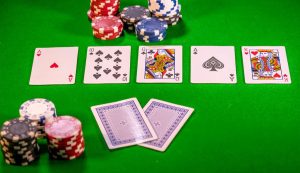
This article will analyze why beginners often lose big pots on the river from a practical review perspective, and help you build a clear judgment logic to avoid the most costly mistakes.
Key takeaway: The river card isn't about comparing hands, it's about comparing decisions.
Many people think the river card is about "who has the higher hand," but in reality, the river card is more like:
Who understands the entire betting line and range?。
1. Your hand strength is only one part of the equation.
2. The opponent's behavior and scope are key.
3. The pot size is incorrectly magnified.
→ Losing a big pot on the river is usually not due to luck, but because a poor decision is magnified.
Why do beginners always lose money on the river?
Mistake 1: Only looking at your own cards and ignoring your opponents' stories.
The most common mistake beginners make is only looking at "I have a top pair" or "I have two pairs," completely ignoring the information represented by the opponent's entire betting line.
The key to the river card isn't what you have, but rather:How did the opponent play their game?
Mistake 2: Inability to let go of "already invested chips".
Many players have this thought on the river:"I've already invested in this, I can't just give up now, can I?"
→ This is a classic example of sunk cost fallacy.
Mistake 3: Fear of being Bluffed, resulting in constantly following the wrong path.
Many players will say on the river, "He might be cheating, I don't want to be tricked."
The result is:
1. Opponent's value → You and
2. Opponent's bluffs → far fewer times than you imagine.
→ In the long run, this results in a stable loss.
River Decision Poker Hand Replay 1: Typical Hero Call Mistake on the River
Scene
1. You hold K♠Q♠
2. Flop: Q♦ 8♣ 3♥
Action Line
1. Flop: You bet → Your opponent calls.
2. Turn: You bet → Your opponent calls.
3. River: Opponent suddenly makes a large bet.
Beginner's mindset
"I have a top pair, I can't possibly fold, right?"
What's the problem?
1. Opponent was passive on both streets → suddenly gained momentum on the river.
- This type of line is rarely bluff.
- Mostly set / two pairs / slow play
→ This type of call has a negative EV in the long run.
River Decision Poker Hand Replay Part 2: Overvaluation Leads to Counterattack
Scene
1. You hold A♣Q♦
2. Flop: A♠ 7♣ 2♦
Action Line
1. Flop: Betting
2. Turn: Place a bet
3. River: Your third shot → Opponent check-raises
Error point
1. If there are no worse cards, will the third shot be called?
2. It will only be countered by stronger cards.
→ You weren't defeated, you built the pot yourself.
River Decision Poker Hand Replay Part 3: A Wrong Bluff That Burned the Entire Pot
Scene
1. You missed the draw.
2. River brand air
Newbie behavior
"I've already played all the previous ones, it would be a waste not to play now."
question
1. The opponent's range was not compressed.
2. You did not represent a strong hand.
3. The opponent will not give up.
→ This kind of bluff is one of the most expensive mistakes.
River card decision-making model: You should ask these 5 questions
1. What range does the opponent's line represent?
2. How many worse hands would call?
3. How many stronger cards exist?
4. Does the opponent use bluffs? How often?
5. Is my decision based on logic or emotion?
→ The river card is not a guess, but a deduction.
The river card is essentially a "range battle".
River Decision Poker The core is not the strength of the hand, but rather:
→ Is the range compressed?
→ Is the betting line reasonable?
→ Does the opponent have a bluff?
When you start thinking in terms of scope, you'll find that:
→ Many hands that "look like you should call" are actually folded.
5 essential questions for post-mortem analysis
- Why do I follow? Is it because I don't believe, or because it's reasonable?
- Does the opponent have more bluffs or more value in this lane?
- Am I affected by my emotions?
- Did I overlook the entire betting line?
- Will this call result in a positive long-term EV?
In conclusion: Losing money on the river isn't because of bad luck, but because you're unwilling to let go.
Most big losses on the river are not because of bad hands, but because:
You're unwilling to admit you lost.
When you start to learn to make the right fold on the riverYour profitability will undergo a qualitative change.
Key points summary
1. River card decisions are more important than hand strength.
2. Most losses come from incorrect betting and overvaluation.
3. Bluffs should not be used indiscriminately.
4. Learning to fold is key.
5. The key points are the range and the betting line.
FAQ: Frequently Asked Questions about River Tiles
Should you call on the river card?
→ No, it shouldn't be.
→ In most cases, you should be cautious unless you are certain that your opponent is bluffing frequently.
What is a Hero Call?
Use a medium-strength hand to call a bluff.
Why do I always lose on the river?
This is mostly due to over-calling and misjudging the opponent's range.
Want to change Texas Holdem from "can understand" to "can win"?
The following hand situations are the key moments when most players most often lose money:
A must-read for beginners
These are the basic scenarios where most players make the most mistakes and most often lose money:
[Common Beginner Mistakes] Why do I always lose with AQ? A complete hand replay analysis
[Frequency Error] Should the top move have been executed with a three-street sweep? Real-world analysis.
[Common Dilemma] Should I attack or call if I have a draw on the flop? Strategy Breakdown
[Key Mistake] Why do beginners always lose big pots on the river? Analysis of Reasons
[Basic Concepts] How strong are middle pairs (JJ / TT)? Hand Analysis
Practical decision making
Once you know how to play cards, these decisions will directly determine whether you profit or lose:
[Key Decision-Making] When to Fold When Faced with a Raise? Retrospective Analysis
[Frequently Asked Questions] Why do I lose even after hitting a pair? Hand review and analysis
[Cognitive Error] Why do you always fall just short of winning? Decision Breakdown
[Hand Interpretation] How to play a high Ace hand? Practical strategy analysis
[Pot Control] How to use small pairs? A post-game tutorial.
[Pre-flop Selection] How to play hands like KQ/KJ? Strategy Analysis
[Advanced Mistakes] When should you not play slowly? Hand analysis
Key Insights
What truly sets you apart isn't your hand, but how you understand the situation and the range:
[Card Interpretation] What are "dangerous cards"? Retrospective Analysis
[Core Concept] Why is location so important? Strategy Analysis
[Advanced Techniques] What is "Controlled Pot"? Practical Analysis
Hunter Poker offers systematic Texas Hold'em instruction, hand analysis, and strategy analysis, from basic rules to advanced decision-making, helping players progress from "just looking at their hands" to "understanding ranges and decision-making logic," enabling them to make long-term profitable choices in every hand.
Extended Reading for Teaching
Hand resumption
[Review Methods] How do professional players review their hands?
Hand resumption
[Long-term planning] How to build a long-term profit strategy?
Hand resumption
[Strategy Selection] GTO vs Exploit: Which to choose in actual gameplay?
Hand resumption