




Texas Hold'em Poker Tutorial Articles
Betting sizing strategy is a crucial decision in Texas Hold'em. This article analyzes hand replays to help players improve value capture and strategy consistency by addressing incorrect betting sizing.
Bet Sizing Strategy It is one of the most easily overlooked but crucial factors in Texas Hold'em, yet it has a huge impact on the outcome.
Many players focus on "whether to bet" but neglect "how much to bet". As a result, even if they get a good hand, they lose value or are countered due to incorrect betting.
This article will analyze how incorrect betting sizing can ruin a good hand through hand replays, and discuss the correct sizing mindset.
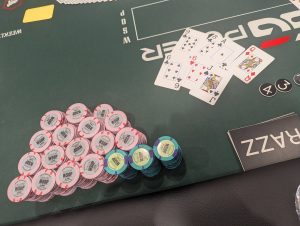
But the real problem might be:Your betting size turned what was originally a correct decision into a mistake.
Key takeaway: Betting is not just about action, but also about signals and structure.
In poker, bet size represents:
1. The strength of the hand you are expressing.
2. What decisions do you want your opponent to make?
3. Your entire storyline
Incorrect dimensions can cause the entire strategy to become inconsistent.
Hand situation review
1. You are on BTN, holding A♠ K♠
2. You raise pre-flop, BB calls.
3. Flop: K♦ 7♣ 2♠ → BB. Check, you bet.
The question is:Should you place a small bet or a large bet?
Mistake 1: Over-betting and scaring away weak hands.
Many players, when they get a top pair, will think:I need to play bigger to protect my hand.
But the result is:
→ Fold cards if you have weak Kx or 7x.
→ Only leave strong hands to call
→ You have lost your source of value
A large size will reduce the opponent's range.
Mistake 2: Betting too small, allowing opponents to win cheaply.
Another common mistake is:I placed a small bet and let him continue.
But the problem is:
→ You can call cheaply when you have a draw.
→ Opponent range is too wide
→ It will be harder for you to fight in the subsequent streets.
If the size is too small, it will allow the opponent to easily advance.
Correct thinking: Size should serve the goal.
When you place a bet, you should ask yourself:
→ I need to get my opponent to fold?
→ I want my opponent to call?
→ I want to create a pot?
Different targets require different sizes.
The best choice in this hand
Medium-sized bets (approximately 1/3 to 1/2 pot).
reason:
→ Keep the weaker cards
→ Collect value
→ Don't let your opponent see their cards too easily
Why does a size error cause a magnified problem?
Because the betting size will affect:
→ Opponent ranges
→ pot size
→ Difficulty in subsequent decision-making
Once the size is incorrect:
→ You will enter the wrong decision-making path
→ Every street is becoming more difficult to fix.
In what situations should a larger size be used?
→ You have a strong hand and need to build the pot.
→ The cards are wet and need protection.
→ To apply pressure (Bluff)
In what situations should a smaller size be used?
→ Significant range advantage
→ Want to preserve the opponent's range
→ Conduct high-frequency C-bet
Core Decision Conclusions
Bets size is not a detail, but part of the decision-making process.
When you can align size with strategy, your overall profitability will improve significantly.
Core Decision Retrospective: The Crucial Moments That Truly Determine Your Profitability
Once you've mastered the basic rules, what truly influences your long-term wins and losses is whether your decisions on each street are correct.
The following scenarios are key turning points for most players, marking the point where they begin to "lose money or make a profit":
[Continuing the Attack] Should you continue firing after a C-bet and turn? Hand replay analysis
[Common Mistakes] Why does Double Barrel fail? Analysis of Reasons
[Decision Disagreement] Check-Call vs. Check-Raise: Which to Choose? Strategy Breakdown
[Advanced Scenarios] How to play after the flop in a 3-bet pot? Practical analysis
[Pre-flop Strategy] The Real Reason for a Failed BTN Blind Steal? Hand Review
[Opponent Behavior] How to deal with an opponent's Float (floating call)? Decision Analysis
[Multi-Party Pots] Why shouldn't you bet recklessly in multi-party pots? Strategy Analysis
[Abnormal Signal] What does it mean when a passive player suddenly attacks? Retrospective Analysis
[Counter-Strategy] How to adjust when facing aggressive players? Practical analysis
[Sizing Error] How can a wrong betting sizing ruin a good hand? Case study.
[Advanced Techniques] When to Use Overbet? Strategy Analysis
[Slow Play Judgment] When should you slow play? Retrospective Analysis
[All-in Decision] When to go all in? Risk and return analysis
[Missing the Flop] What should you do if you miss the flop? Strategy Analysis
[Key Folding] When to Fold? Decisions to Avoid Continuous Losses
These decisions have no standard answers, but they follow a clear logic. By reviewing your hands, you can understand the real reasons behind every bet, call, and fold, and gradually build your own profitable decision-making model.
Extended Reading for Teaching
Hand resumption
[Review Methods] How do professional players review their hands?
Hand resumption
[Long-term planning] How to build a long-term profit strategy?
Hand resumption
[Strategy Selection] GTO vs Exploit: Which to choose in actual gameplay?
Hand resumption