

International news
April 15, 2011 marked the 15th anniversary of Black Friday. The U.S. government seized hundreds of millions of dollars in player funds, shut down three major online poker websites, and exposed the Full Tilt Poker Ponzi scheme, forever changing the poker industry.
April 15, 2011, marked one of the darkest days in poker history—exactly 15 years ago. The U.S. government seized hundreds of millions of dollars in player funds and shut down the world's largest online poker website.
 Black Friday 15th Anniversary Commemorative Images (FBI raid footage or PokerNews video cover)[/caption]
This event, known as "Black Friday," completely and permanently changed the poker industry, causing tens of thousands of players to lose their jobs overnight and be forced to find other sources of income. Many people left poker altogether.
Black Friday also exposed mismanagement issues at leading poker site Full Tilt Poker and its executives Howard Lederer and Chris Ferguson—at the time, they were among the most well-known and respected figures in the poker world. It took players several years to fully recover the funds deposited into their accounts.
More than a decade later, poker players worldwide can still feel the impact of Black Friday. Back then, poker was at its peak of popularity, and players everywhere wore badges from online poker companies like PokerStars and Full Tilt Poker.
The landscape is now very different: poker has largely disappeared from the mainstream, sponsorships have drastically decreased, and television broadcasts are extremely limited—although there have been some recent developments, with ESPN re-broadcasting the World Series of Poker (WSOP) Main Event for the first time since 2021.
In this new PokerNews video special, we look back at Black Friday—the darkest day in poker history that forever changed the landscape of online poker and exposed massive mismanagement by several poker stars.
Black Friday Eve
Poker reached its peak popularity during the "poker boom" of the early to mid-2000s. Following Chris Moneymaker's legendary victory in the 2003 WSOP Main Event, poker sponsorships exploded, with advertisements from major online poker brands like PokerStars and Full Tilt Poker becoming ubiquitous. At the time, Full Tilt's roster included poker heavyweights such as Phil Ivey, Tom Dwan, Mike Matusow, John Juanda, Gus Hansen, Jen Harman, Erik Seidel, and Patrik Antonius.
Just as poker is booming, a bill is about to challenge the legality of online poker in the United States.
In 2006, the U.S. federal government enacted the Unlawful Online Gambling Enforcement Act (UIGEA), which prohibits gambling businesses from "knowingly accepting payments related to others' participation in illegal online gambling betting."
UIGEA came into full effect in 2010, and despite strong lobbying by the Poker Players Alliance (PPA), the law did not exclude skill-based games like poker.
It's clear that the situation in the US online poker scene is turbulent, but the websites continue to operate and players continue to deposit money.
This domain name has been seized.
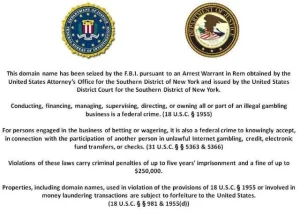
On April 15, 2011, when American poker players attempted to log into their online poker accounts, they were greeted by the logo of the U.S. Department of Justice.
The statement reads, "This domain name has been seized by the FBI pursuant to an arrest warrant obtained by the U.S. Attorney's Office." It continues, "Operating, funding, managing, supervising, directing, or owning all or part of an illegal gambling business is a federal crime," and "For persons engaged in gambling or betting businesses, knowingly accepting payments in connection with others' participation in illegal online gambling is also a federal crime."
A federal indictment against PokerStars, Full Tilt Poker, and Absolute Poker lists 11 defendants, including PokerStars executive Isai Scheinberg, Full Tilt Poker's Raymond Bitar and Nelson Burtnick, Absolute Poker's Scott Tom and Brent Beckley, and several payment processors.
The impact of Black Friday was immediate. Overnight, thousands of American poker players suddenly lost their jobs. Countless poker players lost sponsorships, including Prahlad Friedman, Maria Ho, and Scott Ian, guitarist for the heavy metal band Anthrax.
On April 20, Full Tilt Poker and PokerStars reached separate agreements with the Department of Justice, gaining permission to resume using their .com websites to assist in distributing player funds.
But Full Tilt's money is gone. The true extent of Full Tilt's problems is about to be revealed.
The aftermath of Full Tilt
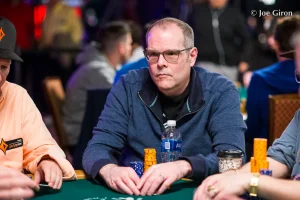
In September 2011, six months after the Black Friday incident, it was revealed that Full Tilt Poker had used player funds to pay tens of millions of dollars to its executives and was unable to repay players.
The U.S. Attorney's Office amended its complaint, alleging that Full Tilt Poker was a Ponzi scheme used by Raymond Bitar, Howard Lederer, Chris Ferguson, and Rafe Furst to defraud players.
The lawsuit alleges that as of March 2011, Full Tilt Poker owed approximately $390 million in player funds globally, including $150 million owed to US players. However, Full Tilt's bank accounts held only $60 million, meaning that over $300 million remained unreturned to players worldwide.
The lawsuit further alleges that between April 2007 and April 2011, Bitar, Lederer, Ferguson, and Furst embezzled approximately $443 million from player funds.
After a year and a half of silence, Lederer gave a lengthy interview to PokerNews in 2012, which was published as a seven-part "Lederer Archive" series.
In 2012, PokerStars acquired Full Tilt Poker, took over all of Full Tilt's assets, and agreed to forfeit $547 million to the U.S. government over three years.
However, it took several years for Full Tilt players to gradually recover their winnings. Many players, uncertain about whether they would ever get their money back, left poker and never returned.
Subsequent development

Although several online poker executives were jailed, most were only fined, which many considered to be just a “light tap on the wrist.”
Howard Lederer and Chris Ferguson of Full Tilt Poker are still considered unpopular figures in the poker community. Nevertheless, Ferguson still appeared at the 2017 WSOP and ultimately won the Player of the Year title, much to the disappointment of the community.
In March 2020, PokerStars founder Isai Scheinberg pleaded guilty to operating an illegal online gambling business. Scheinberg avoided jail time and only had to pay a $30,000 fine, bringing an end to the nearly decade-long Black Friday controversy.
So, what is the current state of online poker in the United States? Black Friday opened the door for state-regulated online poker websites—following multiple rulings that the 1961 Interstate Telecommunications Act did not apply to online poker. Nevada and Delaware legalized online poker in 2013, followed by New Jersey, Pennsylvania, West Virginia, and Michigan over the next decade.
In recent years, several states, including New York, Maryland, Virginia, and Massachusetts, have introduced online poker legislation. Meanwhile, states that have legalized online poker have consolidated player pools through the Interstate Internet Gambling Agreement (MSIGA), creating much-needed liquidity for American players.
PokerStars partners with FanDuel to help online poker regain its glory.
Online poker in the United States will never be what it used to be. Black Friday remains a stark reminder of the devastating consequences of circumventing government regulations, ignoring warnings, and mismanaging player funds. However, a major development occurred in April 2026: PokerStars North America reached a cross-state online poker partnership agreement with sports betting giant FanDuel.
The brand-new "PokerStars on FanDuel" platform has launched in Michigan, New Jersey, and Pennsylvania. Within days of its launch, the poker site announced the "Ignite Series," starting April 18th, with a guaranteed prize pool of $5 million. Fifteen years after Black Friday, online poker is making a comeback in the United States—and the launch of PokerStars on FanDuel has played a significant role in this resurgence.
Specific Scenario Retrospective: Key Decisions in Different Situations
Certain scenarios can drastically alter decision-making logic, such as tournament pressure, chip depth, positional structure, range matchups, and betting patterns.
When you enter different situations, the correct approach isn't just about looking at your hand, but about understanding the overall context. The following specific scenarios and core themes are key to influencing wins and losses and long-term profitability:
I. Special Scenarios in the Championship
[ICM Pressure] How to make decisions in the ICM tournament scenario?
[Bubble Phase] Should we be aggressive or conservative during the Bubble phase?
[Final Table] How should key moves be handled?
[Short Code Strategy] How should Short Stack be typed?
[Deep Stack Strategy] What are the differences in how Deep Stack is played?
[Blind Stealing Strategy] How to consistently steal blinds in tournaments?
【Stealing Blinds vs. Counter-Stealing Blinds】Strategies for Countering Blinds in the Bubble Phase
[Middle Chip Dilemma] Why is the middle chip the hardest to beat?
[Pressure Transfer] How to transfer ICM pressure to the opponent?
[Final Table Mindset] How to go from the final table to the championship?
[Chip Management] How to control risk and avoid collapse?
[Complete Tournament Strategy] The entire process from entry to victory
II. Core of the Underlying Strategy
[Position Advantage] How to play in different positions? A complete analysis of BTN / CO / SB / BB
[Range Thinking] Why do expert players look at the range instead of their hand?
[3-bet strategy] When should you raise your bet? How to counter your opponent's opening?
How does bet sizing affect your EV?
[Betting Line] How to design a complete Flop / Turn / River Line?
Fold Equity: How can you win without showing your cards?
III. Practical Decision-Making After the Cards Are Flipped
[C-bet Strategy] When should you continue betting?
[Turn Strategy] Should we fire the second shot?
[River Decision] Should the last street be Value or Bluff?
When should you retaliate?
[Blocker Application] What is a blocking sign? How does it influence decision-making?
[Range Shrinking] How to understand your opponent's range step by step?
IV. Advanced Competition and Professional Mindset
[Exploit Strategy] How to achieve stable profits for different player types?
[GTO vs Exploit] How to choose in actual combat?
[Result Bias] Why do I still lose even when I guess correctly?
[Decision-making process] How do experts make the right decisions quickly?
Why does overconfidence actually lead to more losses?
[Emotional Management] How to avoid Tilt?
How to establish a stable profit-making mindset for long-term EV (Electronic Vehicle) businesses?
V. Common Hand Issues and Practical Problems
[All-in Decision] When should you go all in?
[Missed Card] What should I do if I missed?
[Slow Play Judgment] When should you slow play?
Why do expert players rarely play marginal hands?
[Key Fold] When should you fold?
VI. Basics for Beginners and Traffic Sources
[Starting Hand Strategy] A Complete Guide for Beginners
Texas Hold'em Rules: Complete Gameplay Tutorial (2026 Latest Version)
[Poker Card Rankings] Card Rankings and Comparison Rules
Texas Hold'em Terminology: A Complete Guide from Beginner to Advanced Players
How to win money in Texas Hold'em? A complete analysis of the thought process.
Different scenarios require entirely different decision-making logic. From tournament pressure and chip depth to position, range, and post-flop strategy, each situation demands a different framework for thinking. When you can systematically understand these specific situations, you're no longer just playing by feel, but truly establishing a sustainable and profitable decision-making system.
Further News Reading
International news
Brutal Full House Cooler Decides $10K Poker Masters Champion
International news
Poker player Lynne Ji denies allegations in alleged domestic dispute stabbing case
International news
Adrian Mateos completes an “unwanted hat trick” at the Poker Masters: three consecutive bubble exits
International news