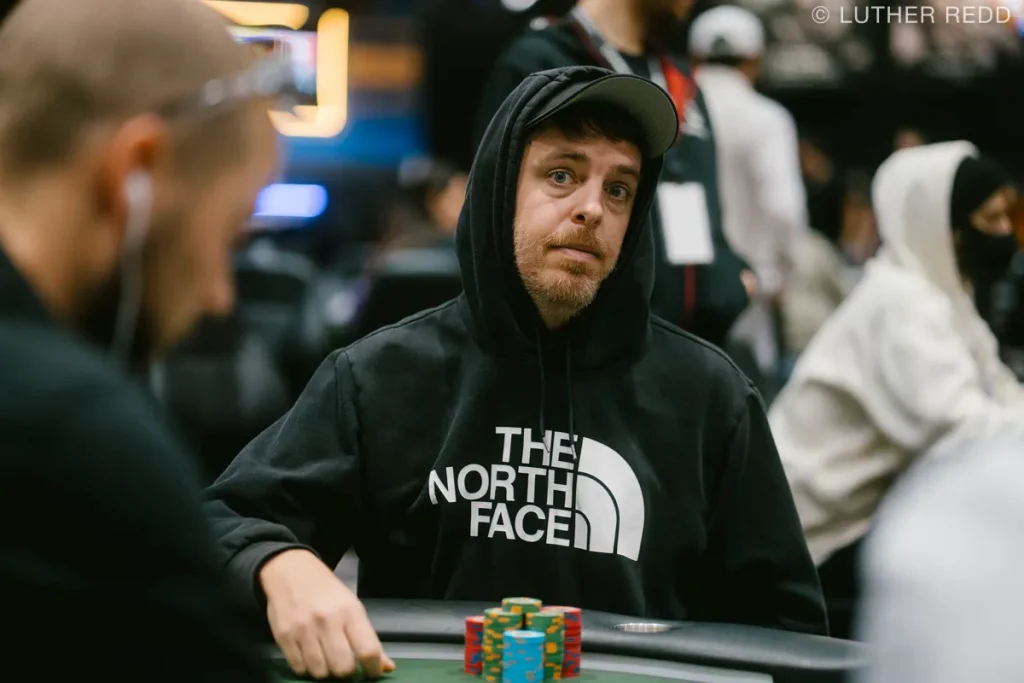




Fedor Holz looks back on his legendary season a decade later: raking in over $16 million in 2016, now focusing on family and career.
International newsTen years ago, Fedor Holz delivered one of the most dominant year-end performances in poker tournament history; ten years later, the German high-stakes legend no longer maintains that high-frequency playing pace, but he still returns to the tables in a few top-tier events. During the 2026 PokerStars EPT Barcelona, Holz appeared in the €100,000 EPT Super High Roller and gave an interview to PokerNews, discussing his current situation, his legendary 2016 season, and whether today's high-stakes players can replicate his phenomenal success. At 23, he amassed over $16 million in cash in a single season, creating a historic performance. In 2016, Fedor Holz was only 23 years old, yet he accumulated over $16 million in live tournament winnings. PokerNews points out that at the time, no tournament player had achieved such a high amount of live tournament winnings in a single year, although this record has since been broken several times. More importantly, this $16 million was not accumulated from a single mega-prize. Starting with EPT Monte Carlo, Holz achieved numerous six-figure finishes, followed by a summer of intense competition at the highest level, creating a rare period of high-stakes dominance. Fedor Holz's representative results in 2016: Super High Roller Bowl runner-up ($) $3,500,000; WSOP One Drop champion ($) $4,981,775; EPT Barcelona Super High Roller champion ($) $1,473,127. The Super High Roller Bowl title was won by another German star, Rainer Kempe, leaving Holz as runner-up and earning $3.5 million. He then won the WSOP One Drop, earning $4,981,775, and then went on to win the EPT Super High Roller in Barcelona, earning $1,473,127. Can Holz replicate his 2016 run today? Ten years later, the high-stakes landscape has changed significantly. When asked if it's possible for modern poker players to replicate his 2016 year-end performance, Holz believes it's not impossible. He observes that there are more high-stakes tournaments now than a decade ago, meaning top players have more opportunities to achieve big results; however, the skill gap between players has narrowed, making it more difficult to maintain a significant lead. Overall, he still believes there's a chance to see similar year-end rallies again in the future. This reflects the duality of the modern High Roller environment: more tournaments, more prize money opportunities, but also a smaller skill gap between top players. Ten years later, life is completely different: married, focused on family.