




International news
On November 3, 2026, Chinese Poker Network compiled a Reddit AMA interview with renowned online poker player Jack Katenjian (Jackstack99). He said his career net profit exceeds $5 million, including $4 million from HU Hyper heads-up sit-and-gos and $1 million from cash games. Despite his outstanding results, he admitted that around 17 years ago he went broke after playing above his bankroll level. He also shared insights from more than 10,000 hours of solver study, 100-buy-in downswings, GTO strategy, bankroll management, and AI’s impact on online poker.
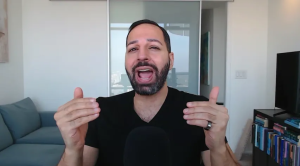
On November 3, 2026, China Poker Network compiled a recent public Ask Me Anything (AMA) held on Reddit by veteran online poker professional Jack Katenjian (screen name Jackstack99). A longtime player in high-stakes Heads-Up Sit & Go and online cash games, he shared in detail for the first time his career profit figures, his experience of once going broke, and his views on GTO study, bankroll management, and the modern online poker landscape.
Jack said that his cumulative career net profit has now exceeded$5 million, with more than $4 million coming from Heads-Up Hyper Sit & Go (HU Hyper) and more than $1 million from cash games.
More surprisingly, despite such outstanding long-term results, he admitted that around 17 years ago, he went broke after repeatedly taking shots at stakes beyond what his bankroll could support.
That experience completely changed his understanding of professional poker and led him to consistently treat bankroll management as a priority throughout the rest of his career.
Who is Jackstack99? Career net profit exceeds $5 million
Jack Katenjian is a veteran professional in the online Heads-Up Sit & Go arena who has long been active at the tables under the screen name Jackstack99.
Early in his career, he primarily played HU Hyper, fast-paced Sit & Go events between two players.
In this format, blinds rise quickly, requiring players to make a large number of preflop and postflop decisions in a relatively short period. It places high demands on short-stack strategy, opponent range assessment, and mental resilience.
According to figures Jack released on Reddit, his career profits have come primarily from two formats.
Jack Katenjian's key career figures
| Category | Figures reported by Jack |
|---|---|
| Cumulative career net profit | More than US$5,000,000 |
| Cumulative HU Hyper net profit | More than US$4,000,000 |
| Cumulative cash game net profit | More than US$1,000,000 |
| Cash game profit period | Past 4 years |
| Recent cash game playing frequency | About 1 to 2 days per week |
| Solver study hours | More than 10,000 hours |
| Professional focus | High-stakes online cash games, staking, and coaching |
| Team | Team651 |
Notably, Jack said that the more than $1 million in cash game net profit was earned primarily over the past four years, during which he generally played only one to two days per week.
This also reflects how his professional focus has gradually shifted from grinding large volumes of HU Hyper matches in his early years toward high-stakes cash games and poker instruction.
From HU Hyper to high-stakes cash games: Jack shifts his career focus
In the early online poker market, Jack was mainly active on PokerStars, while also playing Heads-Up Hyper events on Full Tilt Poker, partypoker, and 888poker.
Over the years, he accumulated more than $4 million in HU Hyper net profit, becoming one of the format's representative professionals.
However, as the market environment changed, the profitability of Heads-Up Sit & Go games gradually declined from its earlier levels.
Jack now devotes most of his energy to high-stakes online cash games, noting in his Reddit responses that he primarily plays cash games on WPT Global and WPT Gold.
Most of the HU events he used to play had buy-ins ranging from $200 to $1,000, with a smaller number at the $2,000 and $5,000 levels.
His cash game action is concentrated primarily at $10/$20 to $25/$50 blind stakes.
In addition to playing himself, Jack is one of the co-founders of Team651, where he is involved in staking, strategy training, and coaching for Spin & Go and cash game players.
From $100 to $1,000: Jack once lost his entire poker bankroll
Despite now having more than $5 million in cumulative net profit, Jack's professional path was not always smooth.
During this AMA, one player asked him:
How many times have you gone broke during your career, and how did you start over?
Jack admitted that when he first began playing poker around 17 years ago, he experienced one instance in which his bankroll was completely depleted.
At the time, he was still a recreational player, though he already hoped to make a living from poker in the future.
The problem was that the buy-ins for the games he entered were far beyond what his bankroll could withstand.
Jack's early experience of uncontrolled shot-taking
| Street | Stake entered |
|---|---|
| First loss | US$100 HU SNG |
| Then moved up to | US$200 |
| Continued chasing losses | US$500 |
| Final move up | US$1,000 |
Jack recalled that when he sat down in a $1,000 buy-in game, he had effectively put almost all of his remaining poker bankroll on that single match.
At the time, he could clearly feel his heart racing, because the outcome of that game would directly determine whether he had any funds left to continue playing.
Ultimately, he lost the match.
It was the first time he truly experienced the psychological pressure that can result from losing control of bankroll management.
A late-night conversation with a friend changed his entire poker career
After going broke, Jack had a long conversation with a poker friend through AIM, the popular instant messaging software of the time.
They did not discuss how to bet a particular hand, but why anyone who wants to become a professional player must maintain strict bankroll management discipline.
Jack noted that excessive losses not only affect one's financial situation, but can also trap a player in persistent negative emotions.
At the time, they even lost interest in going out with friends and taking part in normal social activities because they had lost money.
This made Jack realize that there must be a clear boundary between a poker bankroll and everyday life.
After that conversation, he began choosing stakes strictly according to a pre-established plan, no longer moving up arbitrarily because of short-term losses or emotional swings.
He said he has never gone broke in poker again since then.
For Jack, this experience was not merely a failure, but a major turning point in his professional career.
Even long-term winners can face 100-buy-in downswings
Another issue that drew players' attention in the AMA was how large a downswing professional players need to endure.
One player asked how many buy-ins a normal losing streak might cost a player with long-term profitability.
Based on his experience, Jack provided the following estimates.
Jack's experiential estimates of downswings
| Game format | Potential downswing magnitude |
|---|---|
| HU Hyper Heads-Up turbo events | About 100 buy-ins |
| Cash games | About 30 to 40 buy-ins |
For example, at the $100 HU Hyper level, 100 buy-ins amounts to a $10,000 bankroll swing.
For cash game players, if each buy-in is calculated as 100 big blinds, 30 to 40 buy-ins can likewise create substantial bankroll pressure.
However, Jack's figures are personal experiential estimates, not fixed statistical ranges that apply to every player.
Actual downswings still depend on a player's edge, game format, stake level, volume played, and degree of variance.
If you cannot handle losing one buy-in, do not rush to move up
One player said that losing a single buy-in in a $1/$3 cash game already felt difficult to accept.
Jack gave clear advice in response.
If one loss has a major impact on daily life or emotions, there is no need to rush into taking shots at higher stakes.
In his view, professional players need more than technical ability; they also need the ability to maintain a normal life and make rational decisions after consecutive losses.
When a player cannot withstand the financial variance at a certain stake, even if they have a short-term technical edge, they may make poor choices after losing emotional control.
Therefore, Jack regards selecting appropriate stakes as an important condition for long-term professional survival.
More than 10,000 hours of Solver study: How does Jack understand genuine poker learning?
Beyond bankroll management, Jack's views on GTO strategy and Solver study were also an important part of this AMA.
He said that over the years, he has devoted more than 10,000 hours to Solver study, in addition to accumulating thousands of hours of teaching experience.
In Jack's view, truly effective poker study is not simply memorizing how much to bet with a particular hand or which preflop ranges can be used from a certain position.
More important is understanding:
Why does the Solver choose this strategy?
Jack advises players serious about improving their skills to use GTO Wizard, Lucid Poker, or other Solver tools suitable for their own format.
First, build a basic understanding through focused training, then identify situations in real play that they do not understand well enough.
Jack's recommended Solver study process
| Step | Study content |
|---|---|
| 1 | Choose a Solver suited to the format you play |
| 2 | Build focused preflop and postflop training |
| 3 | Identify decision-making errors through real play |
| 4 | Return to the Solver to study the situation |
| 5 | Analyze the reasons behind position, ranges, and betting strategies |
| 6 | Compare real opponents with theoretical strategy |
| 7 | Turn understanding into in-game adjustments, then practice repeatedly |
Jack believes that as training volume increases, players gradually develop intuition for different hand structures.
This intuition differs from simply guessing based on experience; it is built on long-term observation and strategic analysis.
Simply copying GTO answers may not make you a true winning player
Jack specifically criticized some poker training courses for placing too much emphasis on memorizing Solver outputs without adequately explaining the logic behind them.
For example, why does a particular flop require betting at a higher frequency?
Why do the player in position (IP) and the player out of position (OOP) use different action strategies in the same situation?
And why are some hands suitable for Check-Raise while others are better suited to calling?
Jack believes players must try to understand the reasons behind these strategic choices before they can truly apply Solver knowledge in real play.
More importantly, Solvers generally base their analysis on specific assumptions, ranges, and equilibrium strategies.
Opponents at real tables may not act according to these strategies.
If a player merely mechanically copies theoretical outputs without analyzing the actual leaks their opponents have, they may be difficult to exploit but still fail to maximize long-term profit.
Especially in a raked environment, simply reaching theoretically balanced strategic performance does not guarantee sufficient profit.
GTO is not only for high-stakes tables; micro-stakes players also need to study it
A player who had remained at the micro stakes for a long time said that although he could achieve a small profit using a tight-aggressive strategy (Tight-Aggressive, TAG), he had been unable to break through his plateau.
He believed that because micro-stakes opponents frequently make mistakes, GTO strategy might not be especially valuable.
Jack disagreed with this view.
He believes GTO study is meaningful at all stakes because it not only teaches players how to keep their strategy balanced, but also helps them identify where opponents deviate from sound decision-making.
For example:
When facing bets on three consecutive streets, some players fold too often.
Some players call with ranges that are too wide when holding top pair.
Some players clearly do not bluff often enough in situations where they should have a sufficient bluffing frequency.
Once players understand these differences, they can further use exploitative strategy to adjust their approach for specific opponent mistakes.
Learning new strategies may lead to short-term regression
Jack also warned that results may not improve immediately when players begin using a new strategy.
The reason is that players may not yet fully understand the new knowledge, causing errors in some decisions.
He therefore advised this micro-stakes player to continue studying for around six months before evaluating his progress.
For him, genuinely effective strategic improvement is a process of long-term study and continuous correction, rather than expecting one simple approach to produce immediate profits.
Is $5 million in profit down to talent or hard work? Jack believes both are indispensable
In the public Q&A, one player asked a very direct question:
If anyone studies Solvers seriously, can they reach Jack's level?
Jack did not give an affirmative answer.
He believes that while hard work and extensive study are certainly important, talent, pattern-recognition ability, and individual mental resilience also affect a person's eventual competitive level.
Over the years, he has worked with a large number of poker players and encountered many who studied diligently but were never able to overcome certain technical bottlenecks.
In Jack's view, strong players generally need to possess a range of abilities.
What Jack sees as the qualities of elite players
| Core ability | Importance |
|---|---|
| Pattern recognition and talent | Quickly identifying complex situations |
| Solver study ability | Understanding theoretical strategy |
| Curiosity | Continually exploring the reasons behind strategies |
| Work discipline | Maintaining consistent study and play |
| Long-term commitment | Accumulating sufficient study and playing experience |
| Mental resilience | Dealing with losses and negative emotions |
| Continuous improvement | Correcting known technical leaks |
Jack believes that not everyone can become one of the world's top poker players, but most people still have the opportunity to improve their level through systematic training.
He also noted that teaching experience has been important to improving his own skills.
When explaining a decision to a student, a coach must reorganize their own understanding, and that process can help reveal details they had previously overlooked.
How much of the $5 million was really luck?
Another of Jack's answers attracted attention.
One player asked whether he believed at least half of his success came from luck, or whether the entire $5 million was created through skill.
Jack said that based on his many years of experience primarily playing HU Hyper and cash games, he believes his long-term results should be attributed to skill rather than luck.
He even described his view of the source of his long-term profits as “100% skill, 0% luck.”
However, this is Jack's subjective assessment of his personal career results and does not mean that Heads-Up games and cash games involve no luck or statistical variance.
What he truly emphasized was that, after accumulating a large volume of matches and extensive long-term playing experience, he considers skill edge to be the main factor behind sustained profitability.
By contrast, in large MTT tournaments, a small number of major first-place prizes can significantly affect a player's cumulative results, making short-term outcomes more susceptible to pivotal hands and tournament variance.
HU Hyper can still be profitable, but regular-player cartels have changed the market
Discussing the current HU Hyper environment, Jack pointed out that these games may still offer profitability, but entering the market has become significantly more difficult.
One of the main reasons is the existence of regular-player cartels.
These cartels are typically composed of a group of players who participate long-term at particular stakes.
By collectively opposing outside regulars, they attempt to preserve the competitive landscape of specific game lobbies.
For example, a professional player who is not part of the cartel may wish to enter the $100 HU Hyper level to seek relatively inexperienced opponents.
But other cartel regulars may actively sit down and continuously play against that player, making it difficult for the outsider to obtain desirable matchups.
Key characteristics of HU Hyper regular-player cartels
| Category | Jack's description |
|---|---|
| composition | Regular players at specific stakes |
| Primary objective | Protect the existing game lobby |
| Against outside players | Continue battling them and raise the cost of entry |
| Requirements for joining | Typically requires approval from other members |
| Potential cost | Could lose tens of thousands to more than $100,000 |
Jack said that some players had tried to challenge these alliances, but ultimately lost tens of thousands of dollars, or even more than $100,000.
This means that the HU Hyper market is no longer simply a comparison of players' skill levels; access to games and the conditions for entering the market also affect profitability.
It should be noted that this is Jack's observation of certain online Heads-Up game markets and does not mean that the same situation exists on every online poker platform or in every HU event.
The two toughest opponents of his career
When asked about the toughest opponents he had faced, Jack specifically mentioned two screen names:

VBV1990
and:
Rams85
He believes that both opponents were not only highly skilled but also had extremely aggressive competitive styles.
For players who regularly compete in high-stakes Heads-Up games, the ability to remain aggressive across a large volume of matches while maintaining sound decision-making is a very important skill.
This is what made these two players particularly memorable opponents in Jack's career.
The most common mistake Spin & Go players make: not bluffing enough on the turn and river
In addition to HU Hyper and regular tables, Jack also answered a number of strategy questions from Spin & Go players.
He believes that one shared issue among many Spin regulars is an insufficient bluffing frequency in certain spots.
This is especially true on the turn, where some players do not make full use of hands with no showdown value that are suitable for turning into bluffs.
As a result, their overall bluffing range is too thin by the river, allowing opponents to adjust their calling and folding strategies more easily.
For Jack, this reflects that players should not focus solely on whether they have hit a strong hand; they also need to consider whether their overall range contains enough bluff combinations.
Of course, actual bluffing frequency still depends on the board, effective stack sizes, bet sizing, and opponent type.
Can you become a professional player by playing 1,500 $50 Spins per month?
A Reddit user asked whether, in the 2026 online poker market, a player who enters Spin & Go games at an average buy-in of $50 (ABI) and completes 1,500 tournaments per month could make a living from poker.
Jack believes that the $50 buy-in level can indeed generate some income, but a volume of 1,500 games per month may still be insufficient for players seeking a high professional income.
However, whether a player can actually make a living also depends on their edge, rake, rakeback, time spent per game, and living costs.
Jack did not provide a fixed monthly income projection, nor did he guarantee that reaching a particular volume would produce consistent profits.
Still losing after 35,000 Spins: how should EV be understood?
Another player said that they had played approximately 35,000 Spin games at the $25 level, with a 36.1% win rate and EVbb/100 of 6.5, yet their actual bankroll was still in the red.
Jack cautioned that a single win-rate metric should not be used to determine whether someone is genuinely profitable.
In Spin & Go games, rake, prize structure, rakeback, and actual EV performance can all affect long-term results.
Even if a particular performance statistic looks good, it does not necessarily mean a player will be profitable after all costs are deducted.
He therefore advised players not to focus only on visible changes in prize money, but to analyze whether they are actually generating sufficient expected returns on their specific platform and in their particular format.
Will AI destroy online poker? Jack believes its impact cuts both ways
As AI and Solver technology continue to mature, the online poker market is also facing new challenges.
One player asked Jack directly:
Will artificial intelligence eventually destroy online poker?
Jack believes that AI's impact on online poker is not necessarily entirely negative.
On one hand, AI and automation tools may increase the risks of improper assistance, bots, and cheating.
On the other hand, poker platforms can also use artificial intelligence to identify suspicious activity and improve anti-cheating and security monitoring capabilities.
Therefore, his overall view of AI is relatively neutral.
However, Jack specifically reminded players that they must pay attention to safety when choosing an online platform.
He tends to use platforms with a certain scale and reputation, while remaining cautious of small, unknown platforms and some club apps.
But a larger platform does not mean absolute safety; players still need to assess local laws, fund protection, anti-cheating measures, and platform rules.
Online poker has not disappeared, but the era of profiting through intuition is changing
Jack does not believe that the modern online poker market has completely lost its profit opportunities.
On the contrary, he believes the current online poker environment may offer more room for competition than many players imagine.
However, compared with 10 to 15 years ago, it has clearly become much more difficult to earn a high and stable income.
The reasons include the widespread adoption of Solver tools, an overall improvement in players' strategic standards, and more concentrated competition in high-stakes markets.
For those who want to become professional players, it is becoming increasingly difficult to maintain a long-term skill edge by relying only on intuition and past experience.
Jack believes players must continually study theory, analyze opponents' mistakes, and review their own decisions in order to remain competitive.
From going broke to $5 million in profits: Jack's five professional lessons
Looking back at Jack Katenjian's Reddit AMA, the key points he shared were not limited to his cumulative net profit of more than $5 million.
More importantly, he explained how he transformed from a recreational player who once lost his entire poker bankroll into a long-term winning professional.
Key career lessons from Jack
| Core topic | His experience |
|---|---|
| Bankroll management | Do not chase losses emotionally or move up in stakes arbitrarily |
| Strategy Study | Understand the logic behind Solver outputs rather than merely memorizing answers |
| Long-term variance | Accept that even winning players can experience major downswings |
| Game selection | Assess rake, the competitive environment, and available games |
| Ongoing competition | Combine GTO understanding with exploitative strategic adjustments |
Early in his career, Jack moved up consecutively through $100, $200, $500, and $1,000 HU events, eventually losing his entire bankroll.
But after that failure, he rebuilt strict bankroll management discipline and devoted substantial time to studying Solver concepts and opponents' strategies.
Years later, he stated that he had accumulated more than $5 million in net profits from HU Hyper and online regular tables.
This experience illustrates two sides of high-stakes professional poker: a skill edge can generate substantial long-term returns, but bankroll management mistakes can also quickly destroy what has previously been built.
Jackstack99 interview summary: skill, discipline, and bankroll management are all indispensable
On November 3, 2026, a profile interview with Jack Katenjian compiled by China Poker Network revealed a less frequently discussed side of an online poker career.
Jack stated that his cumulative net profit exceeded $5 million, including more than $4 million from HU Hyper and more than $1 million from regular-table games over the past four years.
However, this long-term winning professional also lost his entire poker bankroll around 17 years ago after entering games beyond what his bankroll could support.
Since then, he has regarded strict bankroll management and continuous strategy study as the core principles for sustaining his career.
He also reminded players that even with long-term winning ability, HU Hyper can still involve downswings of around 100 buy-ins, while regular tables can likewise see swings of 30 to 40 buy-ins.
Regarding the modern online poker environment, Jack believes that Solver and AI have not made competition meaningless, but that players must possess stronger learning abilities and clearer methods for analyzing opponents.
From once going broke to accumulating more than $5 million in net profits, Jack's professional story highlights an important lesson:
Becoming a long-term winning player requires not only knowing how to win at poker, but also knowing how to avoid losing the ability to keep playing when things go badly.
Want to change Texas Holdem from "can understand" to "can win"?
If you want to learn more about Texas Hold'em, you can continue reading:
The Origins of Texas Hold'em: Why is it the World's Most Popular Poker Variant?
Texas Hold'em Hand Rankings and Showdown Rules (Beginner’s Essentials)
Texas Hold'em Betting teaching: Check / Bet / Call /Raise and Betting Strategy Analysis
The importance of Texas Hold'em position? Why is the back position more advantageous?
How to play Texas Hold'em? Novices learn Texas Hold'em rules, processes and betting teaching in 10 minutes
Texas Hold’em Starting Hands Guide: Which Hands Should You Play? A Complete Starting Hands Strategy Guide
Texas Holdem Starting Hands Chart Guide: Complete Starting Hand Charts and Positional Strategy
How to Play Texas Hold’em: Complete Rules and the Flow of a Hand (Preflop / Flop / Turn / River)
Hunter Poker offers comprehensive tutorials, hand analysis, and strategy sharing to help players upgrade from simply "reading the cards" to understanding the range . This allows you to make better decisions in every hand.
▶️ In Facebook .
📘 In YouTube .
Want to learn more about Texas Hold'em strategy and gameplay?
Online Texas Hold'em freerolls typically require no buy-in, making them ideal for beginners to learn the rules and allowing more advanced players to test strategies and build tournament experience. View the full brand introductions to learn about each platform's freeroll schedule, tournament features, and target players.
Further News Reading
International news
Triton North Cyprus|Malaysia’s Ang Yang Yi wins the QQPK Challenge, turning a $140 buy-in into $11,000 worth of tournament entries
International news
Triton North Cyprus | QQPK Genesis draws 387 entries across its first two starting flights, 62 advance, 12 Chinese players qualify, and Erik Eisen is the current chip leader
International news
Triton Cyprus Opens | 32 Events Set for the 10th-Anniversary Season Finale, with QQPK Genesis Kicking Off and Phil Ivey Playing the $200,000 Invitational
International news