




International news
Poker players, tax experts, and lobbyists opposed gambling tax reforms at an IRS hearing that would limit loss deductions to 90% of winnings, a move described as a "death sentence" for poker players.
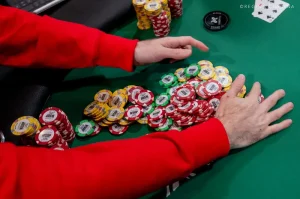 Poker players, tax experts, and lobbyists opposed gambling tax reforms at an IRS hearing that would limit loss deductions to 90% of winnings, a move described as a "death sentence" for poker players.
A carefully selected but diverse group—including poker players, tax professionals, lobbyists, and recreational gamblers—joined at the hearing to oppose a gambling tax reform that is expected to have a devastating impact on all types of gamblers, from serious poker players to recreational sports bettors.
This controversial provision caps gambling losses at 901 TP3T of winnings, meaning players would be taxed on a total winnings of 101 TP3T. The provision was passed by Congress last year as part of the Bigger & Beautiful Act (OBBBA) and went into effect this January.
On Friday, the Internal Revenue Service (IRS) held a public hearing (PokerNews participated remotely) to give stakeholders an opportunity to discuss the gambling tax reform. Of the 12 scheduled speakers, 10 attended, and all spokespeople opposed the tax change, which they described as a "death sentence" for poker players.
"The consequences will be extremely serious."
The first scheduled speaker is Nevada Democratic Representative Dina Titus, who has been a leading figure in the opposition to the gambling tax reform.
Although the IRS is only responsible for implementing the change and has no power to repeal it, Representative Titus told the IRS committee that they should realize the "significant consequences" for both professional gamblers and recreational players.
“For decades, tax laws have allowed taxpayers to deduct gambling losses up to the amount of their gambling winnings,” said Representative Titus, who discussed the tax change on the PokerNews Podcast. “This reflects a simple, clear principle: taxpayers should be taxed on their actual net income, not on money they never actually earned.”
"Taxing virtual income is neither in line with sound tax policy nor with the fundamental principle of tax law that economic benefits should be measured. This would constitute an unfair burden on both professional and recreational gamblers and would inevitably push players overseas and into unregulated markets."
Another spokesperson, poker writer and journalist Sara O'Connor, said the new tax law "punishes transaction volume and honesty," arguing that it indirectly encourages poker players and other gamblers not to declare their gambling income.
"Virtual gambling revenue is not real revenue," O'Connor told the committee.
Poker content creator Joshua Thatcher (better known as the "PLO Professor") also agrees that the change "encourages more illegal activities" and underground betting, adding that it will have an "overall negative impact" on various gambling industries.
Profound impact
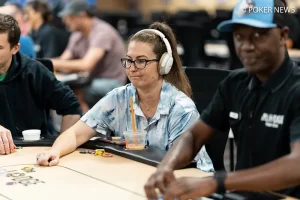
This change could even force tax-paying gamblers to leave the United States. Veteran poker pro and commentator Katie Stone told the panel that she and her family moved out of the U.S. after Black Friday 2011, when online poker was shut down across the country.
Although several legislative measures to abolish the gambling tax have failed, poker watchdog Todd Witteles has offered a suggestion. The founder of Poker Fraud Alert has advised the IRS to postpone the implementation of the tax change to allow more time to study the potential consequences and for repeal efforts to bear fruit.
Witteles also stated that there are many things that need to be "defined very clearly," such as whether professional poker players can deduct all business fees, and items such as rake and buy-in.
“Operating expenses should absolutely not be subject to any 90% restrictions, because they are expenses, not losses,” Witteles said. “This really needs to be clarified.”
Others who spoke at Friday’s hearing included Mike Vanaki of the American Gaming Association, poker player and recent RunGood Poker Series (RGPS) Pennsylvania champion James Cloutier, and Gary Kondler of gambling tax firm Kondler & Associates.

Want to change Texas Holdem from "can understand" to "can win"?
If you want to learn more about Texas Hold'em, you can continue reading:
The Origins of Texas Hold'em: Why is it the World's Most Popular Poker Variant?
Texas Hold'em Hand Rankings and Showdown Rules (Beginner’s Essentials)
Texas Hold'em Betting teaching: Check / Bet / Call /Raise and Betting Strategy Analysis
The importance of Texas Hold'em position? Why is the back position more advantageous?
How to play Texas Hold'em? Novices learn Texas Hold'em rules, processes and betting teaching in 10 minutes
Texas Hold’em starting hands guide: Which hands should you play? A complete guide to Starting Hands strategy
Texas Holdem Starting Hands Chart guide: Complete starting-hand charts and positional strategy
How to play Texas Hold’em: Complete rules and the flow of a hand (Preflop / Flop / Turn / River)
Hunter Poker offers comprehensive tutorials, hand analysis, and strategy sharing to help players upgrade from simply "reading the cards" to understanding the range . This allows you to make better decisions in every hand.


Want to learn more about Texas Hold'em strategy and gameplay?
Free online Texas Hold'em tournaments usually require no entry fee, making them suitable for beginners to become familiar with the rules while also allowing advanced players to test strategies and gain tournament experience. View the full brand introduction to learn about each platform's freeroll schedule, tournament features, and suitable player groups.
Further News Reading
International news
Brutal Full House Cooler Decides $10K Poker Masters Champion
International news
Poker player Lynne Ji denies allegations in alleged domestic dispute stabbing case
International news
Adrian Mateos completes an “unwanted hat trick” at the Poker Masters: three consecutive bubble exits
International news