




International news
Latest developments in the Texas Poker Room Investigation: Although The Lodge Card Club has not been prosecuted, more than $2 million in assets have been seized by the state government, and the controversy over the legality of Texas Hold'em continues to escalate.
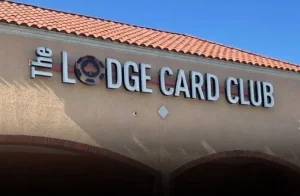 The Lodge, a well-known Texas poker club, has had its assets seized due to a regulatory investigation, and the case continues to unfold.
In April 2026, a major law enforcement incident surrounding the U.S. Texas Hold'em poker industry continued to draw attention. Under the "Texas Poker Room Investigation," The Lodge Card Club, a well-known poker club in the Austin area, although not formally charged with criminal offenses, had over $2 million in assets seized by the state government, leaving the case's future uncertain.
No criminal charges have been filed, but the assets remain seized.
According to documents filed on April 8 with the 480th District Court for Williamson County, Texas law enforcement agencies have completed civil asset forfeiture proceedings within the legal timeframe. This means that even if no criminal charges are currently brought against the club, the state government can legally continue to hold the relevant assets.
This incident originated on March 10th, when the Texas Alcoholic Beverage Commission (TABC) and the Internal Revenue Service (IRS) conducted a raid on the poker club. According to a leaked search warrant, law enforcement initially suspected the premises of being involved in:
- Money laundering activities
- Organized crime
- Illegal gambling operations
Although money laundering allegations are no longer the focus, the case remains centered on the core issue of "illegal gambling."
The legal gray area of Texas: Is poker legal?
Texas law strictly regulates gambling, but poker falls into a gray area. According to Section 47.04 of the Texas Criminal Code:
- Gambling must take place in a "private setting".“
- Participants shall not obtain any economic benefit other than personal profit from it.
This regulation allowed membership-based poker clubs (such as The Lodge) to operate on a "no rake" model, which has long been considered a business model within the bounds of legality.
However, this model is controversial in legal interpretation:
Supporters argue that membership fees do not equate to gambling profits and constitute legal business operations.
Opponents argue that disguised fees still constitute commercial gambling.
This is why similar cases have long been subject to uncertainty in Texas law enforcement.
Behind-the-scenes figures and industry influence
The Lodge Card Club was founded in 2018 and in 2022 received investment from several well-known figures in the poker industry, including:
- Doug Polk
- Brad Owen
- Andrew Neeme
In addition, well-known players such as Ethan “Rampage” Yau also participated in the investment.
Currently, the case mainly involves three core shareholders, and law enforcement agencies are investigating its business model.
As one of the largest poker clubs in Texas (with nearly 70 tables), The Lodge's closure had a significant impact on the local poker ecosystem.
Further developments: Several possibilities remain.
Based on current legal developments, this case may take one of the following directions in the future:
1. The state government has formally filed charges of illegal gambling.
2. The club will recover the seized assets through legal procedures.
3. Both parties reach a settlement or regulatory adjustment.
4. The case has entered the criminal trial stage.
It is important to note that in civil asset forfeiture, law enforcement agencies only need to prove "probable cause," not "beyond reasonable doubt" as in criminal cases.
Club Status Quo and Future
Since the raid in March:
- Austin's home stadium remains closed.
- The San Antonio branch (operating independently) remains open for business.
There is currently no clear timetable for when the main venue will resume operations. Industry insiders generally believe that the legal proceedings in this case could last for months or even longer.
Summary: The Texas Hold'em industry has reached a critical turning point.
“The "Texas Poker Room Investigation" is not just an isolated case, but could become a significant landmark event influencing the direction of regulation in the US poker industry.
With the continued growth of both online and offline poker markets, defining "legal poker operations" will become a core regulatory issue in the future.
For players and investors, the development of this case is worth continued attention, as its outcome could have a profound impact on the global poker market.
Mental Model Review: What truly influences your decisions is not just technology.
Many players aren't bad at the game, they're just "thinking wrong." What truly influences winning or losing is often your judgment, mindset, and decision-making process.
The following mindset issues are the key reasons why most players are unable to achieve consistent profitability over the long term:
[Cognitive Bias] Why do you always overestimate your hand? Hand review analysis
[Results Trap] Results-Oriented vs. Correct Decision Making: Did You Really Make the Right Move?
[Psychological Impact] How does fear affect your betting decisions? Analysis
[Bluff Barrier] Why are you always afraid to Bluff? Analysis of the Reasons
[Overconfidence] Why does overconfidence actually lead to more losses? Retrospective analysis
[Decision-Making Process] How to establish a stable decision-making process? Teaching Analysis
[Emotional Management] How to prevent emotions from affecting your performance? Strategy Analysis
[Intuition Training] How to cultivate Range judgment intuition? Deconstruction and analysis.
[Insufficient Information] How to make decisions when information is incomplete? Practical analysis
[False Intuition] Why can "feelings" harm you? Hand review
[The Ability to Read People] How to determine if your opponent is faking it? Strategy Analysis
[Intuitive Judgment] When should we trust our intuition? Analysis
[Thinking Style] Thinking speed vs. thinking quality: which is more important?
[Reaction Delay] Why are you always one step behind? Analysis of the reasons.
[Profit Mindset] How to establish a mindset for long-term, stable profitability?
[Final Chapter] How to Build Your Own Complete Poker Profit System (Ultimate Guide)
These issues are not fundamentally technical, but rather differences in thinking. By reviewing mental models, you can refine your decision-making logic, avoid repeating mistakes, and gradually build your own long-term profitable decision-making system.
Further News Reading
International news
APT Jeju Station | Scott Margereson wins High Roller title, Hongsheng Zhang achieves career-best third place.
International news
Love from Paris: French warriors win hard-fought victory in Marrakech
International news
Nine cards flopped to determine the RGPS Lake Erie Main Event champion
International news