


International news
The 2026 WSOP Event #87:$1,000 Mystery Bounty Pot-Limit Omaha concluded with Matthew Shepsky defeating a field of 4,764 entries to win his first WSOP gold bracelet and a $305,000 first-place prize.
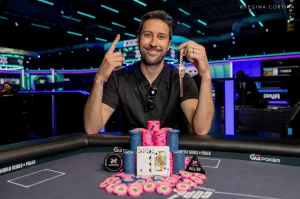
On July 10, the final event of the 2026 World Series of Poker (WSOP) Event #87: $1,000 Mystery Bounty Pot-Limit Omaha concluded. After an extra day of play, Matthew Shepsky emerged victorious from a field of 4,764 entries to claim his first WSOP gold bracelet.
This mystery bounty PLO tournament had a total prize pool of $4,192,320. In addition to winning the $305,000 first prize, Shepsky also accumulated 10 bounties during the tournament, earning an extra $20,000 in bounty income.
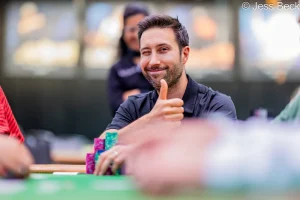
Matthew Shepsky wins his first WSOP gold bracelet
Matthew Shepsky, previously known primarily for his cash game, demonstrated formidable dominance in this high-variation format combining four-card poker with mystery bounties. According to PokerNews, this achievement brings Shepsky's total live tournament winnings close to $2,000,000, surpassing his previous career high of $262,300 for a single tournament.
In a post-match interview, Shepsky mentioned that he has been focusing on PLO cash games since 2013, and has almost exclusively played PLO cash games ever since. He also stated that his past experience playing Sit-and-Go games helped him maintain pressure at the final table, and even with a poor hand, he would try his best to put pressure on his opponents.
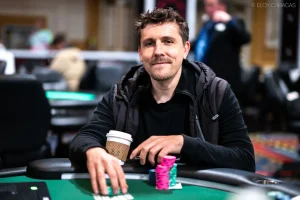
They dominated the final table, controlling half the chips when there were five players remaining.
Once at the final table, Shepsky almost completely controlled the pace of the game. With five players remaining, he held about half of the chips and used his PLO experience and ICM pressure to continuously limit his opponents' options.
Early in the final table, Shawn Stroke was the first to be eliminated in the nine-player stage, failing to reach the official final table. Shepsky then began a series of eliminations, first taking down Andre Rieder, and then Nick Pupillo. Wojciech Barzantny, however, failed to continue his "bounty king" streak, finishing in seventh place.
A crucial turning point in the middle of the match came when Shepsky made a big call against Jeremy Kerbel. He hero-called with a low-suited hand on a paired board, taking home nearly half the chips. Shepsky then eliminated Mark Radoja and Christopher Vitch, gradually building an irreversible lead.
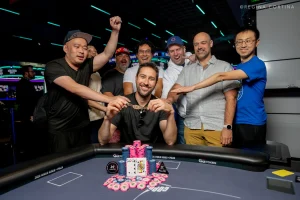
The head-to-head match ended in one round, with Alex Manzano finishing as runner-up.
In the three-player stage, Alex Manzano successfully doubled up under crucial ICM pressure, grabbing a $50,000 prize jump, while Jeremy Kerbel finished in third place. Heads-up play ended after only one hand, with Shepsky defeating Manzano to officially claim the championship and bracelet.
Runner-up Alex Manzano took home $204,000 in prize money. Although he failed to win his second WSOP gold bracelet, his consistent performance over the three days of the tournament earned him a place on the final heads-up stage.
Event #87 Final Table Results
| Ranking | player | Country/Region | bonus |
|---|---|---|---|
| 1 | Matthew Shepsky | United States | $305,000 |
| 2 | Alex Manzano | Chile | $204,000 |
| 3 | Jeremy Kerbel | United States | $151,000 |
| 4 | Christopher Vitch | United States | $112,000 |
| 5 | Mark Radoja | Canada | $84,000 |
| 6 | Nick Pupillo | United States | $64,000 |
| 7 | Wojciech Barzantny | Austria | $49,000 |
| 8 | Andre Rieder | United States | $38,000 |
Match data compilation
| Category | Figures |
|---|---|
| Tournament | WSOP Event #87: $1,000 Mystery Bounty Pot-Limit Omaha |
| Buy-in | $1,000 |
| Total Entries | 4,764 |
| Total prize pool | $4,192,320 |
| Titles | Matthew Shepsky |
| First-Place Prize | $305,000 |
| Champion Bounty Income | More than $20,000 |
| Champion's cumulative bounty | 10 |
| Final Day Completion Level | Level 41 |
| Final Blinds | 1,000,000 / 2,000,000 / 2,000,000 ante |
Event #87 not only brought Matthew Shepsky his first WSOP gold bracelet, but also highlighted the advantage of PLO specialists in the ever-changing bounty tournament format. As the WSOP continues, more bracelet events will enter the final stages.
Want to change Texas Holdem from "can understand" to "can win"?
If you want to learn more about Texas Hold'em, you can continue reading:
The Origins of Texas Hold'em: Why is it the World's Most Popular Poker Variant?
Texas Hold'em Hand Rankings and Showdown Rules (Beginner’s Essentials)
Texas Hold'em Betting teaching: Check / Bet / Call /Raise and Betting Strategy Analysis
The importance of Texas Hold'em position? Why is the back position more advantageous?
How to play Texas Hold'em? Novices learn Texas Hold'em rules, processes and betting teaching in 10 minutes
Texas Hold’em starting hands guide: Which hands should you play? A complete guide to Starting Hands strategy
Texas Holdem Starting Hands Chart guide: Complete starting-hand charts and positional strategy
How to play Texas Hold’em: Complete rules and the flow of a hand (Preflop / Flop / Turn / River)
Hunter Poker offers comprehensive tutorials, hand analysis, and strategy sharing to help players upgrade from simply "reading the cards" to understanding the range . This allows you to make better decisions in every hand.
▶️ In Facebook .
📘 In YouTube .
Want to learn more about Texas Hold'em strategy and gameplay?
Online Texas Hold'em freerolls typically require no buy-in, making them suitable for beginners to familiarize themselves with the rules while also allowing advanced players to test strategies and gain tournament experience. View the full brand introduction to learn about each platform's freeroll schedule, tournament features, and suitable player groups.
Further News Reading
International news
Brutal Full House Cooler Decides $10K Poker Masters Champion
International news
Poker player Lynne Ji denies allegations in alleged domestic dispute stabbing case
International news
Adrian Mateos completes an “unwanted hat trick” at the Poker Masters: three consecutive bubble exits
International news