



International news
PokerGO USPO 2026 Tournament Report: Amateur player Peter Placey defeated a pro to win the $10,000 high-stakes event, taking home $224,000 in prize money. He secured the victory with a crucial four-of-a-kind hand.
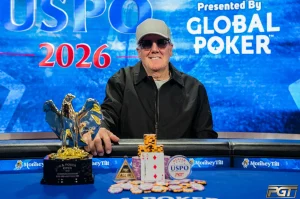 Amateur player Peter Placey pulled off a major upset at PokerGO USPO 2026, winning $224,000 in prize money.
Tournament Overview: Amateur Players Top High-Stakes Championship
In the 2026 U.S. Poker Open (USPO), a high-stakes event that was originally considered the domain of professional players was ultimately won by an amateur player, becoming one of the most talked-about stories of the series.
businessman from California Peter PlaceyWith 40 years of poker experience, he has always participated in tournaments as a recreational player. This time, he defeated many professional players in the **$10,000 buy-in event (Event #5)** held at PokerGO Studio, successfully winning the championship and the $224,000 prize.
Tournament Scale: A high-stakes battlefield where top players gather.
This tournament attracted 80 players, with a total prize pool of $800,000. The lineup included many top professionals and well-known poker players, such as:
- Poker Hall of Fame members
- High table regulars
- Series champion
However, it was Placey, who had been competing as a recreational player for many years, who ultimately stood out, demonstrating the charm of "skill and opportunity coexisting" in poker.
Final table results overview
The final table results are as follows:
- Peter Placey (USA) — $224,000
- Pan Qinghai (USA) — $144,000
- Anil Jivani (USA) — $104,000
- Brandon Wilson (USA) — $76,000
- Justin Zaki (USA) — $56,000
- Cherish Andrews (USA) — $40,000
- Jesse Lonis (USA) — $32,000
The Road to Qualification: From Facing Professional Players to One-on-One Showdown
Throughout the tournament, Placey demonstrated exceptional consistency and mental fortitude. He briefly held the chip lead in Day 1 and steadily progressed to the final table.
It's worth mentioning that this isn't his first time achieving success in a high-level tournament—back in the 2014 WSOP Main Event, he finished 35th and won over $230,000 in prize money.
The pace of the competition noticeably quickened as the final day began.
- The short-stacked player was the first to be eliminated.
- Justin Zaki and Brandon Wilson were eliminated in succession.
- The match eventually enteredPlacey vs Pan QinghaiOne-on-one duel
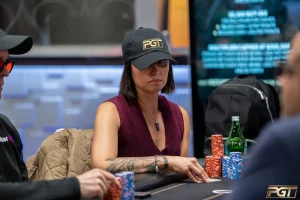
Key hand: Four of a kind to end the game
In the championship battle, Pan Qinghai once doubled up his chips and took the lead, seemingly in control of the situation.
However, the turning point came in a crucial hand:
- Placey hits the flop.Trips
- The subsequent transfer was upgraded toFour (Quads)
- Pan only holds top pair and cannot compete.
This hand sealed the victory, allowing Placey to complete a comeback and successfully reach the top.
Champion's Remarks: The Rewards of Passion and Perseverance
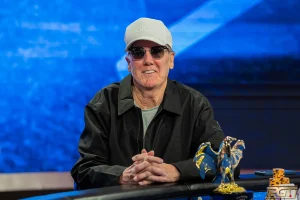
After the match, Placey expressed high regard for the tournament environment and his opponents:
"I've always enjoyed the opportunity to play against these top players here; it's a very special experience."
He also said he really enjoyed the atmosphere at PokerGO Studio and believed that this victory was the best reward for his years of hard work.
Lessons for Amateur Players: The Allure of Poker
Placey's victory once again proves that in the world of Texas Hold'em:
- The gap between professional and amateur is not insurmountable.
- Long-term experience and a stable mindset are equally important
- Luck at crucial moments can change everything.
This victory is not only a championship honor, but also an inspiration to all poker players.
Advanced Thinking Review: From "Knowing How to Play Cards" to "Making the Right Decisions"
When you stop just looking at your own hand, what truly sets you apart is how well you understand Range, EV, Blocker, position, and overall betting strategy.
The following advanced thinking methods are key to most players' progress from "occasionally getting it right" to "long-term stable profitability":
[Range Thinking] How to truly apply Range thinking in actual gameplay? Hand review and analysis.
[River Decision Making] How does the Blocker influence River's calling, raising, and folding? Strategy Breakdown
[Result Bias] EV vs Result: Why did we still lose even when we bet correctly? Retrospective Analysis
[Bluff Core] What constitutes proper Bluff? Hand replay analysis
[Semi-Bluff Timing] When is the most profitable time to use a semi-bluff? Strategy Analysis
[Bet Line] How to construct a complete betting line? Practical analysis and review.
[Position Advantage] Why does position directly influence your every decision? Hand Analysis
[SPR Application] How does SPR affect your playing style and pot planning? Strategy Analysis
[Vulnerability Analysis] How to identify vulnerabilities in an opponent's Range vulnerability? Post-mortem analysis and breakdown.
[Marginal Hands Problem] Why do expert players rarely play marginal hands? Decision Analysis
【Lập kế hoạch ba vòng cược】Làm sao thiết kế chiến thuật cho flop, turn và river? Phân tích thực chiến trong poker
[Fold Equity Pressure] How to Create Fold Equity? Hand Replay Analysis
[Area Contraction] How to analyze the process of the opponent's area being compressed? Strategy breakdown
[Strategy Selection] Balance vs. Exploit: Which to Choose in Practice? Retrospective Analysis
[Long-Term Profitability] How to Train a Long-Term EV Mindset? Decision Model Analysis
The biggest difference between advanced players and casual players isn't remembering more terminology, but rather the ability to integrate range, EV, position, blocking cards, and betting lines in every decision. Through these advanced thought processes, you can gradually build a more complete Texas Hold'em decision-making framework.
Further News Reading
International news
Nick Schulman, after winning his ninth WSOP gold bracelet, said: "I never thought I would get to this point."
International news
From cryptocurrency liquidation to a deep run at the WSOP! How did a 22-year-old trader turn his life around into a poker winner?
International news
Eelis Pärssinen wins his second WSOP title and his third gold bracelet, becoming the first Finnish player to achieve this feat.
International news