




Pocket Pair Strategy It is one of the most basic yet most easily misunderstood core concepts in Texas Hold'em.
Especially with mid-lane pairs (such as JJ and TT), many players get into a dilemma:
Is this hand strong or not strong enough?
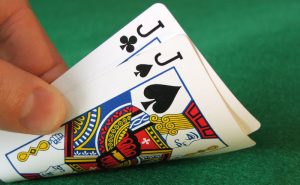
Some people consider JJ to be a strong hand close to AA, while others fold it under any pressure.
This article will help you rediscover the true role of middle pair through hand analysis and strategy breakdown.
Key conclusion: Middle pair is neither a strong hand nor a weak hand, but rather a "situational hand".
The essence of JJ / TT is:Medium to high intensity, but extremely context-dependent.
1. Regarding the upper lenient range → Very strong
2. Tightening the area → Very dangerous
3. Pre-flop → Usually in the lead
4. After the flop → It's easy to be suppressed.
→ The difficulty of playing a pair lies not in the strength of the hand, but in the fact that it is easy to go from "leading" to "falling behind".
Why are JJ/TT so difficult to beat?
Mistake 1: Overestimating the value before the rollover
Many players, upon obtaining JJ, will feel:"That's a strong move; they should be able to beat a big pot."
But the problem is:When the pot gets bigger, you're usually facing a stronger range.
1. AK, QQ, KK, AA
2. Even AQ has advantages in some situations.
Mistake 2: Playing randomly after failing to hit the flop
JJ/TT rarely get a significant boost on the flop, and often face:
1. A-high board
2. K-high board
3. Q-high board
Many players will do the following in this situation:Bluff or call (reckless attacks)
Mistake 3: Unable to accept that one's hand is only of average strength
JJ/TT's biggest psychological trap is:You might think it "should be alright", but it's often just a marginal hand.
Pocket Pair Strategy Hand Recap 1: Playing too big pre-flop, leading to a predicament
Scene
1. You hold J♠J♦
2. Early position opening, you 3-bet
3. Opponent 4-bet
Beginner's reaction
"JJ can't possibly give up, right?"
question
1. The opponent's range is relatively strong (QQ+ / AK)
2. You are easily suppressed.
→ At this point, many of JJ's losses were actually determined before the flip.
Pocket Pair Strategy Hand Replay Part 2: Overly Obsessed After the Flop
Scene
1. You hold T♣T♦
2. Flop: A♠ 9♣ 4♥
Common errors
1. Unwilling to fold
2. Continue to follow up on multiple streets.
→ But in this hand, your TT is likely already behind.
Pocket Pair Strategy Hand Review Part 3: Overly Conservative, Missing Value
Scene
1. You hold J♥J♣
2. Flipped cards: 7♦ 5♣ 2♠
question
1. Players are overly afraid of overcards.
2. Afraid to place a bet
→ In this weak hand, JJ should take the initiative to capture value.
Decision-making model: How should China respond to this?
- Opponent's range strength
- Does the hand contain high cards (A/K/Q)?
- Are you in position?
- Bottom pool size
- Does the opponent continue to exert pressure?
→ The key to the China-US conflict is not "whether to fight or not", but "how big the fight will be" and "to which street it will go".
The essence of the Chinese strategy is "control and judgment".
Pocket Pair Strategy The core of the strategy is:
1. Control the pot, instead of blindly increasing it.
2. Determine if it is being suppressed by a stronger area.
3. Actively extract value from safe hands.
→ A middle pair is not used to "prove you have a card", but to "test whether you can think".
5 essential questions for post-mortem analysis
1. Does my opponent have a range advantage over me?
2. Is this card advantageous to me or my opponent?
3. Did I overestimate this hand?
4. Should I control the pot?
5. What is the long-term EV of this hand?
In conclusion: The difficulty in playing a middle pair isn't due to the cards themselves, but rather because you want to play them as a strong hand.
The real issue with JJ/TT isn't whether they're strong or not, but rather:Do you accept that it's only a medium-strength hand?
When you stop treating middle pairs as strong hands, your losses will decrease significantly.
Key points summary
1. Middle pair is a situational card, not a fixed strong card.
2. Strong before the roll, but easily suppressed after the roll.
3. Control the pot, don't just attack blindly.
4. Players with weak hands should proactively acquire value.
5. Be more cautious with high-ranking hands.
FAQ: Frequently Asked Questions
Is JJ considered a strong hand?
→ It's considered a medium-to-high strength hand, but not a top-tier strong hand.
What should you do if you get a raise in TT?
→ It depends on the opponent's range and position; you can't generalize.
If you don't hit your middle pair on the flop, should you continue?
→ Depending on the cards you have and your opponent, you should either control the situation or give up in many cases.
Want to change Texas Holdem from "can understand" to "can win"?
The following hand situations are the key moments when most players most often lose money:
A must-read for beginners
These are the basic scenarios where most players make the most mistakes and most often lose money:
[Common Beginner Mistakes] Why do I always lose with AQ? A complete hand replay analysis
[Frequency Error] Should the top move have been executed with a three-street sweep? Real-world analysis.
[Common Dilemma] Should I attack or call if I have a draw on the flop? Strategy Breakdown
[Key Mistake] Why do beginners always lose big pots on the river? Analysis of Reasons
[Basic Concepts] How strong are middle pairs (JJ / TT)? Hand Analysis
Practical decision making
Once you know how to play cards, these decisions will directly determine whether you profit or lose:
[Key Decision-Making] When to Fold When Faced with a Raise? Retrospective Analysis
[Frequently Asked Questions] Why do I lose even after hitting a pair? Hand review and analysis
[Cognitive Error] Why do you always fall just short of winning? Decision Breakdown
[Hand Interpretation] How to play a high Ace hand? Practical strategy analysis
[Pot Control] How to use small pairs? A post-game tutorial.
[Pre-flop Selection] How to play hands like KQ/KJ? Strategy Analysis
[Advanced Mistakes] When should you not play slowly? Hand analysis
Key Insights
What truly sets you apart isn't your hand, but how you understand the situation and the range:
[Card Interpretation] What are "dangerous cards"? Retrospective Analysis
[Core Concept] Why is location so important? Strategy Analysis
[Advanced Techniques] What is "Controlled Pot"? Practical Analysis
Hunter Poker offers systematic Texas Hold'em instruction, hand analysis, and strategy analysis, from basic rules to advanced decision-making, helping players progress from "just looking at their hands" to "understanding ranges and decision-making logic," enabling them to make long-term profitable choices in every hand.