



Poker Fold Strategy It is one of the most underrated, yet most crucial, ways to generate profits in Texas Hold'em.
Many players will learn how to bet, how to bluff, and how to value bet.However, they overlooked something that truly determines long-term success or failure:When to fold。
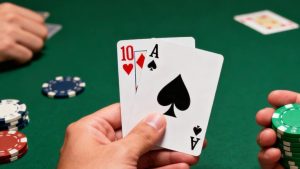
Especially when facing a raise, the most common mistake beginners make is "not wanting to fold."Ultimately, small mistakes gradually turn into big losses.
This article will analyze real-world scenarios to break down the correct folding logic when facing a raise.
Key takeaway: Knowing when to fold is more important than knowing when to attack.
In Texas Hold'em, profits come not only from winning the pot, but also from:Avoid pots you shouldn't lose。
1. Every incorrect bet contributes to the accumulation of losses.
2. Every correct fold protects your EV (Effective Value).
→ In the long run, “losing less” is more important than “winning more”.
Why are players hesitant to fold when faced with a raise?
Mistake 1: Resentment (Ego)
"My skills aren't bad, are they? How can I give up?"
→ This isn't logic, it's emotion.
Mistake 2: Sunk Cost
"I've already invested so much; it would be a huge loss to fold now."
→ The stakes already invested should not influence current decisions.
Mistake 3: Overly suspicious of the opponent (fear of being bluffed)
Many players might think:He might be stealing; I can't be fooled.
→ But in reality, most players bluff far less frequently than you might imagine.
Poker Fold Decision Hand Replay 1: Flop Facing a Check-Raise
Scene
1. You hold A♠Q♦
2. Flipped cards: Q♣ 8♠ 3♥
action
1. You place a bet (c-bet)
2. Opponent's check-raise
Beginner's reaction
"I have a top pair, I can't give up."
question
1. The opponent's check-raise is usually on the stronger side.
2. It could be a set / two pairs / forced draw.
→ Being able to withstand pressure does not mean being able to withstand pressure.
Poker Fold Decision Hand Replay Part 2: Facing Continued Pressure on the Turn
Scene
1. You hold K♣Q♣
2. Flop: Q♦ 9♠ 4♣
Action Line
1. Flop: You bet → Your opponent calls.
2. Turn: The opponent suddenly increases their bet.
Error point
1. Ignore changes in the opponent's behavior
2. Blindly following the trend
→ Increasing the size and size indicates a stronger range.
Poker Fold Decision Hand Replay Part 3: River Card Facing a Large Bet
Scene
1. You hold J♠J♦
2. Hand: A♣ 7♦ 3♠ 9♥ 2♣
action
The opponent, River, placed a large bet.
Beginner's mindset
He might be in bluff.
question
1. You almost never win with this hand.
2. The opponent's bluff frequency is low.
→ This type of call is the most typical source of losses.
Decision-making model: 5 questions you should ask when facing a bet increase.
1. Has the opponent's range increased?
2. Where is my current card in the range?
3. How likely is it that the opponent is bluffed?
4. Is the size of the pool appropriate?
5. Is my call a positive long-term EV?
→ If you can't answer, you should usually fold.
Folding is the most underrated source of profit.
Poker Fold Strategy The core is:
1. Avoid being drained by a more extensive range of factors.
2. Don't pay for emotions.
3. Understand the logic behind the betting lines
→ A true master doesn't make every move, but knows when to let go.
5 essential questions for post-mortem analysis
1. Why did I follow along? Was it logic or emotion?
2. What does the opponent's raise signify?
3. Am I being suppressed by range?
4. Did I overestimate my hand?
5. Will this call be profitable in the long run?
Conclusion: Only those who know how to fold have the potential to win money.
Many players fail to improve not because they don't know how to play, but because they don't know how to play strategically.
When you start learning to fold at crucial moments, your losses will decrease, and profits will naturally follow.
Key points summary
1. Folding is a significant source of profit.
2. When faced with adding fuel, the scope needs to be reassessed.
3. Avoid emotionally driven betting.
4. Don't be swayed by sunk costs.
5. Understanding the betting lines is more important than looking at the cards.
FAQ: Common Folding Issues
Should you always fold when faced with a raise?
→ Not necessarily, but if you can't reasonably explain why you called, you should usually fold.
How do you determine if your opponent is bluffing?
→ Look at the betting lines and frequency, not your gut feeling.
Why do I always abandon the wrong path or follow the wrong path?
→ This is mostly because people make decisions based on emotions rather than using logical thinking and reasoning.
Want to change Texas Holdem from "can understand" to "can win"?
The following hand situations are the key moments when most players most often lose money:
A must-read for beginners
These are the basic scenarios where most players make the most mistakes and most often lose money:
[Common Beginner Mistakes] Why do I always lose with AQ? A complete hand replay analysis
[Frequency Error] Should the top move have been executed with a three-street sweep? Real-world analysis.
[Common Dilemma] Should I attack or call if I have a draw on the flop? Strategy Breakdown
[Key Mistake] Why do beginners always lose big pots on the river? Analysis of Reasons
[Basic Concepts] How strong are middle pairs (JJ / TT)? Hand Analysis
Practical decision making
Once you know how to play cards, these decisions will directly determine whether you profit or lose:
[Key Decision-Making] When to Fold When Faced with a Raise? Retrospective Analysis
[Frequently Asked Questions] Why do I lose even after hitting a pair? Hand review and analysis
[Cognitive Error] Why do you always fall just short of winning? Decision Breakdown
[Hand Interpretation] How to play a high Ace hand? Practical strategy analysis
[Pot Control] How to use small pairs? A post-game tutorial.
[Pre-flop Selection] How to play hands like KQ/KJ? Strategy Analysis
[Advanced Mistakes] When should you not play slowly? Hand analysis
Key Insights
What truly sets you apart isn't your hand, but how you understand the situation and the range:
[Card Interpretation] What are "dangerous cards"? Retrospective Analysis
[Core Concept] Why is location so important? Strategy Analysis
[Advanced Techniques] What is "Controlled Pot"? Practical Analysis
Hunter Poker offers systematic Texas Hold'em instruction, hand analysis, and strategy analysis, from basic rules to advanced decision-making, helping players progress from "just looking at their hands" to "understanding ranges and decision-making logic," enabling them to make long-term profitable choices in every hand.