



International news
2026年11月4日,西班牙撲克巨星Adrian Mateos在Raise Your Edge Podcast專訪中,回顧2017年登上GPI世界第一後遭遇職業生涯最嚴重下風的經歷。他坦承因連續獲勝而停止深入研究撲克,加上資助其他牌手及投資失利,承受長達一至兩年的心理壓力。最終透過重新專注無限注德州撲克錦標賽,重建職業競爭力。如今他已擁有6條WSOP金手鍊、逾7,000萬美元現場賽事累計獎金,並贏得2026 Poker Masters年度總冠軍。
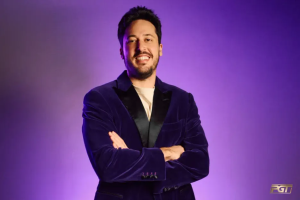
On November 4, 2026, China Poker Network compiled the latest Raise Your Edge Podcast interview with Spanish poker superstar Adrian Mateos. The elite player, who owns six WSOP bracelets and has accumulated more than $70 million in live tournament earnings, rarely discussed the most difficult period of his career.
In an interview with host Benjamin “bencb” Rolle, Mateos admitted that after reaching No. 1 in the Global Poker Index (GPI) world rankings in 2017, his continued success gradually made him lose his sense of urgency, and he even stopped studying poker seriously.
He subsequently endured the most severe downswing of his career.
However, what truly put Mateos in trouble was not merely his wins and losses at the table, but failed off-table investments, backing other players, and the resulting financial and psychological pressure.
After one to two difficult years of adjustment, he ultimately decided to set aside his other businesses and investments and refocus all of his energy on No-Limit Hold'em tournaments.
Today, Mateos continues to post results in the world's most prestigious high roller events, and in October 2026 he won the Poker Masters overall championship and its highest honor, the Purple Jacket.
Who Is Adrian Mateos? WSOPE Main Event Champion at 19
Adrian Mateos is one of Spain's most prominent professional poker players and a major figure in international high-stakes tournaments in recent years.
His professional career got off to a rapid start.
At the end of 2012, Mateos recorded his first live tournament cash, winning the event for $42,399.
Just one year later, he achieved one of the most important breakthroughs of his career.
In 2013, Mateos, then just 19 years old, won the World Series of Poker Europe (WSOPE) Main Event, earning $1,351,661 and his first WSOP bracelet.
This result quickly drew the attention of international poker media.
Over the following decade, Mateos continued competing in WSOP, EPT, and major international high roller tournaments, gradually establishing himself as an elite professional player.
Key Milestones in Adrian Mateos' Career
| Year | Key Achievement | Prize Money / Record |
|---|---|---|
| 2012 | First live tournament cash and victory | US$42,399 |
| 2013 | WSOPE Main Event champion | US$1,351,661, first bracelet |
| 2017 | Reached No. 1 in the GPI world rankings | World No. 1 |
| 2025 | Won his fifth WSOP bracelet | 5 bracelets |
| June 2026 | WSOP $250,000 Super High Roller champion | US$4,334,411, sixth bracelet |
| October 2026 | Poker Masters overall champion | 451 points, Purple Jacket |
As of early November 2026, according to public statistics from The Hendon Mob, Mateos' cumulative live tournament earnings had exceeded $70 million.
It should be noted that cumulative live tournament earnings are the sum of prize money earned from finishes over the years, not an individual's net profit after buy-ins, travel expenses, staking arrangements, and other costs.
Reaching No. 1 in the GPI in 2017: Success Made Mateos Start to Let Up
In 2017, Mateos achieved a goal that many professional players dream of:
Reaching No. 1 in the Global Poker Index world rankings.
The GPI is an important live tournament ranking system in international poker, calculating points based on players' results over a specified period.
Reaching the top of the GPI indicated that Mateos had established consistent and outstanding performances in international tournaments at the time.
However, in his recent Raise Your Edge Podcast interview, he admitted that this success instead caused him to start relaxing.
Mateos recalled that, due to a run of strong results and a healthy personal poker bankroll, he gradually developed the illusion that:
He was already good enough and no longer needed to devote as much time to studying poker as he had in the past.
As a result, he began reducing his strategy work and even stopped studying seriously for a time.
For a player who regularly competed in events with the highest buy-ins in the world, this change ultimately had a major impact.
After Stopping Strategy Study, He Endured the Worst Downswing of His Career
Mateos said that after reaching world No. 1, he experienced the most severe downswing of his career.
A downswing is a poker term used to describe a period in which a player repeatedly experiences unfavorable results.
Even with a long-term skill edge, professional players can experience short-term losses because of tournament variance.
However, the problems Mateos encountered this time could not simply be attributed to luck.
He admitted that he had reduced his investment in study and training while continuing to compete at the highest level.
As other elite players continued to improve, the technical edge he had built also required ongoing investment to maintain.
This experience made him recognize an important fact once again:
Reaching world No. 1 does not mean you can stop improving.
If players want to remain in an elite competitive environment over the long term, they must continue learning, studying strategy, and adapting to changes in the market.
The Real Crisis Was Not Losing Money at the Tables, but Failed Off-Table Investments
In the interview, Mateos further revealed that the financial problems he faced at the time were more complex than outsiders imagined.
In addition to playing high-stakes poker tournaments, he invested substantial funds in other areas.
These included two important types of financial arrangements:
First, providing financial backing to other poker players.
Second, investing in business ventures that were not performing well.
These off-table arrangements later became a major source of his financial pressure.
The Main Problems Mateos Faced at the Time
| Problem | factors |
|---|---|
| Stopped studying poker in depth | Affected his technical development and competitiveness |
| Backed multiple other players | Took on additional investment and tournament variance |
| Invested in unsuccessful business ventures | Caused off-table financial losses |
| Managed multiple businesses at the same time | Diverted energy that should have been devoted to poker |
| Increased financial pressure | His mental state was continually affected |
Mateos emphasized that the financial losses during this low point came more from backing and business investments than from simply losing continuously at the tables.
He did not disclose the exact amount of his losses at the time, so it is impossible to determine the actual dollar losses caused by the entire downswing.
But he acknowledged that these decisions had a long-term impact on him.
One to Two Years of Poor Mental Health, Yet He Never Considered Leaving Poker
For Mateos, the hardest part of this low point was not losing any single event, but the psychological pressure continuously brought on by financial problems.
He recalled that his mental state was quite poor for approximately one to two years.
Off-table investments, backing arrangements, and responsibilities across different projects placed him under more pressure than he had originally expected.
However, even in such difficult circumstances, Mateos never considered leaving poker entirely.
The reason was:
He had always loved the game.
For him, the problem was not that he had lost his passion for competing, but that he had not focused his time and resources on what he was truly good at.
Therefore, what he needed to change was not his career path, but the way he organized his life and work.
This became the starting point for readjusting his career.
How Did Adrian Mateos Get Out of His Slump? He Decided to Focus Only on No-Limit Hold'em
When host Benjamin Rolle asked Mateos how he recovered from the most difficult period of his career, he gave a clear answer.
Refocus and do only what you are best at.
Mateos decided not to let too many off-table investments and other business activities distract him.
He began adjusting his lifestyle and reinvesting most of his time in poker study and competition.
More importantly, he made a clear choice about his career direction:
專注無限注德州撲克(No-Limit Hold’em),並以錦標賽為主要競技領域。
Compared with participating in multiple different investments and business ventures at once, he believed focusing on the field he knew best and in which he held the strongest competitive edge was more aligned with his long-term career development.
Why Choose to Become a Specialist in One Field?
Mateos believes that when a player tries to do too many things well at once, it is often difficult to maintain the highest level in every field.
Even having once been world No. 1 did not mean he could simultaneously become the best professional poker player, investor, and business operator.
Therefore, rather than making the expansion of other businesses his primary goal, he chose to focus his energy on the No-Limit Hold'em tournaments where he had already built an edge.
The core of this adjustment was not to play more events, but to restore the importance of strategy study and competitive preparation.
Key Differences Before and After Mateos' Career Adjustment
| Category | During the Low Point | After the Adjustment |
|---|---|---|
| Career Focus | Handled poker and multiple investments at the same time | Made poker his primary focus |
| Strategy Study | Gradually reduced his investment | Renewed his emphasis on learning |
| Financial Arrangements | Involved multiple players and other projects | Reduced off-table distractions |
| Tournament Focus | Played while managing other businesses | Focused on No-Limit Hold'em tournaments |
| Main Goal | Maintain existing success | Build long-term competitiveness |
As he gradually adjusted his lifestyle and work arrangements, Mateos rediscovered his commitment to poker strategy study and steadily regained his competitiveness in the world's top high roller events.
Returning From a Low Point to the Top: Winning His Sixth WSOP Bracelet in 2026
Mateos' career adjustments were ultimately reflected in his major tournament results in subsequent seasons.
2026年6月,他在世界撲克系列賽(WSOP)Event #41:250,000美元買入Super High Roller No-Limit Hold’em中成功奪冠。
The event featured numerous world-class high-stakes players, including Phil Ivey, Jason Koon, and Bryn Kenney.
Mateos ultimately won:
$4,334,411 in first-place prize money
And his sixth WSOP bracelet.
According to the official WSOP announcement, this also made him the youngest player in history at the time to win six WSOP bracelets, achieving the record at age 31.
This result showed that, after many years as a professional, Mateos still had the ability to compete with the world's best players.
For someone who had endured a major low point after stopping his strategy study, it also stood in stark contrast to his earlier decision to refocus on poker.
Winning the 2026 Poker Masters Overall Title and the Purple Jacket
In addition to his sixth WSOP bracelet, Mateos recorded another major result in October 2026.
He won the overall points championship in the Poker Masters series held in Las Vegas.
Poker Masters is an important high-stakes tournament series under the PokerGO Tour (PGT), and the player with the highest overall points receives the Purple Jacket, symbolizing the series championship.
According to results announced by PGT, Mateos recorded three cashes across the 10 events in this edition of the series.
These included one event victory, one runner-up finish, and one fourth-place finish.
Adrian Mateos' 2026 Poker Masters Results
| Tournament | Final Position | Prize Money (USD) | PGT Points |
|---|---|---|---|
| Event #2: $10,500 NLH | Runner-up | 151,200 | 151 |
| Event #5: $10,500 NLH | Champion | 229,500 | 230 |
| Event #7: $15,700 NLH | Fourth place | 87,000 | 70 |
| Combined | 3 cashes | 467,700 | 451 |
With 451 points, Mateos beat out other high-stakes regulars to win the 2026 Poker Masters overall championship.
In addition to the Purple Jacket, he also received a $25,000 PGT Passport award, which can be used for designated events under the relevant rules.
This award is an entry benefit and should not be directly regarded as an additional $25,000 cash prize.
Notably, Mateos also bubbled the money five times during this Poker Masters, but still secured the overall title through his three deep runs.
Poker Masters Overall Points Standings: Mateos Leads With 451 Points
According to the official PGT standings, the top five players in the 2026 Poker Masters were as follows.
| Rank | player | Points | Series Prize Money |
|---|---|---|---|
| 1 | Adrian Mateos | 451 | US$467,700 |
| 2 | Nick Palma | 407 | US$424,400 |
| 3 | Nick Seward | 397 | US$578,500 |
| 4 | Jeremy Ausmus | 389 | US$553,500 |
| 5 | Sean Winter | 373 | US$744,800 |
These rankings also reflect that the Poker Masters points system is not entirely the same as cumulative prize money.
For example, Sean Winter earned more in series prize money than Mateos, but had fewer total points and ultimately finished fifth.
Mateos, meanwhile, reached the top with 451 points through one victory and two other deep finishes.
What Did Mateos Learn From His Career Low Point?
Looking back on his experiences, Mateos believes the biggest lesson was not only to place greater importance on strategy study, but also to properly understand the limits of his own abilities.
Even the world's best players cannot achieve equally outstanding results across multiple completely different fields at the same time.
In the interview, he summarized his past experiences by saying, “You are not Superman.”
For him, the most sensible choice is to focus on one or two things he is truly good at and do them as well as possible.
Four Key Takeaways From Mateos' Experience
First, past results cannot guarantee a future competitive edge.
After reaching No. 1 in the GPI world rankings in 2017, Mateos relaxed his study efforts for a time and ultimately faced the worst downswing of his career.
Second, poker bankroll management and other investment risks need to be assessed separately.
His financial pressure did not come entirely from the tables, but was connected to backing other players and failed business investments.
Third, continuing to learn is more important than maintaining an image of past success.
When elite players continue studying new strategies, anyone can gradually lose their edge by ceasing to improve.
Fourth, focus is itself a professional skill.
Mateos later decided to reduce his other businesses, focus most of his energy on No-Limit Hold'em tournaments, and rebuild his long-term competitiveness.
These observations come from Mateos' personal professional experience and do not mean that every player must adopt exactly the same lifestyle or investment arrangements.
Behind $70 Million in Live Earnings, Mateos Also Faced Financial and Psychological Crises
To outsiders, Adrian Mateos' career résumé nearly represents the pinnacle of modern poker tournament achievement.
Winning the WSOPE Main Event at age 19, reaching No. 1 in the GPI world rankings in 2017, claiming six WSOP bracelets, and surpassing $70 million in cumulative live tournament earnings have all made him an important figure on the international poker scene.
However, this Raise Your Edge Podcast interview reveals that his career also went through a prolonged downturn.
Mateos' past success caused him to ease off his study, and he later came under severe financial and psychological pressure after backing other players and suffering losses in business investments.
Yet he never gave up on poker.
By reorganizing his personal and professional life, reducing distractions from off-table investments, and focusing his study on the no-limit hold'em tournaments he excels at most, Mateos gradually regained his competitive form.
In 2026, he won another WSOP bracelet and captured the Poker Masters Player of the Year title.
From being GPI world No. 1 in 2017, through the most difficult downturn of his career, to his continued success in 2026, Mateos' story shows that the challenges facing elite professional players extend beyond simply beating opponents at the table.
How they manage their bankroll, control off-table risk, and maintain the discipline to keep learning after prolonged success also determines whether their careers can continue to develop.
For Mateos, the key to emerging from his downturn was recognizing his strengths again and focusing his time and energy on what mattered most.
Want to change Texas Holdem from "can understand" to "can win"?
If you want to learn more about Texas Hold'em, you can continue reading:
The Origins of Texas Hold'em: Why is it the World's Most Popular Poker Variant?
Texas Hold'em Hand Rankings and Showdown Rules (Beginner’s Essentials)
Texas Hold'em Betting teaching: Check / Bet / Call /Raise and Betting Strategy Analysis
The importance of Texas Hold'em position? Why is the back position more advantageous?
How to play Texas Hold'em? Novices learn Texas Hold'em rules, processes and betting teaching in 10 minutes
Texas Hold’em Starting Hands Guide: Which Hands Should You Play? A Complete Starting Hands Strategy Guide
Texas Holdem Starting Hands Chart Guide: Complete Starting Hand Charts and Positional Strategy
How to Play Texas Hold’em: Complete Rules and the Flow of a Hand (Preflop / Flop / Turn / River)
Hunter Poker offers comprehensive tutorials, hand analysis, and strategy sharing to help players upgrade from simply "reading the cards" to understanding the range . This allows you to make better decisions in every hand.
▶️ In Facebook .
📘 In YouTube .
Want to learn more about Texas Hold'em strategy and gameplay?
Online Texas Hold'em freerolls typically require no buy-in, making them ideal for beginners to learn the rules and allowing more advanced players to test strategies and build tournament experience. View the full brand introductions to learn about each platform's freeroll schedule, tournament features, and target players.
Further News Reading
International news
Triton North Cyprus|Malaysia’s Ang Yang Yi wins the QQPK Challenge, turning a $140 buy-in into $11,000 worth of tournament entries
International news
Triton North Cyprus | QQPK Genesis draws 387 entries across its first two starting flights, 62 advance, 12 Chinese players qualify, and Erik Eisen is the current chip leader
International news
Triton Cyprus Opens | 32 Events Set for the 10th-Anniversary Season Finale, with QQPK Genesis Kicking Off and Phil Ivey Playing the $200,000 Invitational
International news