



International news
Advanced Poker Training has generated 1 million AI simulations to predict the 2026 WSOP Main Event champion. Lucas Jumalon leads with a 40.41 TP3T win rate, but experts favor Greg Mueller as the dark horse.
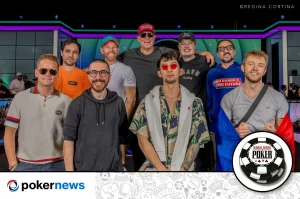 Advanced Poker Training has generated 1 million AI simulations to predict the 2026 WSOP Main Event champion. Lucas Jumalon leads with a 40.41 TP3T win rate, but experts favor Greg Mueller as the dark horse.
With just days to go until the 2026 WSOP Main Event, while no one knows who will be crowned the next world poker champion, the Advanced Poker Training team believes its AI-powered supercomputer has a better chance of making the right predictions than most people.
This is because the company performed an astonishing 1 million simulations of the entire WSOP Main Event final table, producing some remarkable results.
Steve Blay, the Florida-based academic and software developer behind Advanced Poker Training, has a proven track record of predicting the results of the biggest poker tournaments. Back in 2016—the last time there was a gap between the final table and the crowning of the champion—Blay's model correctly identified Qui Nguyen as the most likely winner, even though he wasn't the chip leader at the time.
It's worth noting that that prediction was based on only 100 simulations. Ten years later, computing power has increased dramatically, and the latest model in Advanced Poker Training has performed a 10,000-fold more detailed analysis of the final table. Here are the results…
2026 WSOP Main Event Final Table Simulation Results (1 million simulations):
| player | 1st place | 2nd place | 3rd place | 4th place | 5th place | 6th place | 7th place | 8th place | 9th place |
|---|---|---|---|---|---|---|---|---|---|
| Lucas Jumalon | 40.4% | 20.4% | 13.1% | 9.0% | 6.4% | 4.6% | 3.1% | 2.0% | 1.0% |
| Rami Hammoud | 13.2% | 15.3% | 14.2% | 13.2% | 11.8% | 10.5% | 8.9% | 7.5% | 5.4% |
| Jamie Shaevel | 11.3% | 13.4% | 13.7% | 13.2% | 12.2% | 11.2% | 10.1% | 8.4% | 6.5% |
| Greg Mueller | 10.9% | 13.5% | 13.5% | 13.0% | 12.4% | 11.3% | 10.1% | 8.6% | 6.7% |
| Michael Gagliano | 7.0% | 10.0% | 11.3% | 11.9% | 12.6% | 12.7% | 12.4% | 11.8% | 10.3% |
| Mario Boos | 6.5% | 9.4% | 10.9% | 11.7% | 12.1% | 12.6% | 12.9% | 12.5% | 11.4% |
| Lauri Saaskilahti | 5.2% | 7.9% | 9.8% | 10.9% | 12.0% | 12.7% | 13.5% | 13.9% | 13.9% |
| Han Feng | 3.0% | 5.3% | 7.2% | 8.9% | 10.6% | 12.5% | 14.4% | 17.3% | 20.8% |
| Evagoras Evagorou | 2.5% | 4.7% | 6.3% | 8.2% | 10.0% | 11.9% | 14.5% | 17.9% | 24.0% |
Average winnings
| player | seat | Starting chips | ICM Value | Average winnings (simulated) | difference |
|---|---|---|---|---|---|
| Lucas Jumalon | 9 | 194,000,000 | $6,188,930 | $6,306,953 | +1.91% |
| Rami Hammoud | 7 | 79,000,000 | $4,054,198 | $3,862,553 | -4.73% |
| Jamie Shaevel | 5 | 56,000,000 | $3,414,290 | $3,605,675 | +5.61% |
| Greg Mueller | 4 | 48,500,000 | $3,177,214 | $3,568,945 | +12.33% |
| Michael Gagliano | 2 | 46,500,000 | $3,111,062 | $2,996,098 | -3.70% |
| Mario Boos | 3 | 44,000,000 | $3,026,466 | $2,899,613 | -4.19% |
| Lauri Saaskilahti | 1 | 37,500,000 | $2,795,602 | $2,673,088 | -4.38% |
| Han Feng | 6 | 25,000,000 | $2,296,565 | $2,231,290 | -2.84% |
| Evagoras Evagorou | 8 | 22,500,000 | $2,185,672 | $2,105,788 | -3.65% |
Interpreting the data
You can judge the meaning of these numbers for yourself, but Blay has thoughtfully pointed out a few particularly interesting results...
Jumalon is powerful, but not invincible.

"Jumalon's dominance in simulations is not surprising," Blay said. "With around 351 TP3T, he won in simulations with over 401 TP3T. Why? Math. Other players simply couldn't mount a positive counterattack because every confrontation came with huge ICM consequences."
Nevertheless, the 22-year-old from Spokane, Washington, is far from having the game in the bag. "What surprised me was that all of this translated into prize money that was only about 2% higher than his ICM expectation. I had thought that the chip leader's dominance at the table would create a bigger advantage," Blay added.
Moreover, although it sounds unlikely, Jumalon could still be eliminated in ninth place—a disastrous result that occurred in the 1% simulation.
Simulations show that Hammoud performs poorly.
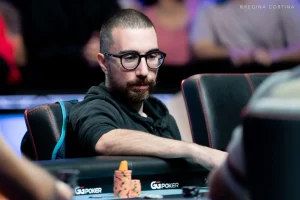
"The biggest disappointment in the simulation was Hammoud, whose average score was nearly 51 TP3T lower than the ICM value," Blay said, offering several possible reasons.
"First, while Hammoud is an excellent player, he is still an amateur in terms of skill. Second, intelligence suggests he may be a bit too aggressive."
However, the computer considered the seating arrangement as a major factor. "Hammoud unfortunately placed Jumalon two seats to his left. Whenever Hammoud reached the cutoff or button—the two best positions for stealing the blinds—Jumalon would be waiting in the blinds with a huge stack and maximum leverage. It was almost the most awkward seating arrangement ever."
Shaevel and Mueller: The Dark Horses of the Final Table
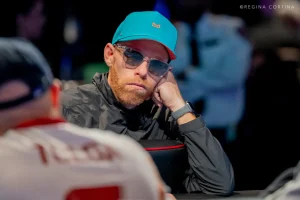
Looking for an underrated player to support? Shaevel and Mueller might be your best bets.
"The two who exceeded expectations the most were Shaevel, especially Mueller. Both of them have good seats and a lot of experience," Blay said.
"Shaevel has eight Main Event money records and is a highly respected cash game regular in Los Angeles... Mueller is probably the fan favorite. He has three WSOP gold bracelets, dozens of WSOP money records dating back to before Jumalon was born, and he is also a former pro hockey player. Playing under pressure in front of a large audience is nothing new to him."
This is the world of the rich.
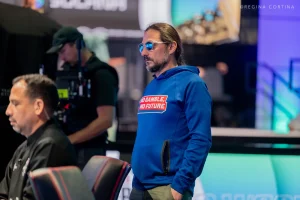
Simulations showed that all five short-chip players underperformed their ICM expectations, although Blay said the result was not surprising.
“Every prize jump represents life-changing money, which makes finding profitable opportunities even more difficult,” he explained. “You have to constantly weigh the value of protecting your tournament life against the risks of accumulating chips.”
"This is an extremely difficult balancing behavior, and the simulation shows just how brutal this environment is."
The Science Behind It
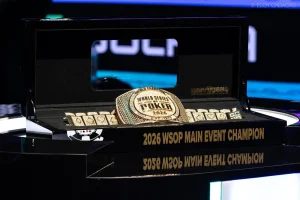
"The big question on everyone's mind is, how scientific is this simulation?" Blay admitted. "No one can do a more scientific study than this. I've collected all the data we could get."
"I won't reveal all the details—those are trade secrets—but each bot has adjustable behavioral traits. How does this player handle ICM pressure? How unwilling are they to risk their tournament lives? What hands will they use to steal the blinds? How stubborn are they after being called? There are seven different configuration options for continuation betting alone, depending on the situation," he laughed.
"No one can conduct a more scientific study than this. I have collected all the data we could obtain."
In summary, this equates to over 40 configurable features applied to each player. This is the modeling framework that the Advanced Poker Training team has been building for decades. By feeding all the data into a computer capable of simulating three full WSOP Main Event final tables per second, you get a highly reliable model.
"I'm probably better than anyone at trying to mold a robot that can exhibit a similar personality to its real self from limited data," he said. "It comes down to my expertise and a little bit of poetic permission, you could say."
"If that sounds a bit far-fetched, think about election prediction. Polling organizations don't interview every voter in the United States. Instead, they combine demographics, historical trends, economic indicators, and even social media sentiment to build predictive models. These models are far from perfect, but they are often surprisingly accurate. Building a poker bot isn't much different."
Official Champion Prediction by Experts

So, who did the experts pick? After correctly predicting Nguyen's victory in 2016, Blay didn't remain silent; he backed Greg Mueller to become the next world champion in poker.
“Nobody’s going to accuse me of making a ‘safe’ pick,” Blay said. “If you’re betting purely on numbers, Jumalon is the obvious favorite. He started with more than a third of his chips, and my simulations show he has a winning percentage of over 40%. Mathematically, picking anyone else is going against the grain.”
"But what's the fun in simply predicting the favorites? The player who keeps popping up in my simulations is Greg Mueller. Time and time again, he's found a way to outpace his chip stack, and there's a reason for that. Experience is crucial, especially under the brightest lights of poker."
"The player that keeps popping up in my simulations is Greg Mueller."
"Would I be shocked if Jumalon won? Of course not. The data shows he's very likely to win. But if I were to plant my flag on a player who can overcome the odds, I'd choose the one who's been quietly dominating in simulations. So, here's my official prediction: Greg Mueller wins, baby!"
Want to change Texas Holdem from "can understand" to "can win"?
If you want to learn more about Texas Hold'em, you can continue reading:
The Origins of Texas Hold'em: Why is it the World's Most Popular Poker Variant?
Texas Hold'em Hand Rankings and Showdown Rules (Beginner’s Essentials)
Texas Hold'em Betting teaching: Check / Bet / Call /Raise and Betting Strategy Analysis
The importance of Texas Hold'em position? Why is the back position more advantageous?
How to play Texas Hold'em? Novices learn Texas Hold'em rules, processes and betting teaching in 10 minutes
Texas Hold'em Starting Hands Strategy Guide: Which Hands to Play?
Texas Holdem Starting Hands Chart Tutorial: Complete Starting Hand Chart and Position Strategy
How to play Texas Hold'em? Complete rules and a hand's flow (Preflop / Flop / Turn / River)
Hunter Poker offers comprehensive tutorials, hand analysis, and strategy sharing to help players upgrade from simply "reading the cards" to understanding the range . This allows you to make better decisions in every hand.
▶️ In Facebook Follow Hunter Poker.
📘 In Youtube Follow Hunter Poker.
Want to learn more about Texas Hold'em gameplay and strategies?
Online Texas Hold'em free tournaments typically have no entry fee, making them ideal for beginners to familiarize themselves with the rules and for advanced players to test strategies and gain experience. View full brand profiles to learn about each platform's free tournament schedule, features, and target audience.
Further News Reading
International news
All roads lead to London GUKPT Grand Finals: £1.2 million guaranteed prize money
International news
PokerStars on FanDuel bucks the trend and grows, while the US online poker market stagnates.
International news
The youngest South African gold bracelet winner wins the APC Main Event.
International news