



International news
Allen Kessler is highly anticipated at the WSOP 2026, and the veteran is confident that he will win his first gold bracelet, with his recent hot streak being the biggest key factor.
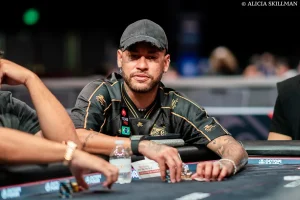 Allen Kessler is preparing for the 2026 WSOP, aiming to win his first career gold bracelet.
Allen Kessler WSOP 2026: A veteran player gets a breakthrough opportunity
With the 2026 World Series of Poker (WSOP) set to open in Las Vegas on May 26, veteran professional poker player Allen Kessler has once again become the focus of discussion. The poker veteran, nicknamed "Chainsaw," has publicly stated his confidence in ending his more than two-decade-long wait this summer and winning his first WSOP gold bracelet.
For players who follow poker tournaments, "Allen Kessler WSOP 2026" has gradually become one of the hottest keywords, and market attention continues to rise.
A steady income for 20 years, yet the regret of never winning a title.
Allen Kessler has been active in the WSOP since 2001, known for his consistent qualifying and cash prize records. He has accumulated over 122 WSOP cashes, ranking second all-time among players who have never won a title, second only to Tom McCormick.
Furthermore, he ranked 16th on the all-time WSOP money list, with cumulative live tournament earnings exceeding $4.6 million. However, despite his consistent performance, he never quite crossed the final hurdle—winning a gold bracelet.
This "stable but not explosive" performance has made him one of the most talked-about players in the poker world.
The recent hot streak has boosted confidence.
Kessler's strong confidence is not unfounded. He has performed admirably in several tournaments over the past month, including:
- Win a RunGood Poker Series (RGPS) ring tournament
- Win the WSOP Circuit (WSOPC) ring
- Two runner-up finishes
- Six-time final table participant
This consistent and high-intensity performance led him to believe that he is currently in his "peak period of form".
He said, "I will definitely win the gold bracelet this year." This statement has become a hot topic of discussion in the poker world recently.
Multiple missed championships: A retrospective of historical regrets
In fact, Kessler has come close to winning the championship. He reached the heads-up stage of WSOP bracelet events four times, including:
- 2010 match against Frank Kassela
- vs. Brian Rast
- Match against Todd Brunson
However, he ultimately missed out on the championship each time. These losses not only affected his performance but also led to the outside world's assessment that he "lacked explosiveness in crucial moments."
"Top Compensation Player" Label and Market Positioning
Kessler is also widely known as the "Casino Comps King." He excels at consistently participating in casino competitions to earn various casino rewards and points, and he maximizes this strategy.
While this conservative playing style allowed him to maintain stable earnings throughout his long career, it also limited his ability to perform exceptionally well in high-risk, high-reward tournaments.
2026 WSOP Key Factor Analysis
Looking ahead to the upcoming 2026 WSOP, whether Kessler can achieve a breakthrough depends primarily on several key factors:
1. State continuity
Whether the current "hot season" can last into the summer is the biggest variable.
2. Psychological level
Past setbacks may bring pressure, but they can also be transformed into an advantage of experience.
3. Event Selection
Choosing a tournament that suits your playing style will directly affect your chances of winning.
Conclusion: Will this year be a turning point?
In the highly volatile world of poker, no one can guarantee victory. But for Allen Kessler, 2026 may be the year he comes closest to his dream.
Based on data, experience, and his recent performance, he has the potential for a breakthrough. The only question now is—
Can this veteran, who has been fighting for more than 20 years, write his own chapter in history this year?
Advanced Thinking Review: From "Knowing How to Play Cards" to "Making the Right Decisions"
When you stop just looking at your own hand, what truly sets you apart is how well you understand Range, EV, Blocker, position, and overall betting strategy.
The following advanced thinking methods are key to most players' progress from "occasionally getting it right" to "long-term stable profitability":
[Range Thinking] How to truly apply Range thinking in actual gameplay? Hand review and analysis.
[River Decision Making] How does the Blocker influence River's calling, raising, and folding? Strategy Breakdown
[Result Bias] EV vs Result: Why did we still lose even when we bet correctly? Retrospective Analysis
[Bluff Core] What constitutes proper Bluff? Hand replay analysis
[Semi-Bluff Timing] When is the most profitable time to use a semi-bluff? Strategy Analysis
[Bet Line] How to construct a complete betting line? Practical analysis and review.
[Position Advantage] Why does position directly influence your every decision? Hand Analysis
[SPR Application] How does SPR affect your playing style and pot planning? Strategy Analysis
[Vulnerability Analysis] How to identify vulnerabilities in an opponent's Range vulnerability? Post-mortem analysis and breakdown.
[Marginal Hands Problem] Why do expert players rarely play marginal hands? Decision Analysis
【Lập kế hoạch ba vòng cược】Làm sao thiết kế chiến thuật cho flop, turn và river? Phân tích thực chiến trong poker
[Fold Equity Pressure] How to Create Fold Equity? Hand Replay Analysis
[Area Contraction] How to analyze the process of the opponent's area being compressed? Strategy breakdown
[Strategy Selection] Balance vs. Exploit: Which to Choose in Practice? Retrospective Analysis
[Long-Term Profitability] How to Train a Long-Term EV Mindset? Decision Model Analysis
The biggest difference between advanced players and casual players isn't remembering more terminology, but rather the ability to integrate range, EV, position, blocking cards, and betting lines in every decision. Through these advanced thought processes, you can gradually build a more complete Texas Hold'em decision-making framework.
Further News Reading
International news
Brazilian duo achieves their Las Vegas dream! Breno Drumond and Henrique Lessa team up to win the WSOP Doubles Team Championship.
International news
A poker coach who plays soccer will face the United States in the World Cup.
International news
Japan has a strong showing at the 2026 WSOP. Here’s why.
International news