


This analysis elucidates the core strategies for 3-betting after the flop, explaining when to C-bet and when to control the pot through hand replays. It helps players understand range advantage, board structure, and high-pressure decision-making logic, thereby improving their advanced profitability.
This article analyzes the core differences and timing of Check-Call and Check-Raise, and explains how to make the best decisions between defense and offense through hand review, thus establishing a long-term profitable poker mindset.
This analysis explores why Double Barrel often fails, examining card structure, opponent range, turning blank cards, and River continuity to help players develop a more sophisticated model for continuing offensive decisions.
This analysis examines the core decision-making logic of whether to continue firing after a C-bet, using real-world hand reviews to help players understand range advantage, board structure, and betting narratives, thus establishing a stable profit-making mindset.
Pot control is one of the most important advanced skills in Texas Hold'em. This article analyzes when to control the pot through practical game replays, helping players avoid over-investing and high-cost mistakes, and improve overall profitability.
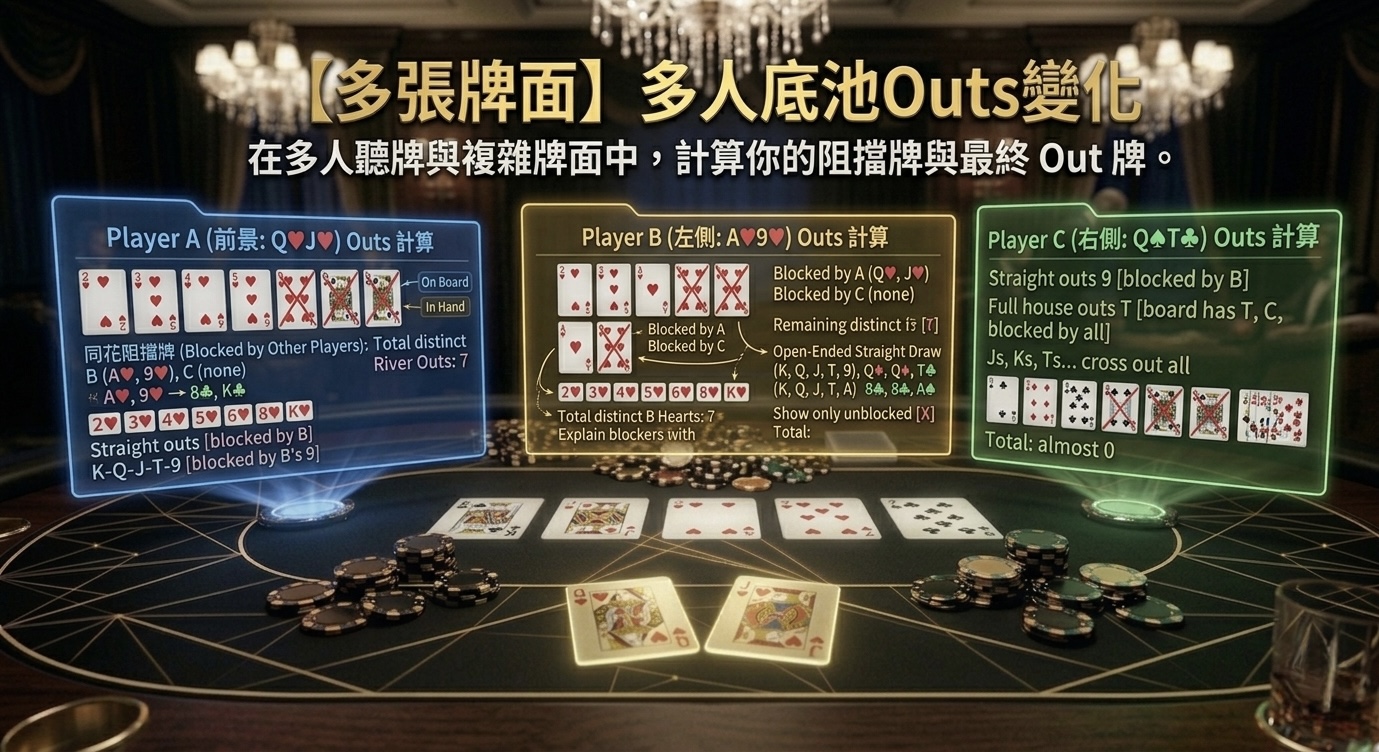
Multiway pots are one of the easiest scenarios in Texas Hold'em to misjudge outs and win rates. Many players directly apply the outs thinking from heads-up games, but in reality, multiway pots significantly alter equity and EV. This article will provide a complete analysis of outs changes, win rate declines, dirty outs, and practical decision-making logic in multiway pots.

Many players calculate Outs, but don't know how to truly translate them into EV (Effective Value) decisions. True professional players don't just know their win rate, but whether that win rate justifies a Call, Raise, or Fold. This article will provide a complete analysis of how Outs are converted into EV, Pot Odds, and the logic behind practical decision-making.
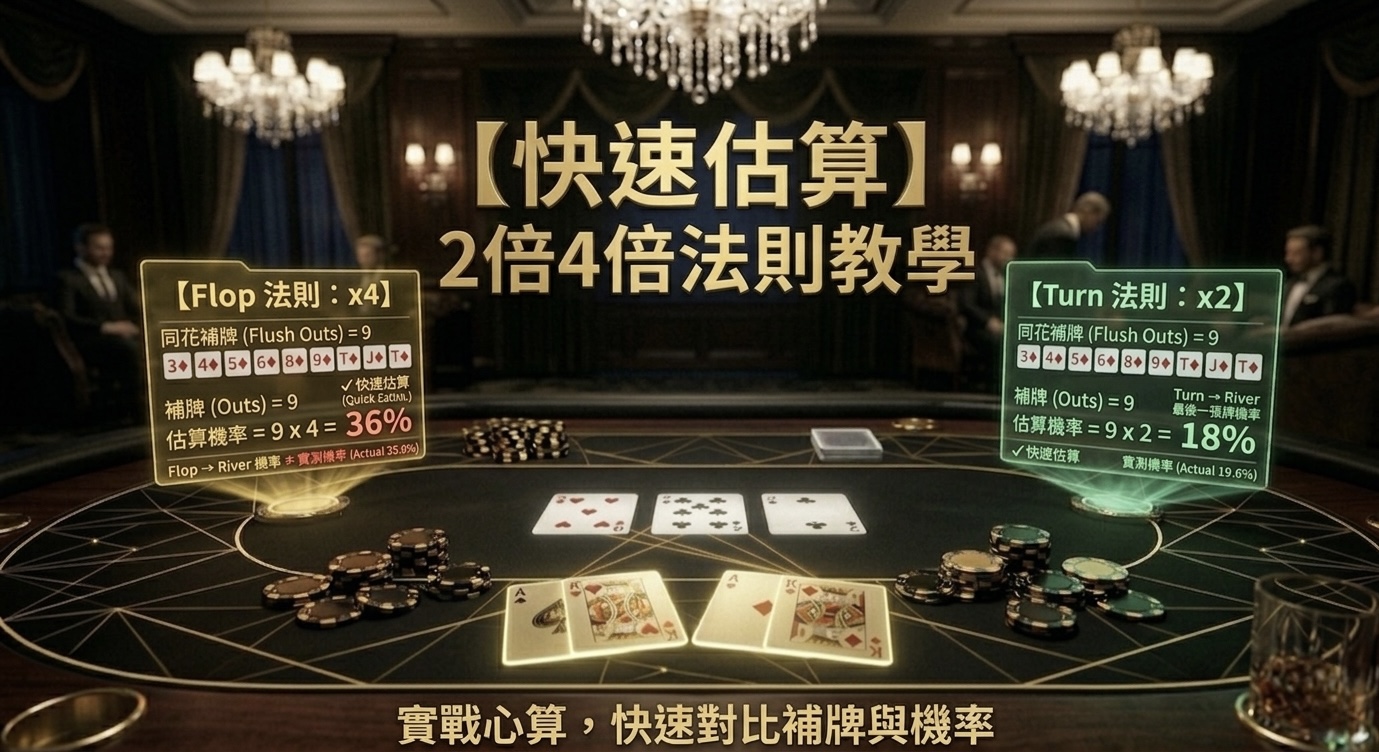
The 2x and 4x rule is one of the most important techniques for quickly estimating win rate in Texas Hold'em. Professional players don't calculate win rate precisely every time; instead, they quickly convert outs to approximate equity. This article will provide a complete analysis of the 2x and 4x rule, its applicable scenarios, common outs conversions, and practical EV applications.
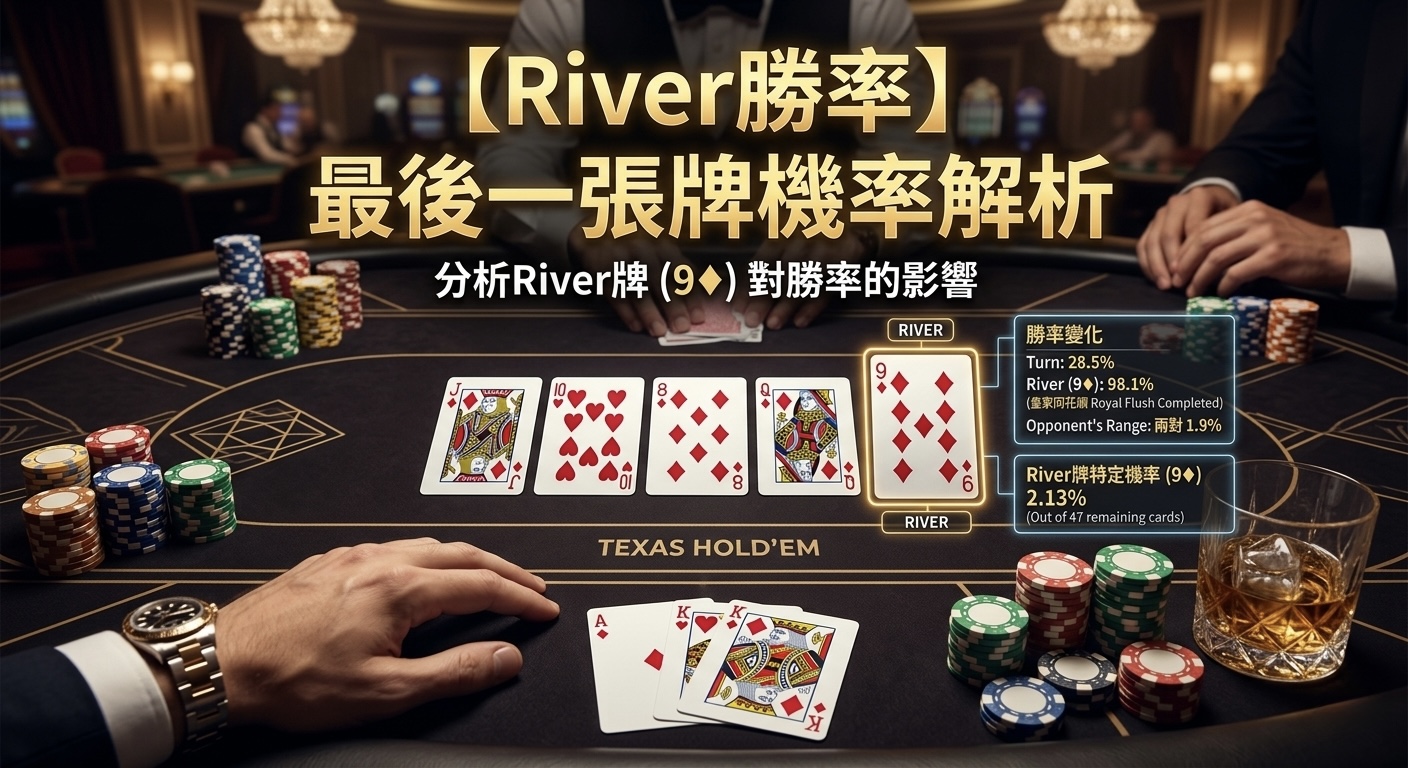
The River is the final decision-making stage in Texas Hold'em, where all probabilities truly come to fruition. At the River, there are no more future cards to draw, and all potential wins (EVs) are transformed into the final outcome. This article will provide a complete analysis of River probabilities, the decision-making logic after Outs disappear, the Value and Bluff structures, and the true mathematical essence of the River.

The Turn is one of the stages in Texas Hold'em where it's easiest to misjudge the odds of winning. Many players confuse the Flop with the turn's draw probability, leading to incorrect chasing and negative EV decisions. This article will provide a complete analysis of Outs calculation during the Turn, the true equity of the Turn to the River, the 2x rule, and its practical EV application.
Exploit bluffing refers to a strategy where a player deliberately increases or decreases their bluffing frequency based on specific weaknesses of their opponent to maximize their profit. Unlike GTO (Game Tottenham Bluff), exploit bluffing doesn't aim for balance but rather adjusts to different player types. For example, against players who tend to over-fold, bluffing can be increased; against players who like to call, bluffing should be decreased and value bets increased. This article will provide a complete overview of the definition of exploit bluffing, its differences from GTO, applicable scenarios, and practical applications.
Fold frequency refers to the percentage of times a player chooses to fold when faced with a bet from an opponent. Fold frequency is a crucial metric in Game Theory Optimal (GTO) and Exploit strategies. An excessively high fold frequency encourages opponents to bluff, while an excessively low fold frequency may lead to over-calling and a decrease in overall EV. Therefore, professional players constantly adjust their fold frequency based on Minimum Defense Frequency (MDF), Pot Odds, Bluff Frequency, and opponent type. This article will provide a comprehensive overview of the definition of fold frequency, MDF, GTO, Exploit strategies, and their practical applications.
Bluff frequency refers to the proportion of betting combinations a player chooses to use bluffs in. In modern Game Theory Optimal (GTO) strategies, a higher bluff frequency is not necessarily better, nor is a lower frequency necessarily safer. Instead, it needs to be maintained in a reasonable proportion with the value range to make the strategy less vulnerable to opponent exploitation. This article will provide a complete overview of the definition of bluff frequency, the ratio of value to bluff, over bluff, under bluff, GTO, and its practical applications.
Underbluffing occurs when a player's bluff frequency is lower than the theoretically optimal ratio, causing their betting range to be overly biased towards the value range. When a player consistently underbluffs, opponents can effectively exploit this weakness by increasing their fold frequency, as most bets represent strong hands. This is one of the most common strategic flaws among low to mid-level players. This article will provide a comprehensive overview of the definition of underbluffing, its causes, the application of GTO (Guard-to-Order) and exploits, and how to avoid underbluffing.
Over bluffing occurs when a player's bluff frequency exceeds the theoretically optimal ratio, allowing opponents to effectively exploit the player's strategy through more frequent calls. Many players mistakenly believe that "the more you bluff, the better," but when the bluffing ratio is too high, the strategy loses its balance range, which can easily lead to negative EV in the long run. This article will provide a complete introduction to the definition of over bluffing, its causes, the application of GTO and Exploit, and how to avoid over bluffing.