




Ace-high boards are one of the most crucial flop types in Texas Hold'em. This article uses practical analysis to explain how the aggressor can leverage range advantage to c-bet, and how the defender can respond, helping players build a complete strategy and decision-making model for Ace-high boards.
Many Texas Hold'em players often feel they are "almost there," but in reality, they consistently lose money. This article analyzes outcome-oriented thinking and flawed judgment from the perspectives of cognitive biases and decision-making logic, helping players establish a correct EV (Earnings Per Expectation) mindset and shift from "almost there" to consistent profitability.
In Texas Hold'em, hitting a pair seems like an advantage, but many players lose big pots in this situation. This article analyzes common ways to lose with pairs through hand replays, including kicker pressure, slow-play traps, and overvalue betting, and builds a correct decision-making model to help players avoid high-cost mistakes.
Whether to fold when faced with a raise is one of the most critical decisions in Texas Hold'em. This article analyzes common emotional errors and judgment biases in players through real-world replays, and establishes a clear folding decision model to help players avoid high-cost mistakes and improve long-term profitability.
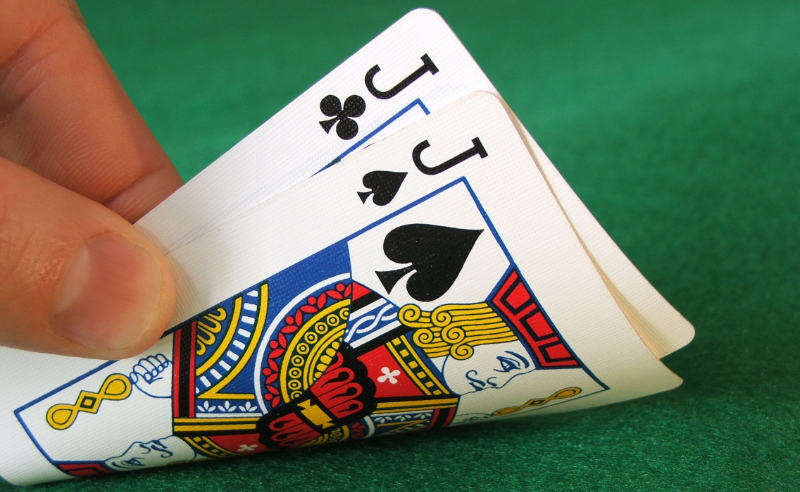
Middle pair (JJ/TT) is one of the most misunderstood hands in Texas Hold'em. Many players either overestimate its value or overestimate its potential. This article analyzes the true role of middle pair from a practical review perspective, helping players understand when to attack and when to control, avoiding common mistakes and improving long-term EV.

OESD (Open-ended Straight Draw) is one of the strongest straight draws in Texas Hold'em. Many players know that straights are strong, but they are unclear about the actual number of outs and the probability of making it. This article will provide a complete analysis of OESD win rate, outs calculation, pot odds, and EV application to help you build real mathematical decision-making skills.

Flush Draw is one of the most common and important draws in Texas Hold'em. Many players know that flushes are strong, but they are unclear about the true equity and EV. This article will provide a complete analysis of the number of outs, equity calculation, pot odds, and practical applications of Flush Draw, helping you build real mathematical decision-making skills.

Outs calculation is one of the most fundamental elements of mathematical decision-making in Texas Hold'em. Many players know they have a draw but don't know how to quickly calculate the actual number of outs, leading to incorrect calls and negative EV decisions. This article will provide a complete analysis of outs calculation methods, common outs types, duplicate outs issues, and practical applications to help you develop true probabilistic thinking.

Outs are one of the most important mathematical foundations in Texas Hold'em. Many players know they have a "draw," but don't know the exact probability of making it. This article will provide a complete analysis of the definition, calculation method, and practical application of Outs, helping you quickly determine your win rate, Pot Odds, and EV, and build true mathematical decision-making ability.

Many Texas Hold'em players mistakenly believe that a high win rate equates to correct decision-making. However, a high win rate does not equate to high EV (Effective Value). Many players, despite short-term leads, still make flawed decisions. This article analyzes common reasons for high win rates leading to mistakes, including range misjudgments, positional issues, pot control errors, and EV errors, helping you develop truly professional-level decision-making thinking.

Pure bluffing refers to a betting strategy where a player currently has almost no showdown value and no obvious draw opportunities, relying solely on opponents folding to win the pot. Pure bluffing is the riskiest type of bluff, therefore it must be built on sufficient fold equity, a reasonable blocker, range advantage, and a reliable storyline; otherwise, it can easily lead to negative EV in the long run. This article will provide a complete overview of the definition of pure bluffing, its differences from semi-bluffing, fold equity, GTO, and practical applications.
Bluffing is a strategy where a player, without the best hand, forces their opponent to fold by betting, raising, or going all-in to win the pot. Bluffing isn't random; it's a mathematical decision based on Fold Equity, Range Advantage, Blockers, Board Texture, and opponent tendencies. Successful bluffing allows players to profit even without the best hand and is a core element of modern GTO and Exploit strategies. This article will provide a comprehensive overview of bluffing, including its definition, Pure Bluff, Semi Bluff, Fold Equity, Bluff Frequency, GTO, and practical applications.
Range construction refers to a player establishing a complete and reasonable range of hand types based on position, starting hand, board texture, betting action, and strategic objectives. Professional players don't think independently about every hand; instead, they combine all possible hands into a complete strategic system, including Value Range, Bluff Range, Check Range, Call Range, and Raise Range. Good range construction makes the strategy more balanced and reduces the risk of being exploited by opponents. This article will fully introduce the definition of range construction, its core principles, the application of GTO and exploits, and how professional players build complete strategic ranges.
Nut Advantage refers to a player's hand range containing more or nearly as many nuts as their opponent's. Even if both players have similar average hand strength (Range Advantage), having more nut hands allows one player to use larger bet sizes in many situations, such as overbetting or going all-in, putting immense pressure on their opponent. This article will provide a complete overview of the definition of Nut Advantage, its differences from Range Advantage, Capped Range, Uncapped Range, and the practical applications of GTO and Exploit.
Range advantage refers to a player's overall hand range being more suitable for the current board compared to their opponents, thus having a stronger average hand strength. Range advantage does not necessarily mean holding the best hand, but rather that the average equity of the entire range is higher. In GTO strategies, players with range advantage typically have a higher betting frequency and may even use larger bet sizes to maintain pressure. This article will fully introduce the definition of range advantage, its difference from nut advantage, capped range, uncapped range, and the practical application of GTO and exploit.