




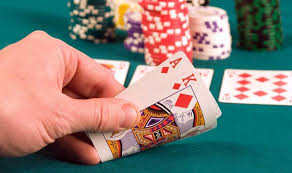
This book provides an in-depth analysis of the decision-making logic when a hand is not hit. Through hand replay, it explains when to attack and when to control the pace. It combines range advantage, position advantage, and board structure to help players make the right decisions even when they don't have a winning hand, avoiding ineffective folds or blind attacks, and establishing a stable and replicable profitable strategy.

This book provides an in-depth analysis of the core logic of all-in decision-making, explaining the relationship between Equity, Fold Equity, and risk management through hand replays. It helps players understand when to go all-in and when to avoid it, and establishes a decision-making framework oriented towards long-term EV, enabling them to make more accurate and stable profitable choices in high-pressure scenarios.

This article analyzes the timing and strategic logic of using Slow Play, and explains how to induce opponents to invest chips under low-risk conditions to maximize long-term profits through hand replays.
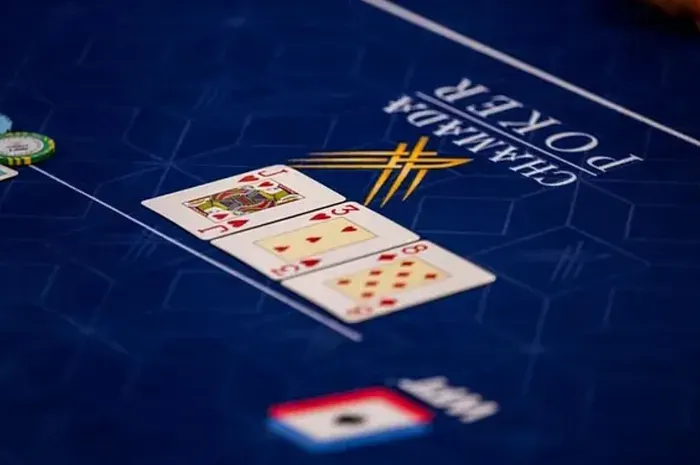
This article analyzes the timing and strategic logic of overbetting, explaining polarized ranges and pressure betting through hand replays, helping players maximize profits and decision-making advantages at the right time.
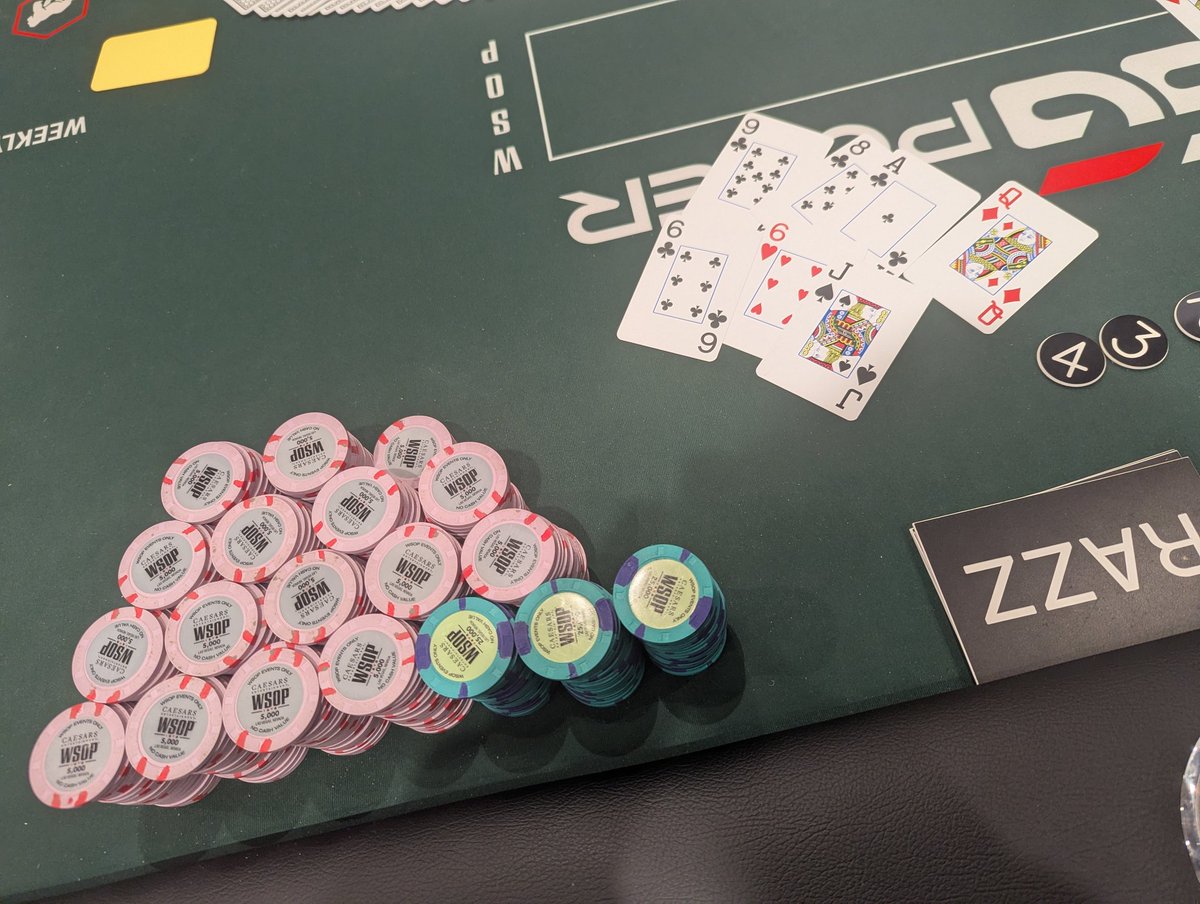
This analysis examines how incorrect betting sizing can affect the overall outcome of a hand. Through hand replays, it demonstrates the consistency between sizing and strategy, helping players improve value capture and decision-making accuracy.

Truly advanced Texas Hold'em involves more than just looking at the current pot; it's about estimating how much more you can win in the future. Many seemingly ordinary calls can become high-EV (Earnings Value) due to their potentially huge future payouts. This article will provide a comprehensive analysis of Future Value, Implied Odds, opponents' payment ability, and professional-level EV thinking.

Many players are tempted to chase a draw when they see it, but true professional players know that some draws are long-term negative EV traps. Insufficient pot odds, dirty outs, reverse-implied odds, and multi-way pots can all turn chasing into a huge loss. This article will provide a complete analysis of when you shouldn't chase a draw, and how expert players can avoid EV disasters.
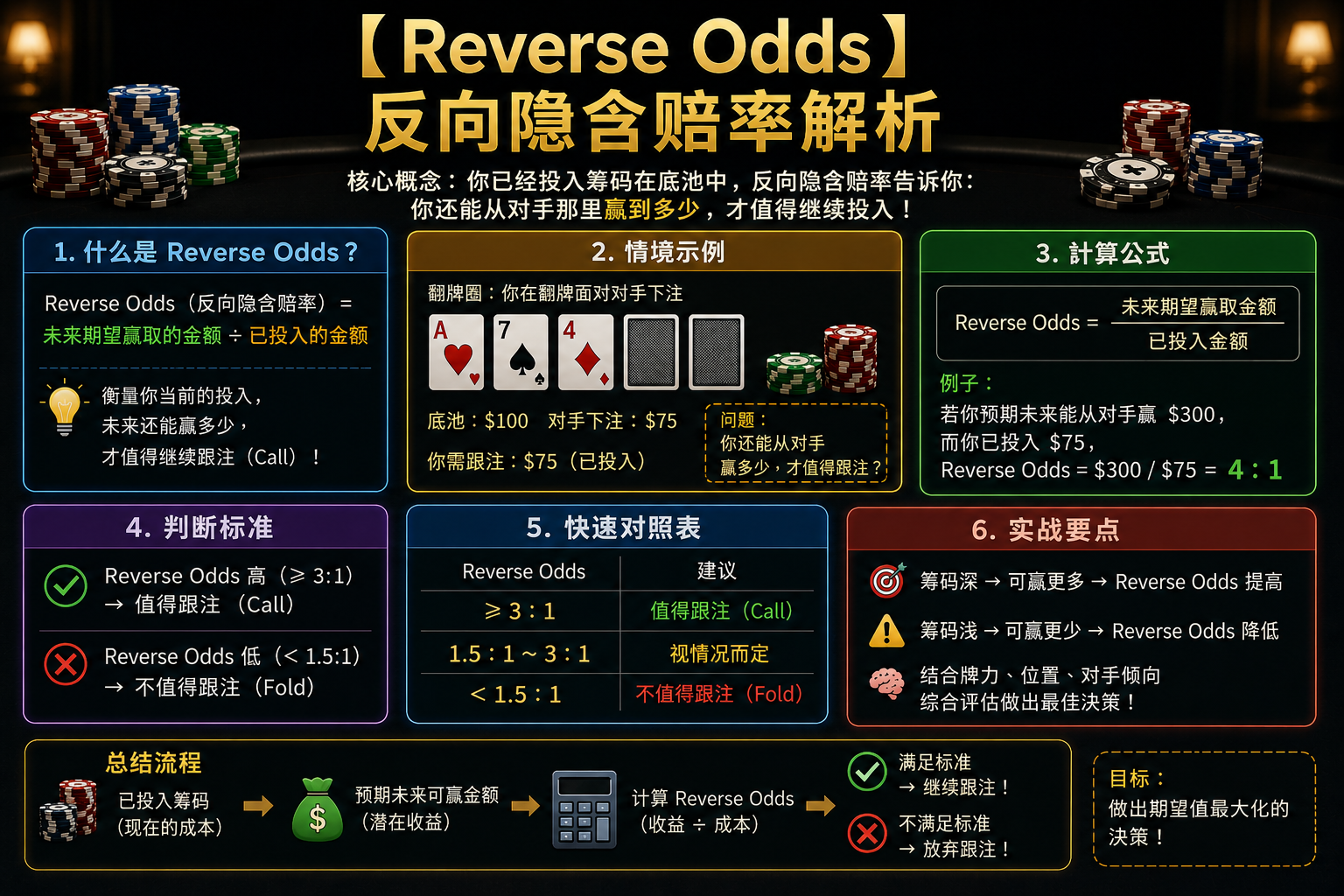
Reverse Implied Odds are among the most sophisticated traps in Texas Hold'em that can easily lead players to "lose more money despite hitting a good hand." Many seemingly good draws and top pairs can actually cause huge EV disasters in deep-stacked games. This article will provide a complete analysis of Reverse Implied Odds, dangerous hand types, multi-way pots, and professional-level risk management thinking.

Deep stacks significantly alter the implied odds and EV structure in Texas Hold'em. Many hands that wouldn't be worth chasing in shallow stacks can become high-EV weapons in deep stacks. This article will provide a comprehensive analysis of how deep stacks affect implied odds, set mining, nut draw value, and professional-level profit-making strategies.

Implied odds are one of the most important advanced EV concepts in Texas Hold'em. Many calls, even with insufficient pot odds at the moment, can still become positive EV due to the potential to win more chips in the future. This article will provide a complete analysis of the core logic, practical applications, and profit-making strategies of implied odds.
Indifference refers to the equilibrium state where, when a player adopts a Game Theory Optimal (GTO) strategy, the opponent's long-term expected value (EV) remains the same regardless of whether they call or fold. Indifference is a crucial theoretical foundation of GTO and a core concept of bluff frequency, value range, mixed strategy, and balanced range. When a player's betting range reaches indifference, the opponent cannot increase their profit by unilaterally changing their strategy. This article will provide a comprehensive introduction to the definition, operating principles, solver analysis, and practical applications of indifference.
Equilibrium refers to a state of equilibrium where neither player can gain more economic benefit (EV) by unilaterally changing their strategy when both players employ optimal strategies. In Texas Hold'em, equilibrium usually refers to Nash Equilibrium, which is also the theoretical basis of GTO (Game Theory Optimal). When both players reach equilibrium strategies, neither can exploit the other by simply changing their playing style. This article will provide a comprehensive introduction to the definition of equilibrium, Nash Equilibrium, GTO, Solver, and its practical applications.
Pure Strategy refers to a player consistently taking the same action in the same situation, without any frequency mixing. For example, always betting (100% Bet), always checking (100% Check), always calling (100% Call), or always folding (100% Fold) all fall under Pure Strategy. In GTO, some hand types use Pure Strategy, while others use Mixed Strategy. This article will provide a complete overview of the definition of Pure Strategy, its differences from Mixed Strategy, its application in Solver, and practical concepts.
Mixed strategy refers to a player's approach in the same situation where they don't always take the same action, but rather distribute their actions among Bet, Check, Call, Raise, or Fold according to a certain frequency. In GTO (Game Theory Optimal), mixed strategy can prevent one's strategy from becoming too singular and reduce the risk of being exploited by the opponent. Therefore, solvers often recommend making different decisions at different frequencies for the same hand, rather than always taking the same action. This article will fully introduce the definition, operation, solver, frequency, and practical application of mixed strategy.
A Solver is an analytical tool that uses mathematical models and game theory to calculate the optimal strategy for Texas Hold'em. It's not software that "helps you play," but rather provides GTO (Game Theory Optimal) strategy suggestions through extensive calculations, including bet size, bluff frequency, value range, and mixed strategy, helping players understand the reasons behind each decision. This article will provide a complete introduction to the Solver's definition, operation, common tools, Node Lock, and practical applications.