



International news
Allen Kessler, a key figure at the WSOP Bracelet 2026, has declared that he will win his first WSOP gold bracelet this summer, ending a more than 20-year reign without a title, becoming a hot topic in the poker world.
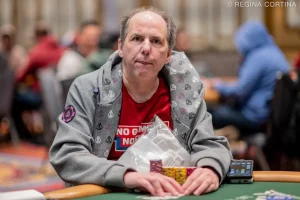 Allen Kessler vows to win his first career gold bracelet at the 2026 WSOP.
WSOP Bracelet 2026 Focus: Can Allen Kessler end his long title drought?
As the World Series of Poker (WSOP), the most prestigious poker tournament in the world, is set to kick off in Las Vegas in May 2026, a veteran player has once again become the focus of attention. Allen Kessler, known by the nickname "Chainsaw," has publicly stated that he will win his first WSOP gold bracelet this summer, marking a significant milestone in his more than two-decade-long professional career.
This declaration quickly garnered attention within the poker community, making "WSOP Bracelet 2026" one of the most searched keywords.
A 20-year wait: From consistently making the cut to a record without a championship
Allen Kessler has been participating in WSOP events since 2001 and is a highly representative "consistent player" in the poker world. He is known for his numerous "min-cash" appearances and has accumulated a considerable number of cashes over the years.
According to statistics, he has accumulated [number] gold bracelets in WSOP events.122 times in the circle recordHe is ranked second in history, but has never won the championship, making him one of the most successful but never won the championship.
In addition, his total prize money for live events has exceeded$4.6 millionIt has a stable and lasting influence in the professional poker world.
Recent hot form: Consecutive final table appearances boost confidence
Kessler is confident about the 2026 WSOP, mainly due to his recent outstanding performance. In the past month:
- Win a RunGood Poker Series (RGPS) ring
- Win a WSOP Circuit (WSOPC) ring
- Two runner-up finishes
- Reached the final table a total of 6 times
This "heater" (winning streak) has convinced him that he is in one of the peaks of his career.
In an interview, he stated frankly, "I am determined to make a breakthrough this year and win a gold bracelet."
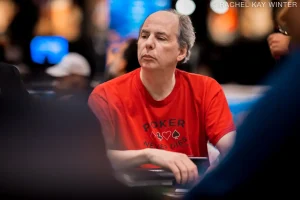
Past regrets: Four defeats in one-on-one duels, still unable to claim the title.
Despite Kessler's extensive experience, there has always been a significant hurdle between him and the WSOP gold bracelet.
He reached the heads-up stage of the gold bracelet event four times, but lost all four times, including:
- Loss in the final against Frank Kassela
- Lost to Poker Hall of Famer Brian Rast
- Lost to Todd Brunson
The loss of these key battles became the biggest regret of his career, and also made "when to win the championship" a long-standing topic.
WSOP Bracelet 2026: Opportunities and Pressures
The 2026 WSOP will be heldHorseshoe Las Vegas and Paris Las VegasThe event is expected to attract top players from around the world once again.
For Kessler, this year is not only an opportunity, but also a pressure:
- Age and the later stages of one's career
- The record of no titles continues to accumulate
- Expectations and doubts coexist.
However, his recent consistent performance, coupled with years of accumulated experience, still makes him one of the players with explosive potential.
Poker community opinion: Can experience overcome luck?
In highly volatile poker tournaments, even top players cannot guarantee victory. Kessler's case perfectly illustrates this point—long-term consistent profitability does not equate to eventual championship win.
However, with the 2026 WSOP approaching, the market and the player community generally believe that:
- If Kessler maintains the current state
- And seize the opportunity at the critical moment
So this "King Without a Crown" does indeed have a chance to make a breakthrough this year.
Conclusion: The 2026 WSOP may witness a historic moment.
Regardless of the outcome, Allen Kessler's story is a highly representative microcosm of the professional poker world—a combination of endurance, volatility, and conviction.
With WSOP Bracelet 2026 officially entering its countdown phase, players worldwide are focused on one question:
Will Chainsaw be able to finally achieve his championship dream this time?
Advanced Thinking Review: From "Knowing How to Play Cards" to "Making the Right Decisions"
When you stop just looking at your own hand, what truly sets you apart is how well you understand Range, EV, Blocker, position, and overall betting strategy.
The following advanced thinking methods are key to most players' progress from "occasionally getting it right" to "long-term stable profitability":
[Range Thinking] How to truly apply Range thinking in actual gameplay? Hand review and analysis.
[River Decision Making] How does the Blocker influence River's calling, raising, and folding? Strategy Breakdown
[Result Bias] EV vs Result: Why did we still lose even when we bet correctly? Retrospective Analysis
[Bluff Core] What constitutes proper Bluff? Hand replay analysis
[Semi-Bluff Timing] When is the most profitable time to use a semi-bluff? Strategy Analysis
[Bet Line] How to construct a complete betting line? Practical analysis and review.
[Position Advantage] Why does position directly influence your every decision? Hand Analysis
[SPR Application] How does SPR affect your playing style and pot planning? Strategy Analysis
[Vulnerability Analysis] How to identify vulnerabilities in an opponent's Range vulnerability? Post-mortem analysis and breakdown.
[Marginal Hands Problem] Why do expert players rarely play marginal hands? Decision Analysis
【Lập kế hoạch ba vòng cược】Làm sao thiết kế chiến thuật cho flop, turn và river? Phân tích thực chiến trong poker
[Fold Equity Pressure] How to Create Fold Equity? Hand Replay Analysis
[Area Contraction] How to analyze the process of the opponent's area being compressed? Strategy breakdown
[Strategy Selection] Balance vs. Exploit: Which to Choose in Practice? Retrospective Analysis
[Long-Term Profitability] How to Train a Long-Term EV Mindset? Decision Model Analysis
The biggest difference between advanced players and casual players isn't remembering more terminology, but rather the ability to integrate range, EV, position, blocking cards, and betting lines in every decision. Through these advanced thought processes, you can gradually build a more complete Texas Hold'em decision-making framework.
Further News Reading
International news
APT Jeju Station | Scott Margereson wins High Roller title, Hongsheng Zhang achieves career-best third place.
International news
Love from Paris: French warriors win hard-fought victory in Marrakech
International news
Nine cards flopped to determine the RGPS Lake Erie Main Event champion
International news